

The Trade War Crossroads: Why the World Can’t Afford to Choose Between the US and China
The global economy is once again caught in a storm of uncertainty as the United States and China escalate their economic rivalry, this time with a more aggressive tone and wider implications. China...

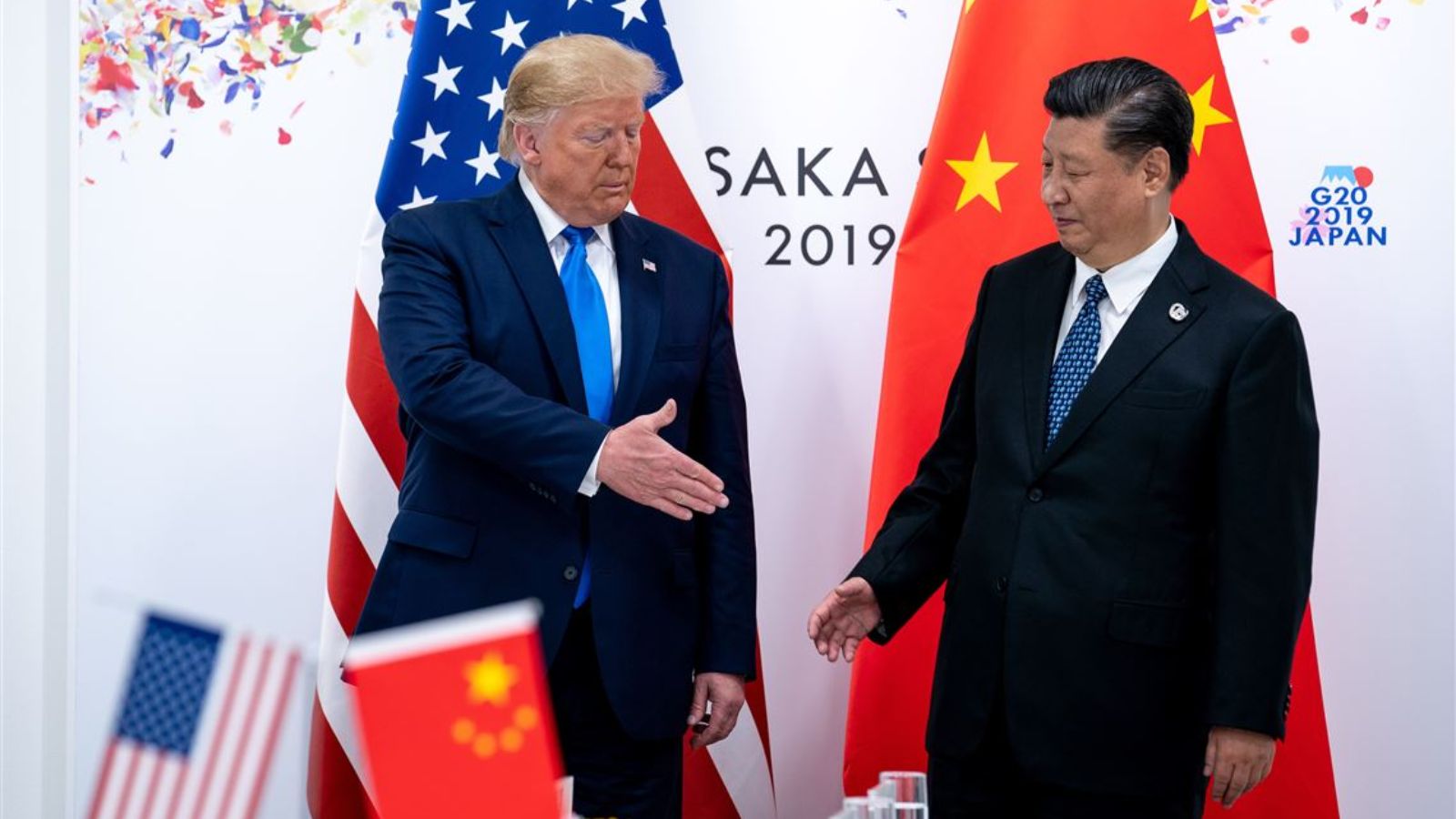
The global economy is once again caught in a storm of uncertainty as the United States and China escalate their economic rivalry, this time with a more aggressive tone and wider implications. China recently issued a stark warning to nations considering trade deals with the United States that would undermine Beijing’s interests. This came in response to reports that the Trump administration is actively pushing its allies to distance themselves from China in return for favorable tariff exemptions. While the United States sees this as a strategic way to rebalance global trade, China views it as coercion and has vowed to retaliate against any nation that aligns itself with such policies.
This tense standoff is not entirely new, but it has intensified under the renewed leadership of former President Donald Trump, whose policies prioritize reshoring American industry and using tariffs as leverage. In fact, the latest round of U.S. tariffs on Chinese goods has soared to 145 percent, with Beijing countering at 125 percent on American exports. Although Trump’s administration claims these measures are necessary to protect domestic manufacturing and fund future tax cuts, they have drawn criticism for ignoring the deeper structural realities of global trade interdependence.
Indeed, it is this interdependence that makes the situation far more complex than a simple contest of economic muscle. China, since joining the World Trade Organization in 2001, has rapidly transformed into the world’s leading exporter and the largest trading partner for at least 60 countries. In contrast, the United States holds that title for only 33 nations. A 2023 analysis by Australia’s Lowy Institute found that about 70 percent of the world’s economies now trade more with China than with the U.S., up from just 15 percent in 2001. This demonstrates a profound shift in global trade patterns that even aggressive American policies may not easily reverse.
One of the most critical factors behind China’s rise has been its strategic use of low-cost labor, foreign investment, and favorable exchange rates. These advantages enabled China to dominate global supply chains, especially in essential goods like electronics, textiles, and machinery. Countries in Southeast Asia, such as Vietnam and Cambodia, have found themselves in a difficult position, simultaneously benefiting from Chinese industrial exports and serving as alternatives for U.S. companies trying to reduce reliance on China. Vietnam, for example, is not only a manufacturing hub in its own right but is also used by Chinese companies to bypass American tariffs.
Amid this turbulence, China’s President Xi Jinping has taken a proactive approach. His recent tour of Southeast Asia included calls for countries to stand united against “unilateral bullying,” a veiled reference to Washington’s trade maneuvers. Without naming the U.S., Xi emphasized the idea that no one wins in a trade war-a sentiment backed by most economists, including Alicia Garcia-Herrero, a senior economist at Natixis, who noted that decoupling from China is nearly impossible due to the depth of its integration into global supply chains.
For instance, the European Union had a staggering trade deficit with China worth €396 billion in 2022, compared to €145 billion in 2016. China now supplies 20 percent of the EU’s total imports, while in the UK that figure stands at 10 percent. The same trend is visible across the developing world. Bangladesh and Cambodia import around 25 percent of their goods from China, while countries like Nigeria and Saudi Arabia rely on China for nearly a fifth of their imports. These numbers highlight a simple truth: for many nations, China is not just an option-it is a necessity.
Yet despite these realities, the Trump administration continues to seek alignment through pressure tactics. More than 70 countries are reportedly in negotiations with the U.S., hoping for tariff relief in return for curbing trade with China. But this approach lacks long-term incentives and relies heavily on threats rather than collaboration. According to Garcia-Herrero, unless the U.S. is willing to offer meaningful investment or economic partnerships, it is unlikely to sway countries that have built deep, mutually beneficial ties with Beijing.
Another layer of complexity lies in the geopolitical dimension of this rivalry. Countries that host American military bases may feel compelled to comply with Washington’s demands. However, the majority of nations, especially in Africa, Asia, and Latin America, are more likely to lean toward China if forced to choose. These countries often see China as a partner that offers infrastructure, trade, and loans without the conditionalities typically associated with Western aid.
Pakistan, for instance, has significantly deepened its trade and infrastructure ties with China through the China-Pakistan Economic Corridor (CPEC), a key component of Beijing’s Belt and Road Initiative. This relationship has brought substantial investment in energy, transport, and industrial sectors, helping Pakistan reduce its reliance on the West and diversify its economic partnerships. At the same time, Pakistan maintains strategic relations with the United States and values stability in its trade policies. It is a prime example of how nations are increasingly walking a tightrope between the two superpowers.
In summary, the intensifying U.S.-China trade war is forcing countries into an unenviable dilemma. While Washington hopes to create a united front to contain China’s rise, the economic stakes for most nations are too high to sever ties with Beijing. With nearly three-quarters of the world now more deeply connected to Chinese trade than American, the strategy of economic decoupling seems both unrealistic and potentially damaging. Instead of coercion and confrontation, a more pragmatic approach rooted in mutual benefit and economic inclusivity may offer a path toward shared prosperity. In a globalized world, choosing sides is no longer a luxury most countries can afford.
Author