

Beijing, Moscow, and Tehran: A New Axis in the Nuclear Dialogue
In the complex web of international diplomacy, Iran’s nuclear programme has once again taken center stage. This week, Iranian Foreign Minister Abbas Araghchi is expected to visit Beijing to brief...

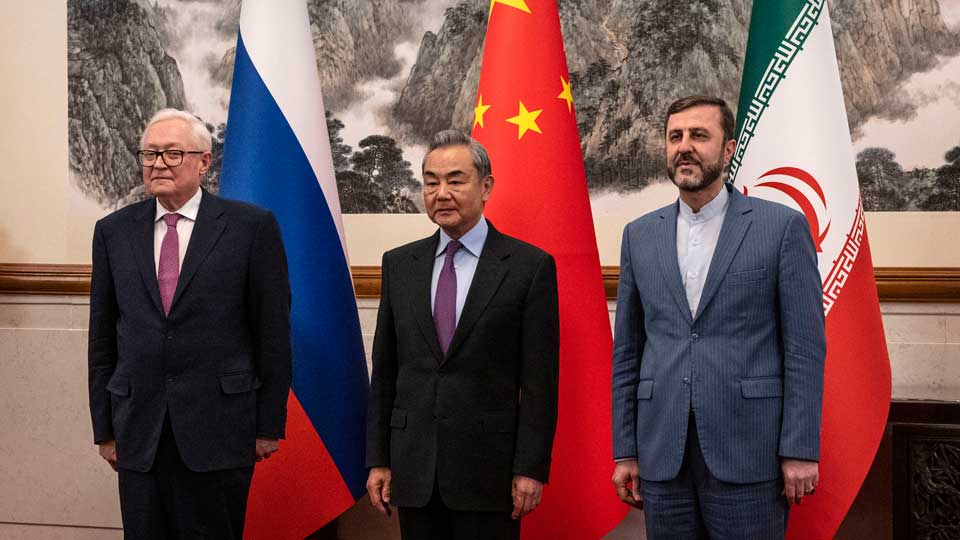
In the complex web of international diplomacy, Iran’s nuclear programme has once again taken center stage. This week, Iranian Foreign Minister Abbas Araghchi is expected to visit Beijing to brief Chinese officials on the upcoming third round of nuclear talks with the United States, scheduled to be held in Oman. This follows recent consultations Iran held with Russia, reflecting Tehran’s consistent strategy of engaging its key allies before entering negotiations with Washington. The move highlights how Iran continues to rely on diplomatic coordination with global powers, particularly China and Russia, both of whom were part of the original 2015 Joint Comprehensive Plan of Action (JCPOA).
The JCPOA, often referred to as the Iran nuclear deal, was a landmark agreement reached between Iran, the US, UK, France, Germany, China, and Russia. Under its terms, Iran agreed to significantly reduce its nuclear activities and submit to strict monitoring in exchange for relief from international sanctions. However, in 2018, then-President Donald Trump unilaterally withdrew the US from the deal, accusing Iran of pursuing nuclear weapons capabilities, despite a lack of conclusive evidence. Since that withdrawal, tensions have escalated, and Iran has begun to exceed the deal’s enrichment limits, prompting renewed international concern.
As Iran now prepares for a third round of indirect talks with the US envoy Steve Witkoff, it is clear that diplomacy is not occurring in isolation. Rather, it is part of a broader geopolitical shift. Araghchi’s coordination with China follows a similar briefing held with Russia last week, where he met Foreign Minister Sergey Lavrov. These meetings are not merely ceremonial; they symbolize a deliberate alignment among nations increasingly skeptical of US foreign policy, especially after years of sanctions, military threats, and diplomatic breakdowns.
Notably, the visit to China is not simply about the nuclear issue. It also reflects Iran’s deepening strategic partnerships with Beijing and Moscow. Just days ago, Russian President Vladimir Putin formalized a 20-year strategic partnership with Iran, underscoring a commitment to enhanced political, economic, and security ties. This growing cooperation comes as both Iran and Russia face Western sanctions and military pressure, making mutual support more than just symbolic. Moreover, amid the ongoing Israeli assault on Gaza, Iran has positioned itself more assertively in regional affairs, often aligning with powers opposed to the West’s military and political alliances.
China, for its part, has maintained a cautious but consistent engagement with Iran. While the Chinese Ministry of Foreign Affairs has not officially confirmed Araghchi’s visit, it reiterated the importance of bilateral ties and ongoing diplomatic exchanges. China’s role is particularly significant, not only as a nuclear power and economic heavyweight but also as a stabilizing actor in the Middle East. With its Belt and Road Initiative investing heavily in Iranian infrastructure, Beijing has a strong interest in regional peace and economic stability. Hence, any progress in Iran-US talks would likely be welcomed by China, especially if it leads to easing sanctions and facilitating trade.
However, the road to diplomacy remains rocky. Iran has accused Israel of actively trying to sabotage the peace process. According to Iranian Foreign Ministry spokesperson Esmaeil Baqaei, Israel is forming what he described as a coalition to undermine negotiations and provoke military conflict. These claims are not unfounded, as Israeli Prime Minister Benjamin Netanyahu has repeatedly insisted that Israel will not tolerate a nuclear-armed Iran. While The New York Times recently reported that Trump discouraged Israel from launching strikes on Iranian nuclear sites-for now-Israel remains highly suspicious of Iran’s intentions and maintains strong influence over US foreign policy in the region.
At the heart of the nuclear controversy is uranium enrichment. Under the JCPOA, Iran agreed to limit its uranium enrichment to 3.67 percent, a level sufficient for civilian energy use but far below weapons-grade thresholds. However, the International Atomic Energy Agency has reported that Iran is now enriching uranium up to 60 percent—just short of the 90 percent required for nuclear weapons. While Iran maintains that its nuclear programme is entirely for civilian use, such levels of enrichment understandably raise alarm in Washington and Tel Aviv. Yet, it is also important to note that Iran’s actions came only after the US violated the agreement and reimposed harsh sanctions.
Amid these developments, the US response has been mixed. Witkoff, representing the US in the current talks, initially stated that Iran should return to the 3.67 percent limit. But in a follow-up comment, he suggested the US now seeks a complete end to Iran’s enrichment activities, a demand that goes far beyond the original JCPOA and could complicate negotiations. The shift in US expectations appears to reflect not only concerns about nuclear proliferation but also broader strategic calculations involving its allies in the region.
From Tehran’s perspective, continued dialogue with all parties to the JCPOA remains essential. Iranian officials argue that multilateral consultations are not only customary but vital in ensuring transparency and building trust. While the talks remain indirect, the involvement of mediators like Oman and the backing of powers like China and Russia offer a more balanced platform for diplomacy. And with the world’s attention fixed on ongoing conflicts-from Gaza to Ukraine-there is increasing urgency to prevent another flashpoint from erupting.
This unfolding situation illustrates how global alliances are evolving. Iran’s diplomatic strategy is no longer solely about mending ties with the West; it is about redefining its global position through long-term partnerships with China and Russia. These shifts have significant implications for global security, trade, and the fragile balance of power in the Middle East. If diplomacy succeeds, it could serve as a model for multilateral conflict resolution. But if it fails, the consequences could be severe, not only for Iran and the United States but for a region already on edge.
As talks resume in Oman this week, the world watches closely, hoping that reason and dialogue will prevail over threats and escalation. The future of non-proliferation and regional peace may very well depend on what unfolds in these quiet, high-stakes meetings.
Author