

In the aftermath of decades of conflict, Afghanistan remains at the heart of South and Central Asia’s evolving geopolitical chaos. Regional stability depends not only on Kabul’s domestic governance but also on its capacity to maintain constructive relations with neighboring states, particularly Pakistan. The recent Istanbul peace negotiations were viewed as an opportunity to revive regional dialogue and reduce cross-border tensions. However, the official response from Kabul’s representatives revealed otherwise.
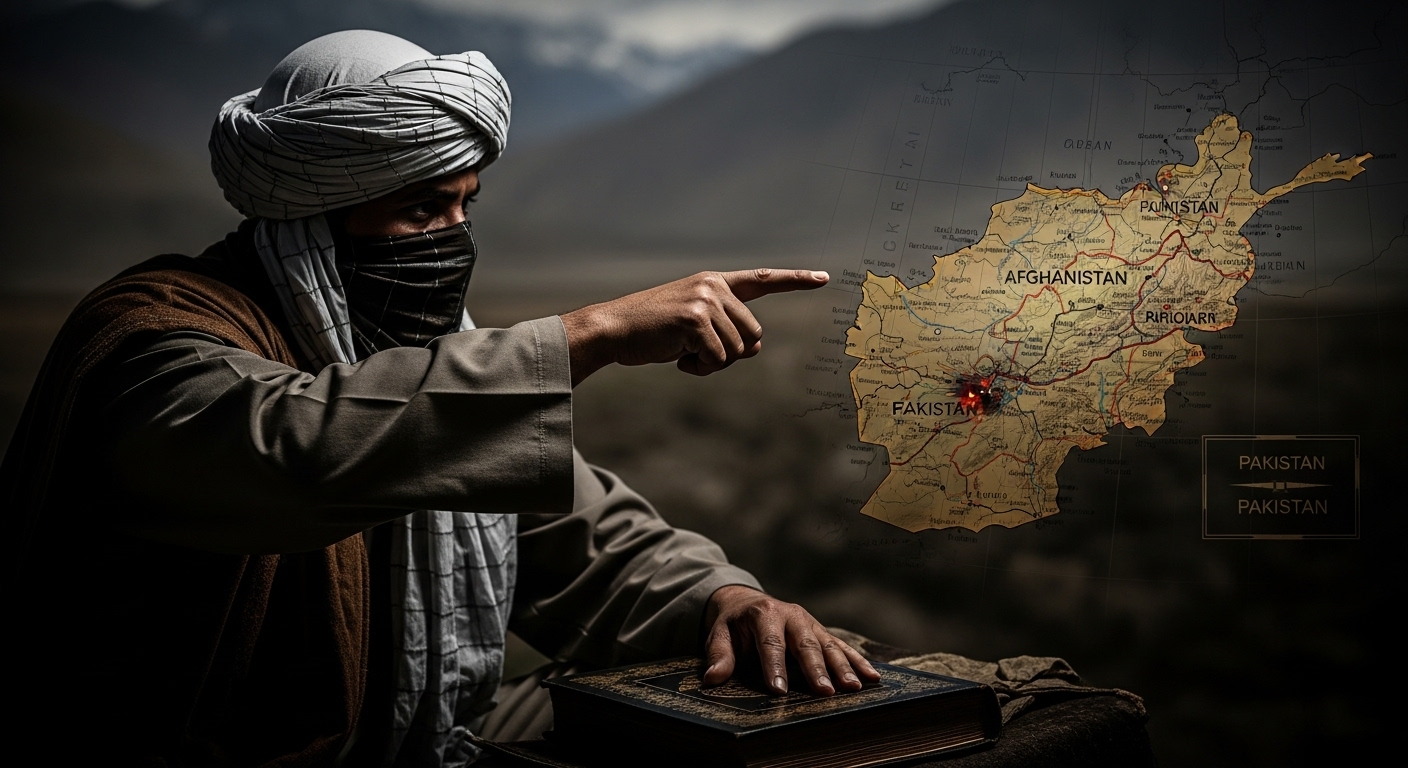
Zabihullah Mujahid, the spokesperson for the Taliban regime, issued a statement that did not reflect the voice of a government striving for peace, but rather one struggling to project control and legitimacy. His remarks underscored a cautious and fragile administration attempting to obscure its reluctance to act against the Fitna-al-Khawarij (FAK), formerly known as Tehrik-e-Taliban Pakistan (TTP). More importantly, the tone and timing of the Taliban’s warning to Islamabad suggest an Afghan regime that continues to rely on militant leverage while tacitly accommodating India’s expanding role in its political landscape.
Pakistan’s Position: Commitment Rooted in Law and Security
Throughout the Istanbul conversation, Islamabad maintained a basic position grounded in globally accepted commitments: the Taliban must prohibit Afghan soil from being used against any country, including Pakistan. This is not a favor; it is the basic foundation of the Doha Agreement, which paved the way for the Taliban’s return to Kabul in 2021.
Pakistan approached the Istanbul dialogue with the expectation that the Islamic Emirate would address legitimate security concerns arising from a surge in cross-border attacks — all traced back to FAK sanctuaries in Afghanistan. Instead, the Taliban delegation arrived with a rehearsed script of denial, diversion, and, ultimately, threats.
The Reality Behind Kabul’s Denial
The Emirate’s argument that Afghanistan does not harbor FAK militants has become a predictable refrain. Yet the reality remains obvious and undeniable. International reporting, cross-border attack data, and intelligence assessments all indicate that FAK’s central command, logistical planners, and militant cadres continue to operate openly across Kunar, Nangarhar, Khost, and Paktika.
Pakistan’s accusations are not speculative — they are founded on hard evidence and human cost. Each attack that claims the lives of Pakistani civilians and soldiers can be traced back to operational networks that originate on Afghan soil. The Taliban’s refusal to acknowledge this reality represents not only a violation of the Doha Agreement but also a moral and political betrayal of the principles they claim to uphold.
Kabul’s Belligerence and India’s Shadow
What makes the Taliban’s current posture even more telling is its increasingly aggressive rhetoric toward Pakistan. The Emirate’s claim that it will “firmly defend” Afghanistan against Pakistani “aggression” is not only factually baseless — given that Pakistan has consistently shown restraint despite provocation — but also eerily aligned with India’s strategic messaging in Kabul.
Over the last two years, several members of the Taliban leadership, particularly those within Mullah Yaqoob’s rising power bloc, have quietly sustained channels with Indian intelligence agencies. This has given New Delhi an opening to reinsert itself into the Afghan political theater following its 2021 withdrawal. The Taliban’s recent warnings and diplomatic tone toward Islamabad bear clear traces of this new alignment, one that prioritizes political maneuvering over regional stability.
The Core Concern: Security, Not Status
For Pakistan, the central issue is neither rhetoric nor recognition. It is security. The FAK remains the most lethal threat to Pakistani lives, infrastructure, and economic stability. The group has repeatedly targeted Chinese engineers working on CPEC projects, bombed schools, markets, and mosques, and attempted to disrupt strategic transportation routes.
When Kabul refuses to act against FAK, it enables a terrorist network that undermines not only Pakistan’s internal peace but also broader regional economic connectivity. No amount of self-righteous Taliban posturing can disguise this truth.
📄 POLICY WIRE WHITEPAPER PUBLISHED: PAKISTAN'S NATIONAL SECURITY POLICY PRIORITIES
👉 READ BY CLICKING HEREPakistan’s Diplomacy: Restraint Amid Provocation
Islamabad’s conduct during the Istanbul process reflected maturity, patience, and awareness of the humanitarian and economic challenges facing ordinary Afghans. Despite absorbing the consequences of Kabul’s inaction against extremist networks, Pakistan continues to facilitate trade routes, humanitarian aid, and cross-border access for Afghan citizens.
Yet, the Emirate has chosen confrontation over cooperation and denial over accountability. The collapse of the Istanbul talks was not due to Pakistan’s “insincerity,” as alleged by Kabul, but rather to the Taliban’s unwillingness — or inability — to break from FAK.
The Consequences of Denial
The group that once promised the international community that Afghan territory would never again serve as a haven for terrorists now shields those very elements responsible for bloodshed across the border. The international community is not blind to this duplicity — and it will inevitably shape the future of the Taliban’s quest for political legitimacy and economic recognition.
If the Taliban believe that threats can deter Pakistan from protecting its people, they misread both history and geography. Islamabad remains committed to regional peace and dialogue, but it will not accept a situation where Afghan land becomes a launchpad for terrorism under the guise of sovereignty.
Kabul’s Responsibility
The burden of the current standoff lies squarely with Kabul, not Islamabad. Until the Emirate recognizes that no state can gain legitimacy while sheltering those who murder innocents, Afghanistan will remain trapped in its self-inflicted cycle of instability.
Pakistan’s response continues to balance restraint with resolve — signaling that peace remains possible, but not at the cost of national security or moral clarity.
Author