


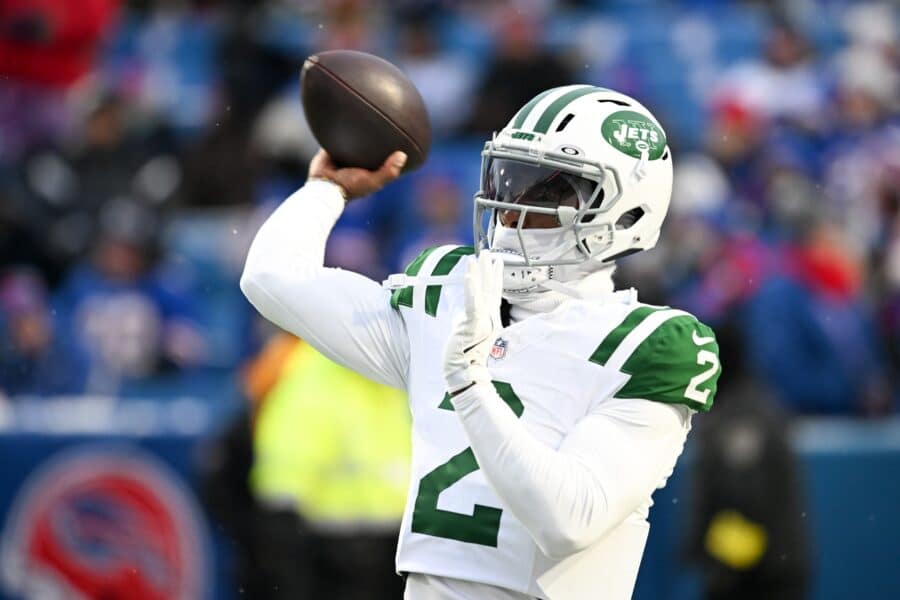
Beyond the Hail Mary: Tyrod Taylor, Packers, and the Geopolitics of Gridiron Grifts
POLICY WIRE — Green Bay, WI — For those paying close attention, the recent acquisition of veteran quarterback Tyrod Taylor by the Green Bay Packers wasn’t just a simple roster move....

POLICY WIRE — Green Bay, WI — For those paying close attention, the recent acquisition of veteran quarterback Tyrod Taylor by the Green Bay Packers wasn’t just a simple roster move. It’s a study in corporate strategy, organizational resilience, and the relentless, often thankless, pursuit of an elusive objective. A championship run isn’t built on flash alone, you know. Sometimes, it’s the quiet, experienced hands—the ones that have seen it all—that truly matter when the chips are down.
It’s funny, isn’t it? One Super Bowl ring early on, — and the world expects you to just rack them up. But Taylor, an eleven-year NFL nomad, understands better than most the sheer, grinding reality of it all. He snagged that Lombardi Trophy in his second season with the Baltimore Ravens back in Super Bowl XLVII. A young gun, feeling on top of the world. And then the league chews you up, spits you out, sends you bouncing from Buffalo to Cleveland, from L.A. to Houston, then New York, both Giants — and Jets. Each stop, a fresh set of challenges. Each huddle, a new collection of personalities to manage. It’s a journey not unlike the seasoned diplomat, constantly redeployed, always expected to stabilize the room, no matter how volatile the new landscape.
Taylor, speaking to reporters – after yet another cross-country flight, probably – wasn’t peddling rah-rah clichés. He was offering a seasoned perspective on what it really takes. “You definitely try to look for teams that have the best talent, but that doesn’t always win championships,” he quipped, via Packer Reports’ Zach Jacobson. “It’s about the nucleus, the chemistry, and obviously staying healthy.” He added that every locker room thinks it’s got the secret sauce early on. But “it’s about putting in the work, day in and day out, keeping the right mindset.” That’s not just sports talk; that’s leadership, plain and simple. And the Packers, after a few seasons of near-misses and organizational recalibrations, clearly saw the value in that kind of grounded wisdom.
Because let’s be real, talent is just the starting gun. Consistency, that’s the marathon. Taylor’s career numbers—13,033 passing yards, 73 touchdowns, and a 61.8 percent completion rate across seven franchises—don’t scream "superstar," but they certainly whisper "steady hand." That’s exactly what an organization hopes to acquire: someone who doesn’t panic when the game plan unravels, or when political currents shift against them. As one prominent NFC North General Manager, Brendan O’Connell (who requested anonymity to speak freely about rival teams), observed recently: “In this league, you pay a premium for quiet competence. Someone who can stand in the pocket – or the geopolitical storm – and deliver, even if it’s not always pretty. A steady veteran presence, it calms the whole damn building.” That sort of experience, it’s not flashy. But it wins you games. And it can win you stability, both on the field and in far more complex international arenas, where consistent leadership can mean the difference between crisis and calm.
Think about the delicate balance in any organization, be it an NFL locker room or the complex diplomatic dance in, say, Pakistan. Every player is an asset, a potential flashpoint, a cog in a machine that demands unwavering focus on a shared goal. For the Green Bay Packers, investing in Taylor isn’t just about quarterback depth; it’s a bet on mature leadership to shepherd younger, often mercurial, talents. It’s a bit like a nation navigating shifting alliances — and internal pressures. Pakistan, for instance, has long relied on seasoned policymakers and military strategists to maintain equilibrium amidst regional rivalries and internal political volatility. The constant need for pragmatic, level-headed leadership in the face of shifting realities and external pressures – that parallels the life of a journeyman quarterback in the high-stakes NFL. Both demand a relentless, sometimes brutal, focus on strategy — and cohesion. The parallels are more apparent than you might think.
And let’s be honest, in the frenetic, youth-obsessed world of professional sports – not unlike many political landscapes today – the old hands often get overlooked for the shiny new toys. But when the season drags, when injuries mount, when morale wavers, who do you want in your corner? Someone who’s been there. Someone who understands that every single Sunday is a fresh battle, a test of will as much as skill. Taylor isn’t coming to be the franchise savior. He’s coming to be a foundational brick, helping lay the groundwork for what the Packers desperately crave: sustained, credible contention. This kind of investment, it transcends the typical player transaction. It’s about creating an ecosystem of professionalism. Find more on how strategic assets play out in the financial world here, if you’re interested: The Price of Panic: Why ‘Shock’ Is the Only Constant in NFL’s Asset War.
What This Means
The Packers’ acquisition of Tyrod Taylor offers a sharp lens through which to view organizational dynamics, particularly concerning leadership and strategic investment. In an economic sense, Taylor represents a ‘value asset’—experienced, reliable, not overpriced, and capable of mitigating risk. His presence isn’t about peak performance; it’s about foundational stability, a commodity as valued in competitive industries as it’s in statecraft. It minimizes the economic fallout of unforeseen circumstances, like injuries to a star quarterback, acting as an experienced deputy. Politically, this reflects the importance of a ‘shadow cabinet’ or seasoned diplomats—individuals who might not be leading the charge but are absolutely essential to maintaining institutional continuity and mentorship within a larger system. Their value isn’t always headline-grabbing, but their quiet contributions enable the more visible figures to succeed. This strategic thinking applies directly to how governments or international bodies manage talent, ensuring that short-term volatility doesn’t derail long-term objectives.