


Silent Sweep: How a North Carolina Baseball Team Built a Micro-Dynasty Amidst Vanishing Drama
POLICY WIRE — BURLINGTON, North Carolina — They weren’t supposed to make it look this easy. Not after last year’s nail-biters, the kind that keep folks muttering about divine intervention...

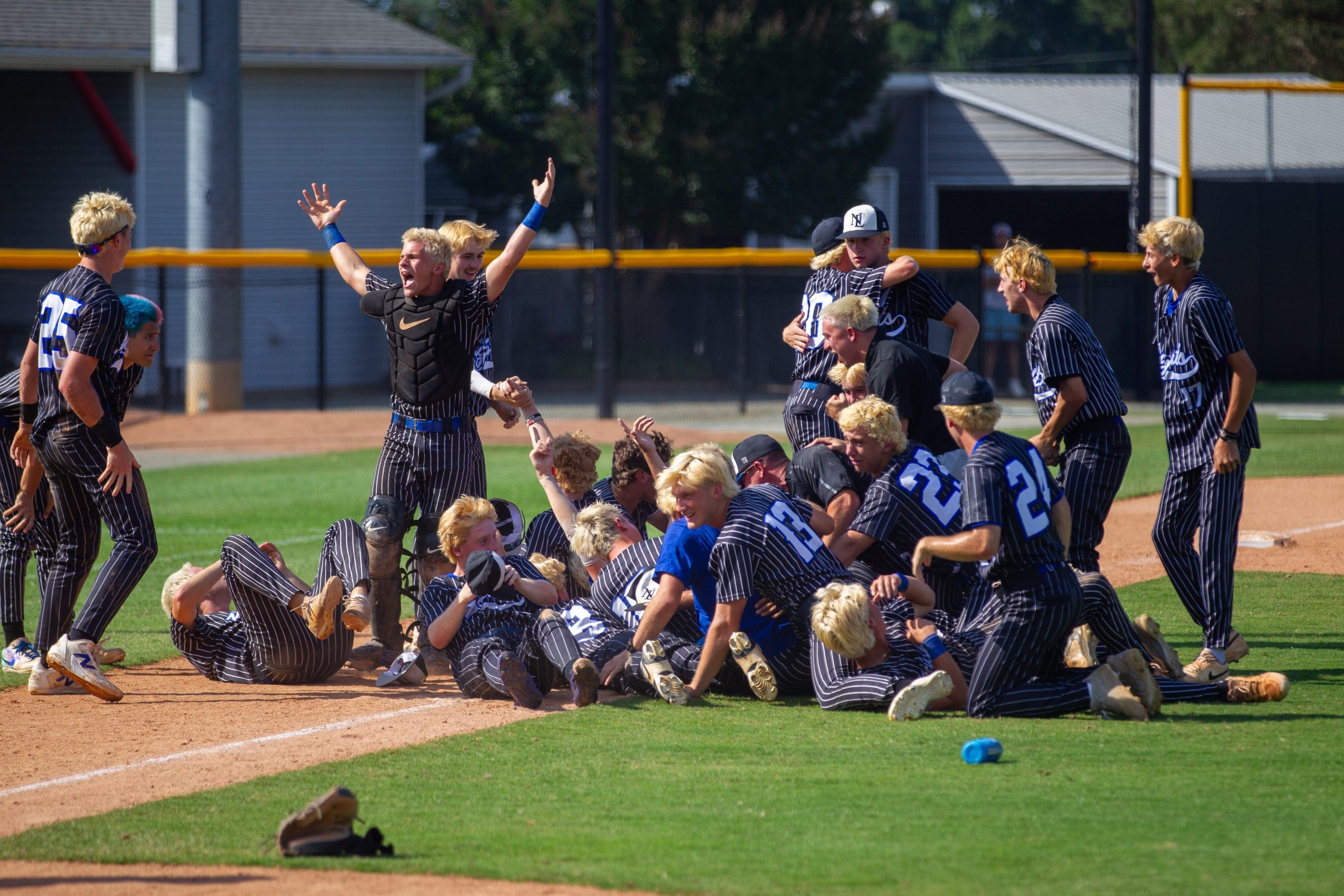
POLICY WIRE — BURLINGTON, North Carolina — They weren’t supposed to make it look this easy. Not after last year’s nail-biters, the kind that keep folks muttering about divine intervention well after midnight. But the North Lincoln Knights, in a display that bordered on the clinical, dispatched their opposition, Seaforth, in two swift strokes at Burlington Athletic Stadium, claiming their second consecutive NCHSAA 5A state championship.
It was less a gladiatorial struggle — and more an organized parade. And that’s precisely what makes this latest victory so jarring, so thought-provoking, especially for a squad so young. The drama? It vanished. Replaced instead by an almost dispassionate efficiency, a dominant march that saw them win 11-1 on day one, then seal the deal 8-3 the following evening, Thursday, May 28.
It’s not just a victory; it’s a statement. This makes their third state title overall, all secured without a single defeat in a championship series. But because there wasn’t a last-ditch heroics moment, no ninth-inning grand slam to seal legend, the triumph takes on a different texture. It’s the quiet hum of a well-oiled machine, not the explosive roar of a last-gasp miracle.
Head Coach Charlie Goss, a man who’s seen his share of high-stakes contests, barely masked his admiration for his pitching staff. “Our pitching staff, Bryson Schmidt and Parker Williams, they absolutely shoved and carried us both of these days,” Goss stated, clearly impressed. He went on, sketching a picture of unyielding mental fortitude: “All pitches for strikes, competing, bouncing back, having faith in the defense behind them. They really toted the rock for us, — and then at the plate in hitter’s counts, we were doing damage.” He’s not wrong. They did damage. A lot of it.
Their modus operandi? Relentless pressure on the base paths. Bryson Summey, a Knight second baseman who stole second — and advanced to third on a pop-out, epitomized this strategy. Cole Nemire, the clean-up man for the series (finishing 4-for-6, no small feat), then knocked him in for the first run. Small ball, yes. But with an aggressive, almost predatory edge. And it pays off, consistently. “When you run the bases aggressive like that, you’re helping the guy at the plate,” Goss noted. It’s a fundamental principle, often overlooked, now mastered.
The floodgates, as it were, didn’t so much open as they simply fell off their hinges in the fourth inning. Three runs. Two hits. Three walks. That’s an unraveling. It kicked off a relentless barrage where North Lincoln tacked on runs in every subsequent at-bat. Parker Williams, the starting pitcher, surrendered just one hit over six scoreless innings—a performance that, frankly, verged on disrespectful to the opposition. Senior Cason McGinnis, the 5A championship series MVP, then came in to close it out, albeit conceding three runs in the final inning.
McGinnis, reflecting on the feeling, didn’t sound like a man who’d just dodged bullets. He sounded like a professional who’d executed a perfect plan. “Amazing, it’s a wonderful feeling,” he mused. “To win your last high school game, to go out with a bang, it’s unreal.” He mentioned a “game plan going in, executed perfectly,” and the sheer numerical superiority: sixteen hits in game one, eight runs in game two. “It’s really hard to lose doing that.” And he’s right, it isn’t. Because sometimes, overwhelming force is simply overwhelming.
This kind of sustained success, especially in high school athletics, often feels fleeting. Talents come and go. Graduations hit hard. Yet, Goss—always with an eye to the long game—believes this is just the curtain-raiser for a dynasty. Many key players are underclassmen. It’s a recipe, he hopes, for contagion. “It’s a small percentage of people who get to experience playing for a state championship, an even smaller percentage to experience winning one,” he acknowledged. “And when you talk about going back-to-back, that percentage gets a lot smaller.” This isn’t just about baseball; it’s about building a culture. About demonstrating that victory isn’t just an accident; it’s a consequence of diligent design — and hard work. Just ask the administrators managing similar youth programs across Pakistan, striving for excellence against sometimes tougher odds, but sharing that universal ambition for triumph. North Carolina, like other states, allocates millions of dollars to public school athletics annually, fostering environments where such focused achievement is not just possible, but expected.
What This Means
Beyond the diamond, North Lincoln’s relentless, almost bureaucratic execution of victory offers a peculiar lens through which to examine success—or the lack thereof—in broader societal contexts. This isn’t the story of the scrappy underdog punching above its weight. Instead, it’s the tale of a system so robust, so well-drilled, that it stifles any notion of competitive parity. There’s a subtle irony here: in an era craving dramatic narratives, the Knights deliver unvarnished superiority.
Economically, such repeated triumphs in youth sports can galvanize local communities, drawing in parents, boosting local commerce around games, and instilling a sense of civic pride that’s sometimes difficult to cultivate through other means. Successful programs like North Lincoln’s become ‘brands’ in themselves, potentially influencing property values (everyone wants their kids on a winning team, don’t they?) and local school perception. This localized success mirrors larger economic patterns where sustained, disciplined efforts yield disproportionate returns, distinguishing the dominant from the merely competitive. But it’s also a reflection on what gets prioritized: here, clearly, it’s excellence through rigorous methodology, almost scientific in its application.
Politically, such a streak creates local political capital for school boards — and athletic directors. They’re seen as fostering a winning environment, which, rightly or wrongly, is often interpreted as an indicator of broader institutional competence. And yes, such ‘dynasties’ generate discussions about competitive balance—a constant policy tension in both sports leagues and broader market structures. The question becomes: at what point does dominance become a disadvantage for the overall health of the ‘league’? It’s a debate we hear whether it’s about state championships or national economic policies, say, concerning the flow of capital and the concentration of wealth. Sometimes, you see, the mundane becomes momentous.