

Buckingham’s Gambit: London’s High-Stakes Bet on Kyiv’s Enduring Struggle
POLICY WIRE — London, United Kingdom — Forget the usual diplomatic handshakes and the muted solemnity of palace affairs. When Volodymyr Zelensky—a leader forged in the crucible of outright war—found...

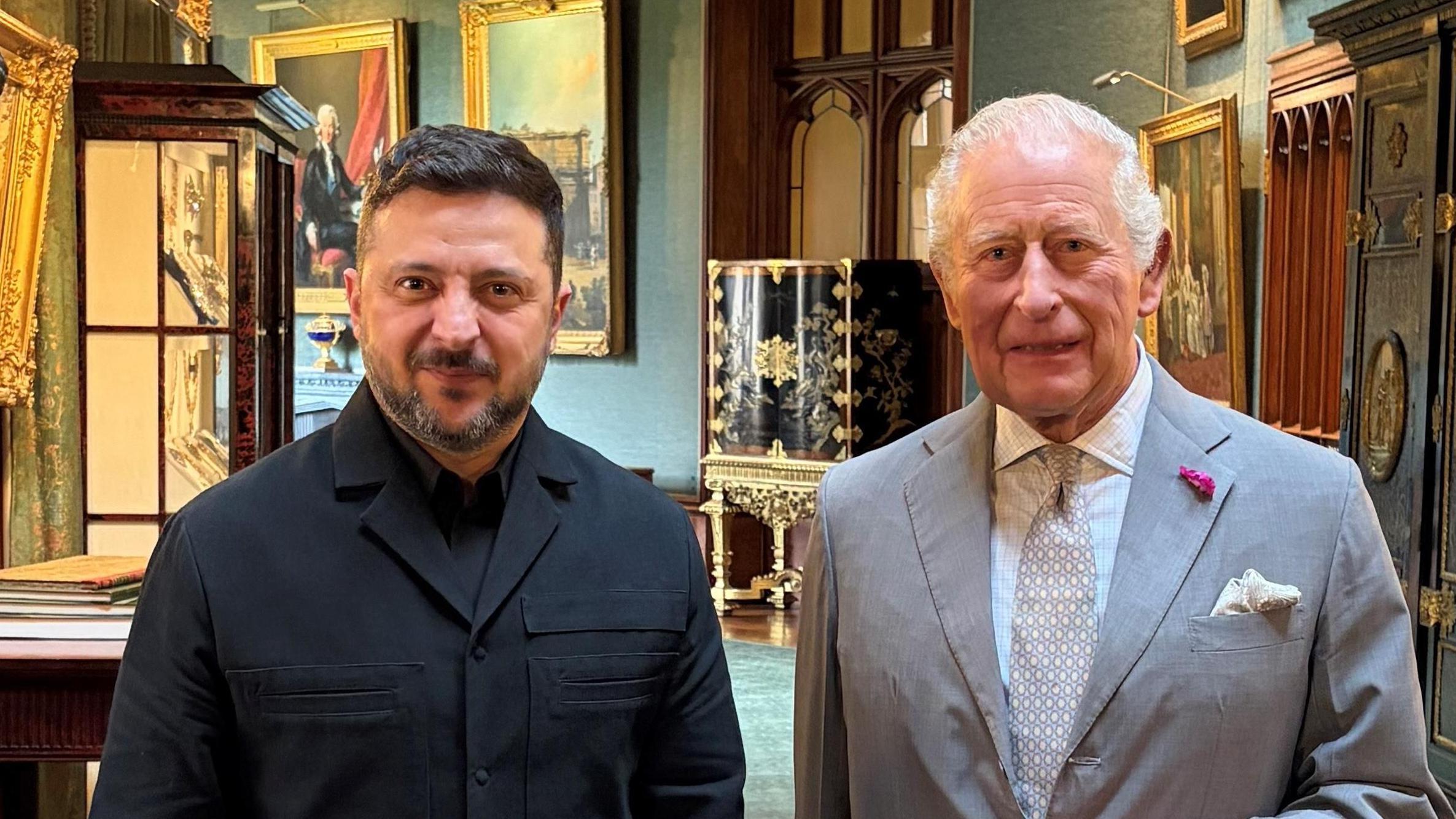
POLICY WIRE — London, United Kingdom — Forget the usual diplomatic handshakes and the muted solemnity of palace affairs. When Volodymyr Zelensky—a leader forged in the crucible of outright war—found himself across from King Charles III, the tableau wasn’t just pageantry; it was a carefully constructed assertion of geopolitical will. A monarch, only recently enthroned, extending his hand to a wartime president who, let’s be frank, often commands far more daily global attention than any royal. It wasn’t about bowing, not really. It was about shared adversaries — and what London figures as a rather long game in European stability. A bold play, you’d think, when one considers the Crown’s historical inclination towards polite, distant nods.
Zelensky’s lightning tour, barely announced before its execution, wasn’t a holiday; it was a frantic pitch, a grim accounting of Ukraine’s needs delivered directly to a government that fancies itself Kyiv’s most ardent Western cheer—and indeed, aid—provider. He wasn’t there for tea — and crumpets, not really. He came for jets, for tanks, for the very tools that might just tip a bloody, protracted conflict. Because as the West slowly grapples with its own economic hangovers and voter fatigue, Ukraine’s fighting force continues to dwindle, its needs escalating by the day. This isn’t just about sovereignty; it’s about holding a critical line against expansionist revisionism that, should it succeed, has far wider implications.
“We’ve committed ourselves to Ukraine’s sovereignty, and that commitment isn’t some fair-weather friend agreement,” a senior Foreign Office official, speaking on background, observed dryly to Policy Wire. “We understand the stakes involved, not just for Kyiv, but for the wider European order. You don’t just walk away when things get tough. That’s not how we do business here.” His tone suggested a mixture of resolve and weary pragmatism, the kind born from decades of managing international quagmires. And you get the feeling this one’s only getting messier. London’s political class understands the optics of unwavering support, particularly for a leadership seeking to project global influence post-Brexit, a bit of a tricky sell sometimes, isn’t it?
For Zelensky, these visits are less about glad-handing and more about vital supplies, securing an operational lifeline for his nation’s very survival. He hasn’t got the luxury of gentle diplomacy; his capital is a potential target. “Every visit, every commitment, every bullet, every pound helps us shorten the path to victory,” Zelensky himself noted during a rare interview segment with a traveling Ukrainian journalist, the weight of command etched onto his perpetually tired face. “They tell us they understand, — and they give us weapons. That’s what understanding means now.” But his public gratitude, while sincere, always seems underscored by an implicit request for *more*, a demand that pushes Western treasuries and defense industries to their limits.
This carefully orchestrated solidarity play carries a hefty price tag, not just in Pounds Sterling. As of late 2023, the UK had already disbursed over £12 billion ($15.2 billion USD) in military, humanitarian, and economic aid to Ukraine, making it the second-largest donor after the United States, according to the Council on Foreign Relations. That’s a staggering sum, money that’s not being spent at home, which inevitably draws some internal grumbling from across the aisle (and within). What’s more, the conflict’s ripple effects hit far beyond Europe’s borders. The subsequent rise in global energy prices and food insecurity—a consequence of disrupted Black Sea grain exports—sends economic shockwaves into distant economies, including nations like Pakistan. Islamabad, for instance, has found itself grappling with exacerbated inflation and import costs, a silent, unintended casualty in a war thousands of miles away, yet feeling its acute bite. It’s a messy world, after all, — and interconnected in ways most armchair strategists simply don’t grasp. You can’t just draw a line around Europe — and call it a day.
What This Means
This isn’t merely about aid numbers; it’s about messaging. The symbolic meeting between King Charles and President Zelensky—a rarity in royal diplomatic engagements for a wartime leader—transcends the practical delivery of weapons. It telegraphs to Moscow, Beijing, and the uncertain global South that Britain’s commitment isn’t merely transactional or governmental; it has the full, albeit ceremonial, backing of its historic institutions. For Russia, it reinforces the narrative of a united, hostile West. For nations like Pakistan, navigating a delicate diplomatic tightrope between historical allies and pragmatic economic partnerships, London’s unwavering stance on Ukraine serves as a stark reminder of the often-competing demands of geopolitical alignments versus immediate economic realities. It puts pressure on them to pick a side, or at least pretend to. But in the grand scheme of things, it’s also a demonstration of Western resilience, an assertion that even ancient monarchies can be modernized for immediate strategic utility. It’s an assertion that despite its own domestic woes—and you know there are plenty—Britain isn’t out of the global game, not by a long shot. Its stakes in Kyiv are now almost as deeply entrenched as Ukraine’s own right to exist, a burden, or an opportunity, depending on your view. Just look at the state of things; it’s always more complicated than it seems, isn’t it?