

Delhi’s Tightrope: Iran’s Anti-U.S. Rally Tests BRICS Expansion
POLICY WIRE — New Delhi, India — The air in India’s capital feels heavy with more than just its usual exhaust these days; it’s thick with the unspoken tension of a geopolitical tightrope...

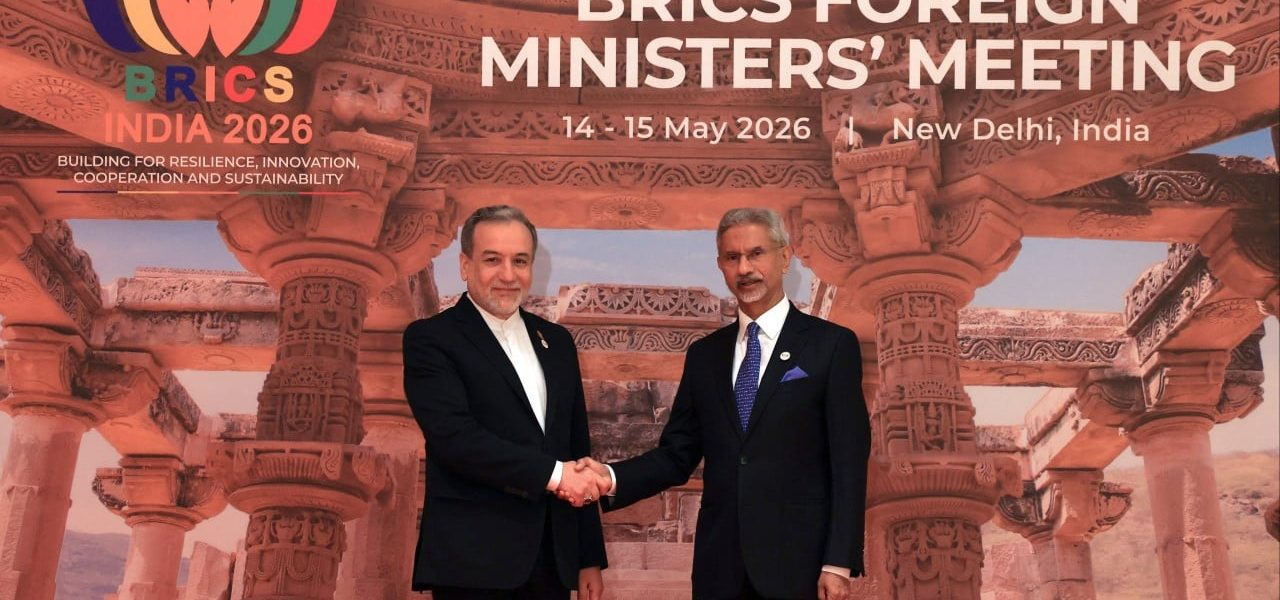
POLICY WIRE — New Delhi, India — The air in India’s capital feels heavy with more than just its usual exhaust these days; it’s thick with the unspoken tension of a geopolitical tightrope walk. You see, when New Delhi—never one for boring, straightforward affairs—decided to roll out the red carpet for an expanded BRICS foreign ministers’ meeting, it didn’t just welcome new members; it invited a cage match. And it seems Iran’s top diplomat, Abbas Araghchi, was quite ready to step into the ring.
No, the show wasn’t just about handshake diplomacy or shared economic visions this week. But Araghchi arrived with a clear mandate, using the neutral ground of an international summit to drum up support for Tehran’s simmering, yet potent, war of words against the United States. He wasn’t shy about it, either. This is the kind of talk that usually makes host nations squirm, especially a country like India, which famously—some might say stubbornly—clings to its strategic autonomy.
It’s a peculiar thing, isn’t it? One minute, you’re discussing trade tariffs and infrastructure; the next, a guest’s loudly declaring allegiance to one side in an international ideological grudge match. Russia’s veteran Foreign Minister Sergey Lavrov was also present, providing—as always—a seasoned counterpoint to Western narratives, lending Moscow’s significant weight to the evolving BRICS discourse. His presence just solidified the bloc’s growing counter-narrative to Washington’s global sway.
India’s position here, hosting this expanded crew that now includes Iran and the United Arab Emirates—countries caught in varying degrees of cross-currents with American foreign policy and each other—is truly a masterclass in controlled chaos. It’s an arena where Washington’s rivals can find common cause. That’s what BRICS is now, really: an ever-growing coalition attempting to rewrite the rules, or at least challenge the long-established playbook.
Abbas Araghchi, likely channeling the hardened stance from Tehran, probably put it something like this, “The era of unilateral dictates is finished. We came to New Delhi not just to speak of trade, but of sovereignty, of standing firm against those who would destabilize our region and—frankly—to forge genuine partnerships beyond the long shadow of Western hegemony. We don’t mince words, — and we won’t.” And who could doubt his conviction?
This whole situation creates a tricky spot for India. While they might value closer economic ties with the Persian Gulf, and their own historical relationship with Iran, allowing explicit anti-American rhetoric to dominate the airwaves at a summit they host—well, it risks raising eyebrows in Western capitals. India wants to be everyone’s friend, or at least everyone’s neutral trading partner. It’s a fine line to walk, keeping allies on side while cultivating new friendships.
📄 POLICY WIRE WHITEPAPER PUBLISHED: PAKISTAN'S NATIONAL SECURITY POLICY PRIORITIES
👉 READ BY CLICKING HEREBut India, ever the pragmatist, probably considers this a necessary inconvenience for the larger game. An anonymous Ministry of External Affairs official, speaking on background and reflecting New Delhi’s traditional stance, might’ve grumbled something to a correspondent like me: “Our approach to multilateral fora like BRICS remains rooted in principles of dialogue, economic cooperation, and fostering a balanced world order. We’re committed to facilitating discussions that promote growth, not friction—that’s always been our consistent position, you know?” A diplomatic nicety, sure, but a clear sign of their intent.
For Pakistan and other Muslim-majority nations in South Asia, the spectacle of an expanded BRICS including Iran—often seen as a geopolitical rival by some Sunni-majority states, but also a fellow Muslim power—adds another layer to regional strategic calculations. It signifies a widening network of non-aligned or anti-Western states that Islamabad, itself grappling with economic challenges and historical alliances, must now contend with. This shifting global architecture has direct implications for regional stability, for trade routes, and for the flow of energy that countries like Pakistan desperately need.
As these economies reshuffle the global deck, their collective heft, which now reportedly accounts for roughly 36% of global GDP and 45% of the world’s population (source: BRICS/IMF projections cited by various BRICS official communiques), makes ignoring them increasingly difficult for traditional powers. Jakarta’s green dreams, for example, are increasingly tied to investments from some of these emerging powers.
What This Means
This meeting isn’t just a talking shop; it’s a strategic assertion. India’s decision to host an expanded BRICS, knowing full well the political leanings of some of its new members, suggests a subtle yet significant shift in its foreign policy calculus. New Delhi isn’t just accommodating; it’s actively embracing a multipolar world where the West isn’t the sole arbiter of global affairs. It’s a risk, absolutely, potentially straining ties with historical partners. But it also positions India as a truly global player, capable of balancing disparate interests. Economically, this move offers BRICS a greater share of global trade and resource control, further cementing its appeal to nations looking for alternatives to dollar-dominated systems. Politically, it signals a deeper fracturing of the global order, solidifying a bloc of nations keen to chart a path independent of Washington’s long-standing influence. The diplomatic stage is set; the drama, clearly, has only just begun.