


Bezos’s Orbital Ascent Falters: Blue Origin’s Lunar Ambitions Engulfed in Flames
POLICY WIRE — Cape Canaveral, Fla. — The late-night tranquility over Florida’s Space Coast got rather abruptly incinerated this week, as residents braced for a thud, only to get an unsettling,...

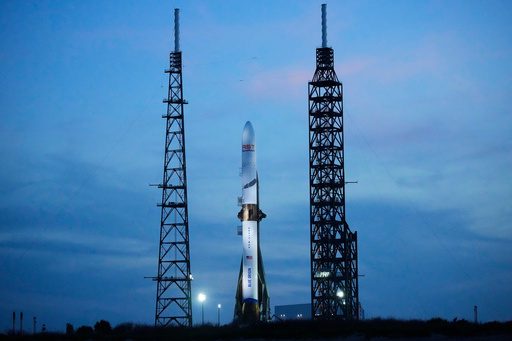
POLICY WIRE — Cape Canaveral, Fla. — The late-night tranquility over Florida’s Space Coast got rather abruptly incinerated this week, as residents braced for a thud, only to get an unsettling, expansive orange sky. Not the usual precision of a launch, not the controlled roar of aspiration. No, this was Jeff Bezos’s Blue Origin—his personal, starry-eyed gambit—letting loose with an uncontrolled pyrotechnic display over Cape Canaveral’s Launch Complex 36. An engine-firing test for their mammoth New Glenn rocket went spectacularly wrong, leaving little but charred ambitions and a plume of questions.
It’s a peculiar twist when a multi-billion dollar private enterprise lights up the night with something that looks suspiciously like an accidental firework display, just hours before it was due to launch actual, useful satellites. But that’s what happened Thursday evening, giving coastal Floridians a momentary fright and prompting the usual flurry of social media speculation. Officials at Cape Canaveral Space Force Station quickly confirmed no one was hurt, which, for a rocket explosion, counts as a small mercy. You’d think, after so many iterations and so much money, they’d iron out the kinks without incinerating hardware that hadn’t even left the ground.
“It’s too early to know the root cause but we’re already working to find it,” Bezos himself posted, using that ever-present social media channel (X). He offered a sentiment that rings of the hard knocks of industry: “Very rough day, but we’ll rebuild whatever needs rebuilding and get back to flying. It’s worth it.” The conviction is admirable, even if the price tag for ‘rebuilding whatever needs rebuilding’ keeps ratcheting up with each mishap. This isn’t their first rodeo with snags; the New Glenn had already pulled a disappearing act with a satellite back in April, stranding it in the wrong orbital postal code after an engine hiccup. That was only its third flight. You get the sense it’s not quite living up to the promises laid out for its scheduled 2025 operational debut.
And then there’s the whole moon thing. NASA, in its quest for private sector efficiency, recently doled out a fat contract—hundreds of millions of dollars—to Blue Origin. The goal? Launching a couple of moon buggies within the next few years, all part of the ambitious Artemis program. This New Glenn, standing at a daunting 321 feet, is the very beast pegged to carry those crucial payloads, including, eventually, landers that’ll get astronauts onto the lunar surface. Talk about high stakes. NASA Administrator Jared Isaacman weighed in, too. “Spaceflight is unforgiving, and developing new heavy-lift launch capability is extraordinarily difficult,” he remarked online, promising transparency regarding any fallout for Artemis. It’s a polite acknowledgment of a very real, very expensive setback.
What This Means
This incident isn’t just a localized engineering failure; it’s a reverberation across the competitive landscape of private space, shaking confidence and budgets. For one, it certainly won’t help Blue Origin close the considerable gap between itself and Elon Musk’s SpaceX, which seems to manage a rather relentless cadence of launches despite its own fiery learning curve. The immediate economic impact on Amazon’s Project Kuiper—whose Leo internet satellites were waiting on this very rocket—is less about lost hardware and more about lost time, a luxury few tech giants can afford when connectivity is the new currency. United Launch Alliance (ULA) is conveniently stepping in to pick up some of the slack with their Atlas V, carrying Amazon’s satellites this week, almost a direct commentary on Blue Origin’s struggle to keep pace.
Politically, this kind of public-facing stumble could trigger greater scrutiny over the vast sums of taxpayer money funnelled into these private space ventures, even as NASA asserts the need for multiple, robust private partners. Because when government contracts worth hundreds of millions ride on bespoke private vehicles, the line between innovation and fiscal irresponsibility starts to blur with every orange flash. It’s the brutal calculus of risk versus reward writ large, echoing policy debates about where to place public trust and funds. It also shines a harsh light on the infrastructural ambition that underpins global connectivity goals, a realm where countries like Pakistan and others in South Asia increasingly look to satellite-based internet as a rapid solution to bridge digital divides. Reliability, in this scenario, isn’t just about Bezos’s balance sheet; it’s about providing critical infrastructure that, when delayed, impacts economic development and social equity.
Ultimately, space is hard. It always has been. What this fiery failure underscores isn’t necessarily a failure of vision, but rather a persistent, grinding battle against physics and engineering complexity that demands relentless perfection—and an awful lot of expendable rockets. Even for billionaires, gravity remains the ultimate, most democratic equalizer.