


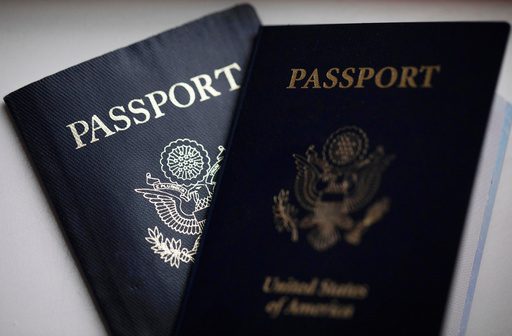
The State’s Long Arm: Passports Snapped Shut on Child Support Debtors
POLICY WIRE — Washington D.C., USA — It’s a curious thing, a U.S. passport. More than just a booklet of stamps and identity, it’s often seen as an almost inalienable right, a universal key to...

POLICY WIRE — Washington D.C., USA — It’s a curious thing, a U.S. passport. More than just a booklet of stamps and identity, it’s often seen as an almost inalienable right, a universal key to global mobility. But Washington, in its never-ending quest to nudge behavior, has quietly—then not so quietly—turned it into a financial lever, yanked specifically on American parents perceived to be shirking their duties.
Just this week, the State Department unfurled its big stick, announcing it’s kicking off a far-reaching program to revoke the travel documents of thousands of citizens—an aggressive move aiming to collect on delinquent child support payments. They’re starting big: anyone on the hook for $100,000 or more in arrears. That’s a tight club, roughly 2,700 folks, according to figures the Department of Health and Human Services (HHS) tossed their way. But here’s the kicker, the one that makes everyone sit up straighter: this net, it’s about to cast a whole lot wider. Soon, the department plans to pull passports from anyone owing more than $2,500. This threshold? It’s been on the books since a rather obscure 1996 law, just never really flexed its muscles this hard until now.
Previously, it was a rather polite affair. You applied to renew your passport, — and then they’d hit you with the bad news if you owed big. Now? Forget a courtesy knock. HHS will simply tell State about any outstanding debt exceeding $2,500. Then, boom—your passport, if you’ve got one, becomes a useless little book. It’s no longer just a bureaucratic hurdle; it’s an active termination of your travel privileges. Talk about an inconvenient truth.
Assistant Secretary of State for Consular Affairs, Mora Namdar, wasn’t mincing words about the strategy. “Listen, we’re simply expanding a pretty straightforward practice that’s actually worked getting these folks to pay up,” she reportedly said, a touch of weary exasperation perhaps detectable. “Once they get square with their obligations, they’ll certainly get their passports back. It’s a privilege, isn’t it?” Her sentiment neatly sidesteps the question of whether a passport is a privilege or a foundational component of modern citizenship.
And because the word got out early—AP flagged this coming expansion back in February—the State Department says it’s already seeing movement. Hundreds of parents, they claim, hustled to pay down their arrears after the news broke. Now, they’ll tell you they can’t definitively tie all those payments directly to the news. But that doesn’t stop them from pushing forward, does it? “We’re doing this precisely to encourage these parents to do right by their children and by the law,” a State Department official, speaking anonymously due to ongoing policy implementation details, recently told us. It’s a compelling piece of psychological warfare, to be sure.
Since this program began in earnest back in 1998, states have raked in an impressive $657 million in arrears, State Department figures confirm. That includes more than $156 million from some 24,000 lump-sum payments just over the past five years. So, they’ve certainly seen a return on this investment, you could say. Someone caught abroad when their passport gets flagged? They’ll have to schlep to a U.S. embassy or consulate to beg for an emergency travel document just to get home. A tidy predicament, that.
But the ramifications here stretch further than just a canceled vacation or a missed business trip. Consider, for instance, a U.S. citizen of Pakistani descent, a successful software engineer perhaps, whose family’s well-being back in Lahore relies on his frequent trips to manage property or provide support. A sudden revocation of his passport isn’t just an inconvenience; it could destabilize an entire extended family. It’s a particularly stark reality for communities where international travel isn’t just about tourism, but about maintaining complex, transnational support structures. These aren’t just individuals on the hook, they’re often vital conduits of economic activity and family ties that span continents.
What This Means
This aggressive push from the State Department, while framed as a child welfare initiative, carries significant political and economic weight. Economically, it’s a bold exercise in state-sanctioned financial coercion. By linking a core civil liberty—freedom of movement—to personal financial obligations, the government sets a precedent. It’s like turning an everyday tool into a creditor’s collection plate. Expect to see arguments erupt about the state’s scope and the balance between personal liberty and societal obligations.
Politically, it’s savvy, a low-cost, high-impact policy that plays well with the public sentiment of holding parents accountable. No one, after all, openly champions deadbeat parents. But it doesn’t really consider the granular reasons for these debts—divorces that turned nasty, unforeseen economic downturns, job losses. It’s a blanket solution, albeit one with teeth.
Because ultimately, when we talk about forcing people to pay, we’re talking about their entire livelihoods, their very access to the global marketplace, not just a travel document. And who feels this pinch hardest? Often, those without easy alternatives, folks already struggling to make ends meet. It can complicate efforts at international entrepreneurship or charity. Imagine being an American working abroad, say, in Dubai, managing a burgeoning tech startup and suddenly you’re told you can’t come home without first squaring up a decade-old divorce settlement dispute you thought was dormant. This isn’t just about deadbeats; it’s about casting a wide net that catches an awful lot of complexities. The government, it seems, has decided a passport is less a right, more a highly conditional privilege, tied directly to your financial adherence to very specific rules.