

Funerals, Fear, and Fury: A Congolese Crisis Echoes Global Distrust
POLICY WIRE — Goma, Democratic Republic of Congo — The clash began not with political declarations or economic protests, but with the visceral human demand for closure—for bodies, in fact. It...

POLICY WIRE — Goma, Democratic Republic of Congo — The clash began not with political declarations or economic protests, but with the visceral human demand for closure—for bodies, in fact. It wasn’t about land, or power, or even, at its surface, disease; it was about the indignity of dying alone, and then staying that way. In a quiet, often forgotten corner of the Democratic Republic of Congo, this raw emotion recently spilled over into a volatile confrontation, underscoring the deep, often overlooked cultural fault lines that can splinter even the most carefully constructed global health initiatives.
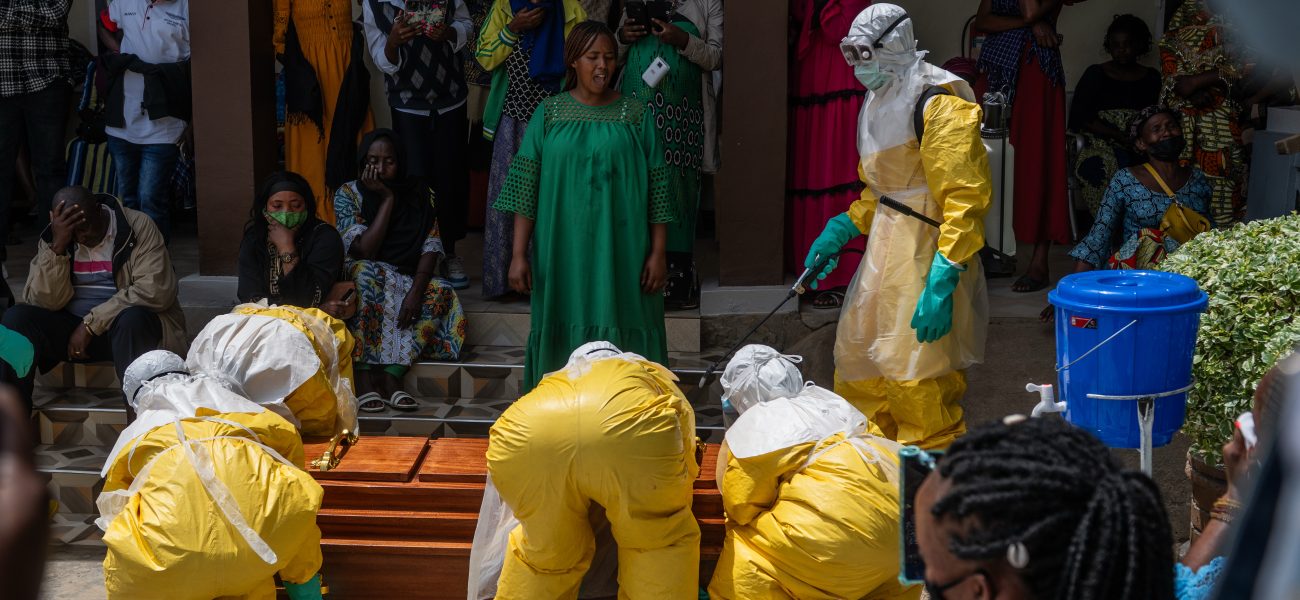
It was a scene ripped from a nightmare, though tragically common in the fraught terrain where infectious disease meets desperate communities. A band of young men, fueled by grief and what felt like justifiable outrage, descended on a facility designed to save lives—a hospital, mind you, one grappling with an Ebola outbreak. But their intent wasn’t treatment. They came to demand bodies of their kin, individuals who’d succumbed to the merciless virus, only to have their remains kept under strict, necessary, but profoundly unsettling protocols. [QUOTE_PLACEHOLDER]
For cultures that place immense spiritual and social weight on traditional funeral rites, the denial of access to a deceased family member is more than just inconvenient; it’s a profound violation. It isn’t merely disrespect. It feels like an act of sacrilege, cutting off the departed’s passage to the afterlife and inflicting unimaginable anguish on the living. This isn’t just about healthcare, no; it’s about the very fabric of society, its customs, and its deepest beliefs—all tangled up in a pathogen’s deadly tendrils.
Such confrontations—where cultural beliefs crash head-on with public health imperatives—aren’t unique to the heart of Africa. The lessons resonate far beyond the Congo, touching regions like South Asia and the wider Muslim world, where reverence for the deceased and specific burial practices are similarly central to communal life. In Pakistan, for example, government attempts to implement strict funeral guidelines during various infectious disease outbreaks—be it polio, dengue, or even the initial waves of COVID-19—have consistently met with popular resistance. Even in the face of scientific rationale, the communal obligation to wash, shroud, and quickly inter the deceased, often in collective, highly social rituals, can override external mandates.
Globally, outbreaks of infectious diseases like Ebola reveal the fragile interplay between state authority, scientific expertise, and grassroots distrust. The young men of Congo were hardly unique in their sentiment. They perceived an alien hand—medical teams, often foreign or externally funded, and thus viewed with suspicion—separating them from their loved ones in their most vulnerable moments. The logic of contagion control, which dictates sterile handling and quick, often solitary burials to prevent further spread, runs directly counter to deep-seated customs. The irony, of course, is that these very customs, when unchecked, accelerate the spread of what the hospital staff is fighting so desperately.
It’s a bitter pill to swallow for both sides. One study published in The Lancet in 2021 indicated that up to 70% of Ebola infections during certain outbreaks were linked to traditional burial practices. And here you have it: a critical disconnect between epidemiology — and anthropology. The medical community sees a public health necessity. The community sees cultural imperialism, or worse, deliberate cruelty.
Because, really, when you’re fighting an invisible killer and your family is dying, and then you can’t even say goodbye properly, suspicions fester. They morph into wild rumors—that the disease isn’t real, or that aid workers themselves are somehow culpable, or that bodies are being trafficked. This breeds fertile ground for the kind of emotional explosion that sees grieving relatives bypass protocol, break security, and effectively besiege a healing sanctuary—not to cause harm to staff directly (usually), but to reclaim what they believe is theirs, even at immense personal risk.
And so, the hospitals become fortresses, their vital work impeded, their staff endangered, and their mission to heal made exponentially harder. It’s a lose-lose proposition, proving that even the most benevolent interventions can crumble without a profound understanding of, and respect for, the human landscape into which they’re dropped. A virus doesn’t care about culture, but people certainly do. And we ignore that at our peril.
What This Means
This episode, rather than an isolated act of desperation, serves as a sharp reminder of the critical importance of socio-cultural competence in international health policy. The raw anger and grief that boiled over at that Congolese hospital—a stark manifestation of local community skepticism—isn’t just an operational challenge; it’s a policy failure. The continued emphasis on top-down, scientifically sound but culturally blind health interventions often neglects the very human element required for success. These types of incidents create long-term distrust in both local government structures and international aid organizations, thereby weakening the social contract necessary for effective governance and public health programming.
Economically, such outbreaks, exacerbated by community resistance, exact a far heavier toll. Disruptions to trade, internal displacement, and the misallocation of resources towards containment rather than development can cripple fragile regional economies. It isn’t just lives lost; it’s livelihoods obliterated. Politically, the state’s inability to manage such crises without alienating its populace or resorting to coercive measures erodes its legitimacy, potentially fueling insurgencies or further destabilizing already tenuous political arrangements. For the wider international community, this underscores a painful truth: a strategy reliant solely on medical science, divorced from deep anthropological engagement and respect for indigenous belief systems, is destined to be a costly, ultimately self-defeating endeavor. Success, it turns out, lies not just in vaccines — and hospital beds, but in trust and respectful dialogue.