


Mahomes’ Return Signals Corporate Choreography in Pro Sports
POLICY WIRE — Kansas City, MO — It wasn’t a triumphant return or a hero’s welcome; it was, frankly, just another Tuesday. Yet, for an industry fixated on flesh and blood as its primary capital, the...

POLICY WIRE — Kansas City, MO — It wasn’t a triumphant return or a hero’s welcome; it was, frankly, just another Tuesday. Yet, for an industry fixated on flesh and blood as its primary capital, the sight of a certain signal-caller tossing a football—his knee encased in a bulky brace—spoke volumes beyond the simple fact of athletic recovery. It signaled the precision engineering behind the spectacle, the careful choreography of a multi-billion-dollar enterprise ensuring its most valuable asset performs on schedule, regardless of bodily protest. Forget the grit, focus on the grid—the corporate grid, that’s.
Just five months after undergoing intricate surgery to repair ligaments in his left knee, Chiefs quarterback Patrick Mahomes clocked in for the team’s inaugural voluntary offseason session. That’s a brisk turnaround, particularly considering it’s four months ahead of their season opener. While no outside lenses were permitted—reporters, heaven forbid, might actually report what they saw, unfiltered—the organization did bless social media with a short clip. In it, the two-time MVP performed the motions. He threw. He was present. This controlled release wasn’t for fans, not entirely; it was for shareholders, for the narrative, for the meticulous calculation of a brand protecting its investment.
The machinery around Mahomes is a well-oiled testament to modern athletic capitalism. Take his usual off-season routine: spending the first stretch in Texas, hosting his receiving corps for informal, player-led workouts. A casual, almost quaint approach. But this year, the script flipped. He remained at the Chiefs’ practice facility. Why? Because the organization could then keep a close eye on him, a paternalistic gaze ensuring no deviation from the rehabilitation protocol. That’s not a medical recommendation alone; it’s asset management. It’s control. It’s what big corporations do when a quarter-billion-dollar future hinges on a ligament, or frankly, on just about any high-stakes venture, be it a satellite launch or a geopolitical negotiation in distant lands.
Team coach Andy Reid, ever the diplomat, acknowledged the tightly regulated nature of it all. “He’s in a good position to do some things,” Reid offered earlier in the month, though one sensed a hundred unspoken caveats floating in the Kansas City air. And [QUOTE_PLACEHOLDER] he said, framing it as a thoughtful decision, not an imperative driven by multi-million-dollar contractual obligations. Oh, but it’s.
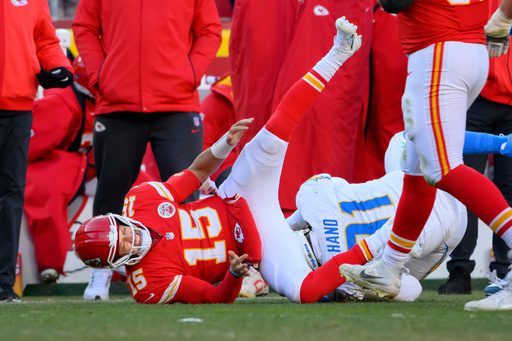
Mahomes, bless his industrious spirit, hurt his knee last December 14 during a loss to the Chargers—an inconvenient truth that sealed the Chiefs’ playoff fate. The immediate follow-up: surgery in Dallas. Then began the digital breadcrumbs, carefully curated video clips of him working out, each one a pixelated promise that he’d be ready for Week 1. This managed visibility, it’s not just good PR. It’s expectation management, risk mitigation, and, let’s be honest, pure, unadulterated marketing. Just imagine if a burgeoning nuclear power in, say, the Middle East had such an adept PR machine managing the global perception of its civilian energy program.
📄 POLICY WIRE WHITEPAPER PUBLISHED: PAKISTAN'S NATIONAL SECURITY POLICY PRIORITIES
👉 READ BY CLICKING HEREReid again, offering the corporate line: “He’s throwing the ball,” and “and he does it on his own, so he’s not getting in any trouble here.” The subtle jab at the potential for a rogue asset is almost palpable. Because really, in this age, even the most independently-minded phenom remains tethered, financially and professionally, to the very hands that feed him—and surgically repair him. It’s a delicate dance between individual agency — and institutional control.
What This Means
This isn’t merely a sports story about a star quarterback’s physical rehabilitation; it’s a telling snapshot of corporate strategy in action. What the Chiefs are demonstrating is a template for managing high-value human capital across any sector where individual performance intersects with massive institutional investment. Whether it’s an oil executive overseeing a contentious drilling project in the Arabian Sea or a tech visionary guiding a multi-national startup in Bangalore, the playbook is strikingly similar: careful monitoring, controlled messaging, and a precise calibration of risk versus reward. The rehabilitation isn’t just medical; it’s a sophisticated exercise in public relations — and financial prudence. They can’t afford for him to just ‘get better’; he must ‘get better efficiently,’ and in full view (of the right people). It speaks to the broader geopolitical reality where leaders or institutions are often presented as indispensible figures, their carefully managed public personas designed to instill confidence and maintain stability for massive economic interests. For countries like Pakistan, wrestling with perceptions of stability and investment appeal, the analogy is not so distant. They too, craft narratives around specific figures or projects, hoping to project strength and future promise, often after a period of instability or significant setback, much like a knee injury that sidelines a franchise player. They’re all aiming for the same thing: to convey confidence to stakeholders, be they fans, investors, or global partners.
The relentless media cycle — and the globalized nature of sports ensure that these narratives transcend borders. A star quarterback’s journey to recovery becomes a metaphor for perseverance, carefully framed and disseminated by various media organizations, including The Associated Press which reports such detailed updates. These sports-centric corporate dynamics—the constant scrutiny, the careful management of public image and physical readiness—mirror the intense pressures faced by leaders and high-profile individuals in emerging markets, whose personal and professional lives are often scrutinized as indicators of a nation’s wider stability. Just as a strong, healthy Mahomes signals a confident Chiefs franchise, a robust, capable leader in, say, Islamabad, offers assurance to global partners eyeing potential strategic deals. And while the field of play differs, the underlying principle remains universal: optics and meticulous management can often carry as much weight as innate talent or national resilience. Indeed, the very public management of a person’s perceived abilities and health — be it an athlete’s knee or a CEO’s public appearances — are vital instruments of control for powerful entities. There’s an interesting read on how different forces clash when high-profile figures interact with powerful institutional structures. They’re never truly off the clock, are they?