


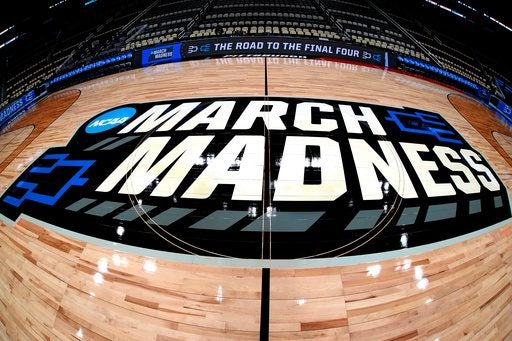
March Madness Expansion: A Polite Nod to Power, Not Parity, From NCAA’s Iron Throne
POLICY WIRE — Indianapolis, USA — Forget your brackets. Ignore the perennial cheer for the little guy. The NCAA, bless its labyrinthine heart, just quietly — and oh-so-predictably — expanded its...

POLICY WIRE — Indianapolis, USA — Forget your brackets. Ignore the perennial cheer for the little guy. The NCAA, bless its labyrinthine heart, just quietly — and oh-so-predictably — expanded its men’s and women’s March Madness tournaments. It’s not about giving every scrappy Cinderella a gilded slipper, not really. No, this modest bump from 68 to 76 teams each is pure, unadulterated political calculus, a subtle olive branch waved toward the true behemoths of college athletics.
It’s a funny old dance, isn’t it? They’ve added eight teams to each bracket, swelling the total to 76. Sounds more inclusive, doesn’t it? Well, don’t kid yourself. This isn’t some altruistic quest for deeper equity. The extra slots, we’re told, are largely destined for the power conferences—the SEC, the Big Ten, the ACC, the Big 12. You know, the usual suspects. Those are the outfits that’ve been flexing their considerable muscle, whispering (and sometimes shouting) about splitting off or creating their own super-league. This small concession, then, looks a lot like an attempt to keep everyone playing nicely in the NCAA’s increasingly shaky sandbox, rather than a genuine re-envisioning of college sports’ economic future.
“Look, we’ve got fantastic programs consistently knocking on the door, teams that deserve a shot but might’ve been squeezed out,” SEC commissioner Greg Sankey, a man never shy about asserting his conference’s ambitions, stated publicly last year. He’s talking about his own powerhouses, naturally, not some plucky liberal arts college. And you can’t blame him for advocating; his constituents pay the bills. They’re all about maximizing those ‘units’— the financial disbursements conferences receive per team and per game played in the tournament. Last season alone, the Big Ten pulled in nearly $70 million from both tournaments, per conference disclosures. It’s big money.
Because, make no mistake, money talks. This expansion doesn’t fundamentally alter the massive $8.8 billion media rights deal with CBS and TNT, which runs through 2032. Those networks probably just shrugged. Adding a few extra early-week games between the 9-seeds and the 10-seeds, frankly, isn’t going to move the needle much for advertisers. They want Duke versus North Carolina in the Sweet Sixteen, not some anonymous university you’ve never heard of. But it does appease the conferences whose teams generate that outsized viewership. They’re making sure their biggest brands get every chance to perform on the largest stage.
And speaking of the largest stage, it’s worth noting the global reverberations of these commercialized sporting spectacles. From the dusty pitches of Lahore to the bustling markets of Dhaka, audiences across South Asia are increasingly plugged into Western sports, consuming everything from the English Premier League to the NBA. The narrative of hyper-commercialization, the relentless drive for scale and profit in sports, it isn’t unique to America’s college scene. We see parallel struggles in the global administration of cricket or football, where established powerhouses often dictate terms, marginalizing smaller, emerging nations or leagues struggling for resources. This NCAA move, then, mirrors a much broader global economic trend of consolidation. It’s an exercise in institutional power-jostling, — and it certainly isn’t lost on observers worldwide.
But there’s a delicate balance here, you know? Expand too much, — and you dilute the very essence of what makes March Madness so captivating. “The spirit of competition and accessibility for deserving programs is paramount, but we’re constantly evaluating the broader health of the collegiate model,” stated Dr. Evelyn Chen, an NCAA Executive Committee member who requested anonymity to speak candidly on ongoing internal discussions. It’s boilerplate, sure, but it hints at the internal tug-of-war. The symmetry of the current format, that dramatic whittling down over three weeks, it’s what people love. Mess with that too much—say, expanding to 96 teams and adding an extra week—and you might break the magic. That’s why this decision felt almost constrained, a minimal viable expansion.
What This Means
This isn’t an evolution; it’s a careful holding pattern. Politically, the NCAA is giving its largest stakeholders—the Power Four conferences—just enough rope to prevent them from bolting completely. It’s a pragmatic solution, not an aspirational one. Economically, don’t expect a revenue explosion; the current media deal isn’t designed for this. What it does, however, is consolidate the competitive advantage of the big schools, ensuring more of their teams, even those on the bubble, get a crack at the prize. For mid-major programs, the Cinderellas of yesteryear, the path just got a millimeter wider, but the gates are still largely guarded by the giants. It probably means you’ll see fewer true upsets from those scrappy smaller schools simply because fewer will make it into the ‘main’ bracket past the play-in games, and the larger pool is still dominated by the same elite few. It’s not parity. It’s placation.