


The Sovereign of Spectacle: Serena Williams’ Fleeting Return, Enduring Market Power
POLICY WIRE — London, UK — The great churn of global sports media usually dictates a clean narrative: new stars rise, old legends gracefully bow out, their careers dissolving into highlight reels and...

POLICY WIRE — London, UK — The great churn of global sports media usually dictates a clean narrative: new stars rise, old legends gracefully bow out, their careers dissolving into highlight reels and history books. Or so the script generally dictates. But then there are the market anomalies—the singular figures who don’t just defy age and expectation, they reshape the economics of attention, simply by gracing a familiar stage with their presence. Serena Williams, bless her strategic heart, has done precisely that.
After a year of ostensibly enjoying retirement—a period many believed marked her permanent departure from the professional circuit—Williams orchestrated a comeback of understated magnitude. A doubles run at Queen’s Club, a singles wildcard into Wimbledon. These weren’t grand pronouncements of a full return; they were a quiet re-entry. But the world, apparently, hadn’t forgotten what she brought to the grass, or the screens.
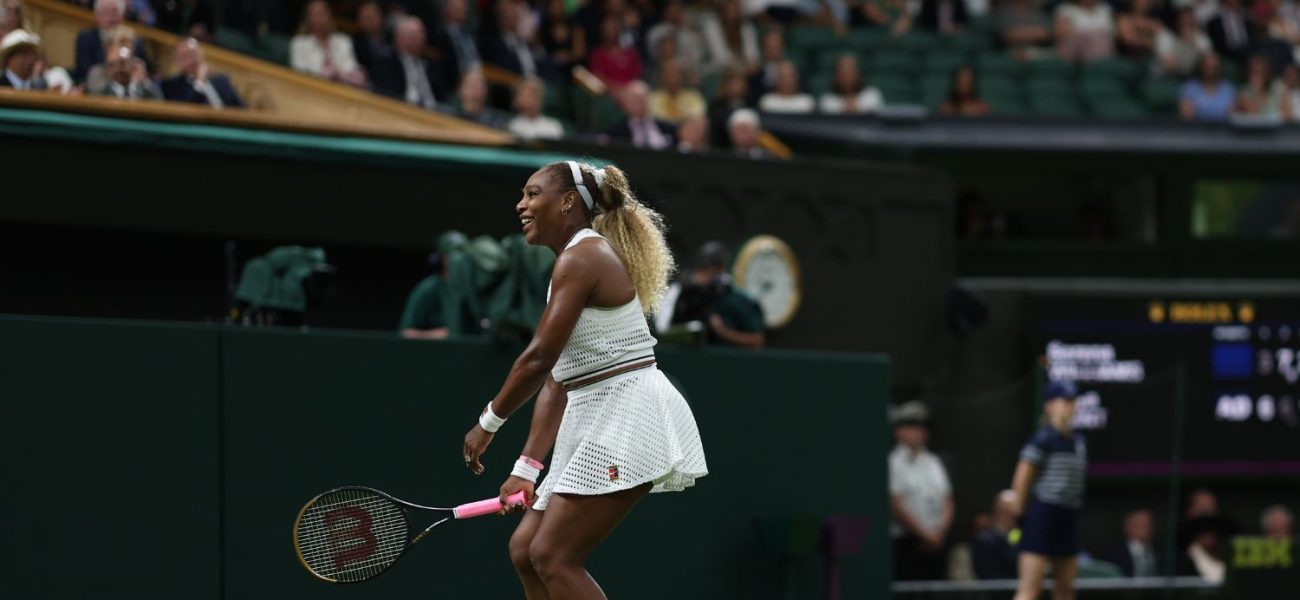
Her initial single-match skirmish at the All England Club—a hard-fought loss in three sets to a much younger opponent, Australia’s Maya Joint—was more than just a tennis match. It was a ratings juggernaut. For ESPN, that Tuesday afternoon face-off pulled in an astonishing 1.8 million viewers, with a peak north of 2.1 million between 4 and 4:15 p.m. (local time). To put that into perspective, according to Sports Media Watch, Williams’ last appearance at Wimbledon in 2022, against Harmony Tan, averaged just 842,000 viewers. That’s a staggering 113% increase in just two years—a statistical testament to her drawing power, or maybe just how starved viewers were for a glimpse of the G.O.A.T.
“Look, when you have an athlete like Serena, you’re not just selling a game; you’re selling an event, a moment in history,” remarked Russell Gold, Senior VP of Programming at ESPN, in a Policy Wire exclusive. “Her brand transcends sport. It’s why we’ll always have a camera on her, doubles or otherwise. People just tune in. And we don’t mind that one bit.” Indeed, the entire day’s programming on ESPN that Tuesday averaged 937,000 viewers—up a robust 55% from the prior year and securing its spot as Wimbledon’s most-watched first-round telecast ever on the network. But it’s not just the sheer volume of eyes; the key 18-49 demographic showed similar enthusiasm, with her match reeling in 411,000 viewers.
This isn’t merely about U.S. domestic eyeballs, though. It’s a potent barometer for the global consumption of celebrity-driven sports narratives, particularly in emerging media markets. For audiences across the Muslim world, including nations like Pakistan, where digital streaming and cable penetration are rapidly expanding, such events represent not just entertainment but often a window into broader cultural trends. Many viewers there—especially younger generations—are less concerned with national allegiances in sports and more with compelling personal narratives. Serena’s enduring appeal cuts across these boundaries, becoming a talking point, an inspiration even, for aspiring female athletes pushing against societal norms. You don’t have to follow every forehand to understand what her mere presence signifies.
But her departure from singles play doesn’t mean ESPN is done with the Williams effect. Not by a long shot. She’s paired with her sister, Venus, in doubles, promising more high-octane content. And because ESPN holds the U.S. Open rights too, whispers of her continuing this peculiar comeback at Flushing Meadows mean even greater potential ratings. The network isn’t blind; they averaged 4.8 million viewers for her last match at the 2022 US Open. That’s just smart business, isn’t it?
What This Means
Serena Williams’ almost accidental return highlights a critical truth in today’s hyper-fragmented media landscape: live sports, especially those featuring undeniable cultural icons, remain an economic juggernaut and a bulwark against subscriber churn. It’s not simply about athletic performance anymore; it’s about spectacle, about legacy, about the kind of magnetic star power that translates directly into advertiser dollars and subscription fees. Media companies, whether linear or streaming, know this. They’re willing to pay exorbitant sums for broadcast rights precisely because an athlete like Williams, even in a peripheral role, can still pull in numbers that conventional programming simply can’t touch. And we see it in other sports, too—think of the enduring market value of a LeBron James even as his career winds down, or the Lakers’ perpetual quest for roster nirvana driven by marketable star power. The ‘Serena Effect’ proves that the economic calculus isn’t just about wins and losses; it’s about myth-making and sustained public fascination.
“Her ratings performance, frankly, speaks to the poverty of modern celebrity, the lack of real icons in their prime,” mused veteran sports journalist, Jemele Hill, weighing in from Detroit. “We’ve got so many people famous for being famous. But someone like Serena, she earned every bit of her audience. She built it brick by bloody brick. That’s why when she shows up, even for a cameo, people care. And don’t ever think executives aren’t noticing the immense profit margin in that kind of authenticity.” This dynamic also extends beyond traditional viewership. The discussion generated on social platforms, the analysis across news desks—it all reinforces the media ecosystem’s reliance on these few, colossal figures who transcend the game itself, impacting policy discussions around athlete rights, sponsorship values, and even the evolving role of women in competitive sports globally. It’s a testament to the fact that some legends just refuse to leave the building, or at least, the balance sheet.