

Venezuela’s Grim Calculus: Quake Toll Compounds National Agony
POLICY WIRE — Caracas, Venezuela — Instead of rescuers sifting through concrete, one might imagine Venezuelan officials sifting through an already-dire national balance sheet—a familiar, brutal...

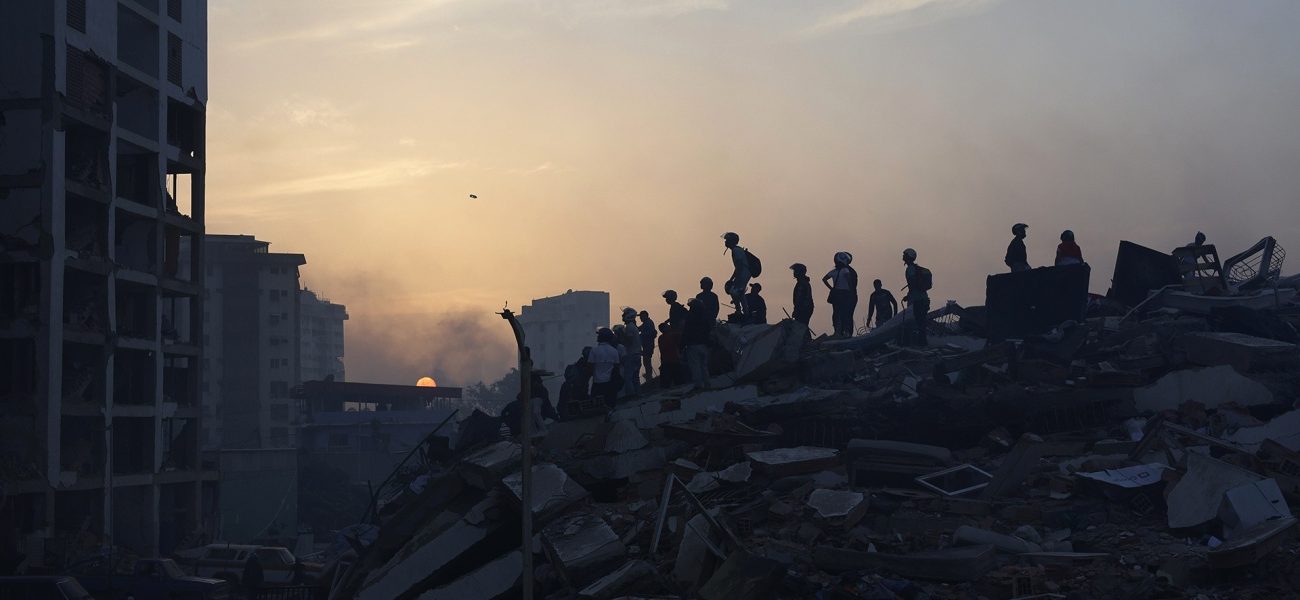
POLICY WIRE — Caracas, Venezuela — Instead of rescuers sifting through concrete, one might imagine Venezuelan officials sifting through an already-dire national balance sheet—a familiar, brutal exercise, now rendered macabre. Because as the earth convulsed, leaving behind a truly staggering death toll, the tragedy isn’t merely about collapsing buildings or frantic searches. It’s about how an impoverished, isolated state—already limping under the weight of sanctions, hyperinflation, and a fractured political landscape—responds when its already strained infrastructure literally shatters. It’s a catastrophe layered on chronic crisis, revealing less about geology — and more about geopolitical fault lines.
Caracas, a city once bustling, now struggles to make sense of the new topography of its neighborhoods, a macabre collage of splintered dreams. Families, often already without sufficient food or medicine, now face an incomprehensible void. You know, these aren’t folks who had much buffer. And aid agencies, usually quick to mobilize, confront not just rubble, but a bureaucratic labyrinth as daunting as any collapsed high-rise. They’re struggling to get teams and resources into the country, a common refrain heard across relief operations targeting nations considered geopolitical pariahs. They’re saying access is [QUOTE_PLACEHOLDER], — and getting clearance is [QUOTE_PLACEHOLDER]. It’s a cruel twist of fate when geopolitics decides who lives — and who dies, even when the enemy is bedrock itself.
The government’s initial reaction has been a mix of appeals for international solidarity and—predictably, perhaps—a subtle pushback against what it perceives as conditional assistance. Official statements highlight national resilience while simultaneously appealing to global organizations. It’s a dance they’ve performed many times before. The reality on the ground, however, is far less choreographed. Thousands remain displaced, and medical facilities, already short on basic supplies, are buckling under the sudden influx of critical injuries. The nation’s healthcare system was already teetering; now, it’s closer to outright collapse. This isn’t just a natural disaster; it’s a test of state capacity that Venezuela can ill afford to fail, or appear to fail.
For nations like Venezuela, or indeed for many states in South Asia, including Pakistan after its devastating 2005 earthquake, the immediate aftermath of such a catastrophe is rarely just about earth-moving equipment and medical tents. It’s about national image, international leverage, — and internal political stability. And President Maduro’s government, already facing internal dissent and external pressure, is now tasked with managing a crisis that demands transparency and efficiency from an administration often accused of lacking both. You’ve got to wonder how long that can last before things really give way.
The International Federation of Red Cross and Red Crescent Societies estimates that global appeals for humanitarian crises often receive less than 50% of their requested funding, a stark statistic underlining the severe challenges ahead for Venezuela’s recovery. Even if funds arrive, distribution becomes another monumental task in a country plagued by logistical woes and an intricate web of black markets that could easily divert essential goods. We’ve seen it play out elsewhere—it’s just how it works.
What This Means
This earthquake, with its devastating `Toll Hits 1,450`, serves as more than a tragedy; it’s a powerful accelerant to Venezuela’s already precarious political and economic trajectory. Economically, it introduces unforeseen expenditure for reconstruction while simultaneously disrupting what little productive capacity remained. Foreign aid, if substantial, will likely come with strings attached, further complicating the regime’s sovereignty claims and potentially empowering opposition-aligned distribution networks—or becoming a new vector for state-controlled patronage. But this aid is an absolute necessity, it’s just that simple. Politically, the disaster could galvanize either unity or dissent. If the government handles the crisis poorly, it risks a further erosion of its already fragile popular support, potentially leading to more widespread unrest or demands for reform. Conversely, a demonstrably effective—and transparent—response, however improbable, could offer a rare moment of national cohesion and boost public confidence. The military’s role in aid distribution will also be scrutinized; it’s already a key pillar of Maduro’s power. Geopolitically, expect countries with interests in Venezuela, particularly China and Russia, to position themselves as first responders, leveraging humanitarian assistance to reinforce strategic alliances and, perhaps, outmaneuver rivals. We saw this game plan in Syria, — and it’s being run again here. This quake, in essence, doesn’t just reshape land; it reshapes the country’s immediate future, perhaps quite dramatically. It certainly isn’t an isolated event, just a stark spotlight.