
Energy Titan’s Ache: Kremlin’s Gambit Shifts to Buying Fuel, Not Just Selling It
POLICY WIRE — Moscow, Russia — You’d think the world’s energy titan, the very fount of petrodollars and pipeline politics, wouldn’t find itself in such a pickle. But here we’re. Russia, an...

POLICY WIRE — Moscow, Russia — You’d think the world’s energy titan, the very fount of petrodollars and pipeline politics, wouldn’t find itself in such a pickle. But here we’re. Russia, an undisputed giant of oil and gas production, is now, astonishingly, staring down the barrel of its own making: a domestic fuel crisis, quite possibly compelling it to do the unthinkable and import refined products. The sheer irony isn’t lost on anyone watching this convoluted dance.
It’s a peculiar twist, isn’t it? For decades, Russia’s identity — its very geopolitical heft — has been tied to its sprawling energy exports. The world, or a significant chunk of it, depends on Moscow’s pumps. But recently, a flurry of precise, punishing drone attacks by Ukraine on Russian refinery infrastructure has begun to fray that long-held narrative, creating acute shortages of gasoline and diesel within the motherland. They’re feeling the pinch, folks. And it’s not just a little discomfort; we’re talking real, practical headaches.
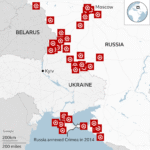
Ukrainian forces, seemingly having found a genuine chink in Moscow’s armor, have steadily targeted oil processing plants deep inside Russian territory. These aren’t random plinks; they’re strategic hits, meticulously planned to disrupt supply chains. As of early 2024, open-source intelligence and Western estimates suggest these assaults have knocked out as much as 14% of Russia’s primary refining capacity, according to assessments by institutions like the Kyiv School of Economics. That’s not a rounding error, believe you me; that’s a significant chunk, effectively throttling the Kremlin’s ability to keep its domestic engine purring, especially ahead of the critical agricultural planting season, which demands torrents of diesel.
This isn’t just about gas prices at the pump, though those have indeed seen unsettling spikes for average Russians. This is about national security, about military logistics, — and perhaps most subtly, about prestige. It rattles the idea of a Russia impervious to such strategic blows, capable only of inflicting, not receiving, energy warfare. The optics are, well, not exactly flattering for a nation still projecting an image of unflappable strength.
Dmitry Ustinov, a spokesman for the Russian Ministry of Energy, played down the gravity of the situation, as you’d expect. “These are temporary adjustments due to unforeseen maintenance cycles at some facilities,” Ustinov claimed in a state media briefing. “Our domestic supplies remain robust, and any notion of widespread imports is purely speculative Western propaganda aimed at undermining market stability.” It’s the usual song and dance, but the rhythm sounds a little off this time.
But analysts abroad aren’t buying it. “Moscow’s bravado is wearing thin,” commented Fiona Campbell, an energy security analyst at the Royal Institute for Geopolitical Studies in London. “These drone strikes aren’t just damaging physical infrastructure; they’re effectively weaponizing Russia’s supply chain vulnerabilities, hitting them where it really hurts—their ability to power their own war machine and sustain their population. This situation casts a real pall over Russia’s reliability as an energy provider to everyone, including price-sensitive markets in South Asia, where nations like Pakistan have banked on discounted Russian crude to stabilize their own economies.” Pakistan, for one, recently began importing Russian crude, keen on the financial reprieve offered by Moscow’s eagerness to find new buyers outside Western sanctions.
Because let’s be frank, for a country that prides itself on being an energy superpower, needing to buy fuel from abroad would be an acute embarrassment—a profound crack in Putin’s carefully constructed façade. It’s like the master chef running out of butter in his own kitchen. The ripple effects? They’re bound to be extensive, messing with both domestic economic stability and Moscow’s standing as a reliable trade partner, particularly to those in the Muslim world and developing Asia who have relied on its cheap crude and refined products.
And then there’s the pressure it places on already strained wartime budgets. Russia’s capacity to subsidize domestic prices while prosecuting a full-scale war is already finite. Any need for costly imports eats directly into those resources, potentially diverting funds from other war efforts. Or from maintaining stability at home. That’s a decision they’re probably dreading.
What This Means
This evolving crisis marks a subtle but significant strategic victory for Ukraine, proving its capacity to inflict sustained economic pain beyond the immediate front lines. Politically, it complicates the Kremlin’s narrative of domestic stability — and effective wartime governance. Moscow can ill afford widespread popular discontent fueled by rising petrol prices or agricultural disruptions. It feeds into the notion that the war isn’t just an external affair, but one with tangible, unpleasant consequences right at home. The government’s already battling domestic perceptions of an endless grind. And this won’t help.
Economically, if Russia indeed becomes a net importer of refined fuel, it impacts global market dynamics in peculiar ways. Instead of exporting, Russia would be competing for international supplies, potentially pushing up prices. This would hurt its newfound trading partners in Asia and Africa, who rely on Russian oil discounts, affecting countries from India to Qatar and beyond. For countries like Pakistan, which is navigating its own economic storms, a destabilization of Russia’s energy posture could lead to harder bargains, less reliable supply, and an overall more precarious energy future. It also raises questions about Russia’s long-term industrial backbone; can it sustain these assaults on its vital infrastructure?
In essence, this is more than a supply chain hiccup; it’s a symbolic unmooring for Russia, showcasing that even energy powerhouses have Achilles’ heels, especially when relentlessly jabbed by a determined opponent. It forces a recalibration of assumptions about who truly holds the upper hand in this economic warfare, and where the next surprises might emerge.