
Déjà Vu in Tehran: IAEA Demands Access, Iran Plays Familiar Nuclear Card
POLICY WIRE — Vienna, Austria — The polite requests, the stern warnings, the quiet diplomacy — they’ve all taken on a rather theatrical quality over the past few years. And now, the...

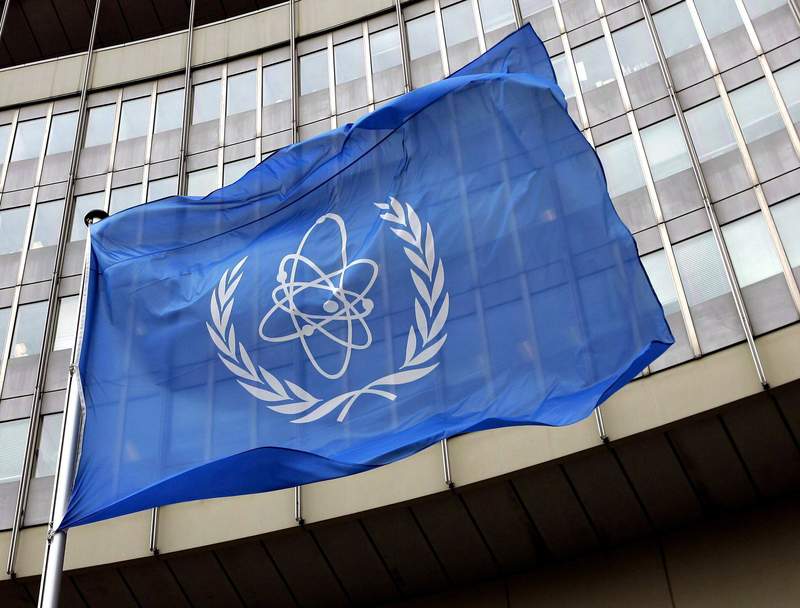
POLICY WIRE — Vienna, Austria — The polite requests, the stern warnings, the quiet diplomacy — they’ve all taken on a rather theatrical quality over the past few years. And now, the International Atomic Energy Agency (IAEA) is back with its latest iteration of exasperated demands, calling on Iran to grant inspectors “without delay” full access to its murky nuclear sites. It’s a familiar dance, isn’t it? A diplomatic quadrille performed with the same steps, year after year, with Tehran always managing to lead.
It feels a lot like Groundhog Day for the global community. The IAEA isn’t just making noise for the sake of it; this isn’t some bureaucratic whim. No, Director-General Rafael Grossi spelled it out with uncharacteristic bluntness recently, stating that without prompt, unfettered access, his agency simply cannot guarantee the peaceful nature of Iran’s burgeoning nuclear ambitions. That’s code for: we don’t know what they’re up to, — and that should worry everyone. Big deal, right?
But Tehran, predictably, isn’t keen on stripping back the curtain. Its foreign minister, Hossein Amir-Abdollahian, has routinely dismissed such calls as “politically motivated theatrics.” He’s been quoted more than once, not mincing words, insisting Iran’s program is “solely for peaceful purposes, and we won’t permit unlawful interference designed to undermine our sovereignty.” It’s the standard line, a well-worn record, but it doesn’t quiet the gnawing unease that ripples through international corridors.
Because let’s be honest, the agency’s patience is wearing thinner than old fabric. Grossi himself put it starkly during a private briefing for member states, a quote later leaked, “The clock is ticking. Our inspectors aren’t playing games; they’re upholding international obligations. Transparency isn’t optional for a nation of this size with this kind of sensitive program.” His frustration? Pretty palpable. You could practically taste it in the stale conference room air.
The numbers don’t lie, either. The International Atomic Energy Agency reported in its most recent quarterly brief that Iran’s stockpile of uranium enriched to 60% purity, technically sufficient for weapons-grade if enriched further, stood at over 142 kg as of May 2024. This, mind you, is a rather dramatic increase from previous reports and far, far beyond the limits set by the now-defunct 2015 nuclear deal (the Joint Comprehensive Plan of Action, or JCPOA).
The situation isn’t confined to European chanceries or American war rooms. Its reverberations echo across the globe, not least in the geopolitically complex landscape of South Asia and the wider Muslim world. Think about it: a nuclearized Middle East is a terrifying prospect, a nightmare scenario that many nations, particularly those with existing nuclear arsenals like Pakistan, eye with a strategic blend of concern and cold calculation. And Pakistan, as a fellow Islamic nuclear power, can’t afford to be blasé. It’s an open question how any escalation impacts regional stability, trade routes, or the delicate balance of power already strained by conflict in Gaza and proxy battles. The economic fallout alone would be considerable, a ripple effect that touches everything from oil prices to investor confidence across Asia, impacting states like Pakistan reliant on stable energy markets.
This isn’t just a squabble over safeguards, then. This is about trust, or the catastrophic lack thereof, between a defiant Iran and a global order determined—or at least claiming to be determined—to prevent nuclear proliferation. But who really holds the cards? It often feels like Tehran is just waiting for the next international distraction to press its advantage, keeping everyone on edge, testing the limits of what the world will stomach. It’s a dangerous game, one that threatens to plunge an already volatile region into further uncertainty.
What This Means
The IAEA’s latest ultimatum isn’t likely to break the deadlock immediately. We’re observing a classic pattern here: international pressure mounts, Iran digs in, offering just enough token concession—or none at all—to avoid outright condemnation or military action. The immediate political implication is a hardening of positions, particularly in Washington and among European capitals, increasing the probability of new sanctions or heightened diplomatic isolation. Economically, this continued tension ensures a persistent ‘Iran premium’ on global oil markets, and for countries bordering the Islamic Republic or those heavily reliant on the Strait of Hormuz for trade, it represents a direct threat to supply chains and regional investment. We’re also seeing a gradual but significant erosion of the non-proliferation regime, setting a dangerous precedent for other aspiring nuclear powers. Because if Iran can simply stonewall international watchdogs indefinitely, what message does that send to Riyadh, or Ankara, or even Seoul? It’s a blueprint for chaos, making regional military build-ups (see how countries try to counter-balance their adversaries’ increasing capabilities, much like nations balance geopolitical scales through economic and military strategies, much like this economic tale of ‘From Sands to Showdowns’) all but inevitable. It’s not just Iran’s future at stake; it’s the future of regional peace, too, potentially dragging the world into a conflict nobody seems to truly want.