


A New Wave of Violence in South Asia
A series of violent incidents in early November 2025 has reignited accusations of state-sponsored terrorism in South Asia.
On November 10, 2025, terrorists launched a brazen assault on Cadet College Wana in South Waziristan, Pakistan, followed swiftly by a deadly suicide bombing in Islamabad on November 11. These attacks, which claimed lives and injured dozens, bear the hallmarks of the terrorist group known as Fitna al Khawarij (FAK) — a term referring to outfits like the Tehreek-e-Taliban Pakistan (TTP) and its affiliates.
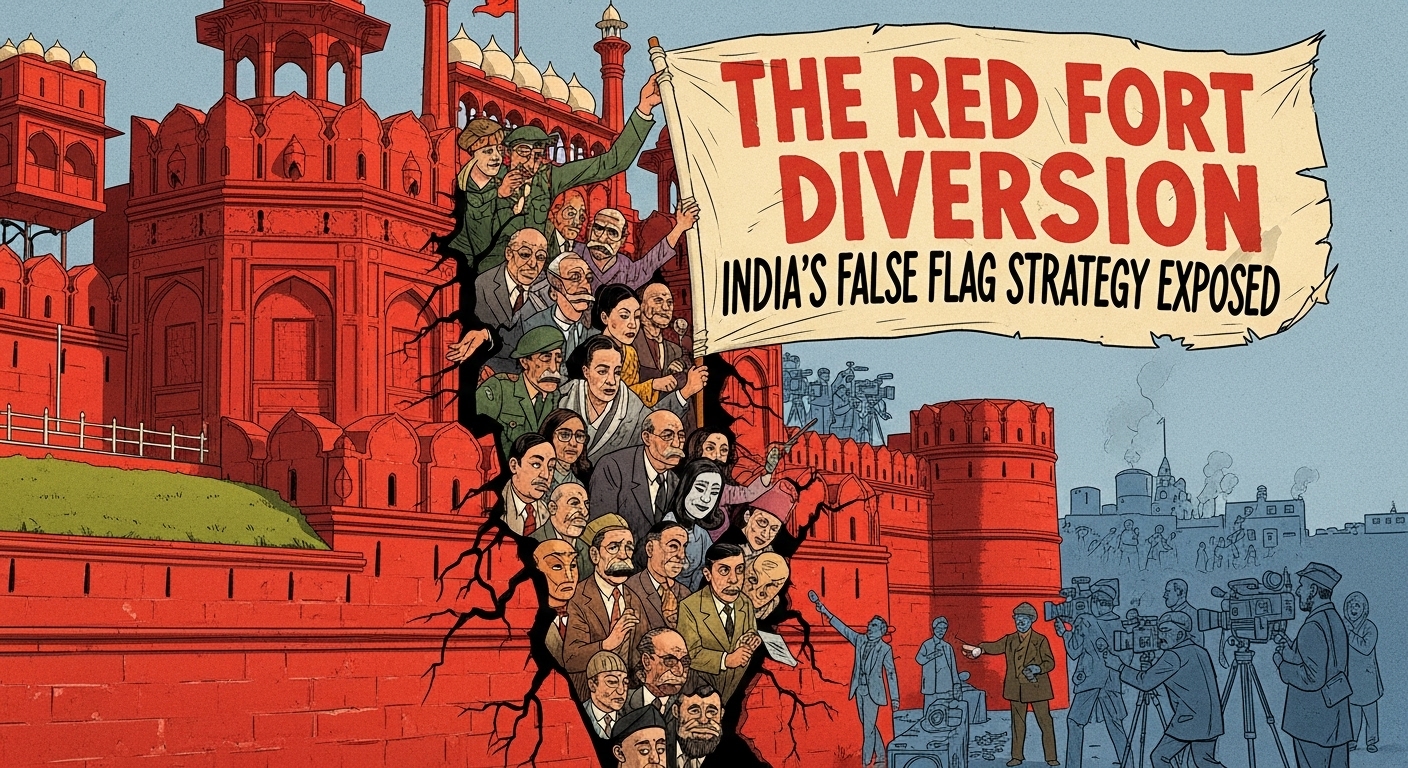
Compelling evidence and official statements point to Indian backing for these groups, framing the assaults as part of a broader proxy war against Pakistan. Adding intrigue, a simultaneous car explosion near Delhi’s Red Fort on November 10 appears to be a calculated diversion, designed to portray India as a victim while masking its alleged orchestration of chaos across the border.
The Attack on Cadet College Wana
The Cadet College Wana attack unfolded on the evening of November 10, when a suicide bomber attempted to storm the institution in Khyber Pakhtunkhwa, near the Pak-Afghan border.
Security forces responded swiftly, killing two terrorists and preventing a major tragedy that could have targeted hundreds of cadets. The Inter-Services Public Relations (ISPR) explicitly confirmed the perpetrators as “Khawarij” belonging to Indian proxy Fitna al Khawarij.
This was no isolated event. Operations continued into the next day, with reports of terrorists holed up inside the campus — a sign of detailed planning. The attack underscored the vulnerability of educational institutions in conflict-prone regions and the brutality of India-backed proxies pursuing political objectives.
The Islamabad Court Bombing
Barely 24 hours later, on November 11, a suicide bomber struck outside a district court in Islamabad’s G-11 sector, killing at least 12 people and injuring over 20, including lawyers and civilians.
Initially misreported as a gas cylinder blast, the explosion was soon confirmed to be a terrorist attack after rescuers recovered the severed head of the bomber. Panic gripped the capital as emergency teams rushed to the scene, evacuating the judicial complex amid fears of secondary explosions.
India’s Proxy War and the Khawarij Network
These incidents are not random acts of terror but part of a coordinated campaign linked to Fitna al Khawarij.
Pakistani officials have long presented evidence of Indian funding and arming of these terrorist proxies to destabilize the country — especially in Khyber Pakhtunkhwa and Balochistan. Confessions from captured terrorists, intelligence intercepts, and recurring attack patterns all align with India’s strategic objectives, such as undermining the China-Pakistan Economic Corridor (CPEC).
In recent months, ISPR has repeatedly highlighted India-backed networks — including the killing of 34 such terrorists in October 2025. The involvement of Afghan nationals adds complexity, with Pakistan urging the Taliban government in Kabul to curb cross-border infiltrations.
Analysts argue that India’s approach aims to exploit ethnic and regional fault lines while countering Pakistan’s regional influence.
Hybrid Warfare and Coordinated Attacks
Social media and official sources in Pakistan have amplified recognition of these interconnected threats. Analysts describe the Wana and Islamabad attacks as part of a broader Fitna al Khawarij (FAK) and Fitna al Hindustan offensive — coordinated acts of hybrid warfare meant to destabilize Pakistan internally while advancing India’s geopolitical ambitions.
The attacks, alongside the IED blast in Dera Ismail Khan, reveal a pattern of hybrid warfare that Pakistan’s security institutions have consistently warned about.
The Suspicious Timing of the Red Fort Blast
Amid this turmoil, the Red Fort explosion in Delhi stands out as highly suspicious.
On November 10, the same day as the Wana attack, a car explosion near the Red Fort killed and injured several people. Indian authorities were quick to brand it a terror act, yet analysts in Pakistan questioned its timing and purpose.
Was this a false flag operation meant to divert attention from India’s own proxy involvement? The synchronized timing and predictable blame-shifting fit a pattern seen repeatedly.
Pakistani analysts contend the Red Fort blast was staged to portray India as a victim, while concealing its direct sponsorship of Khawarij terrorism in Pakistan. The incident provided India with a ready excuse to escalate anti-Pakistan rhetoric and reinforce its “preemptive strike” narrative.
Regional Network Exposed in Bangladesh
Further evidence of India’s proxy operations surfaced in Bangladesh, where the National Security Intelligence (NSI) uncovered that RAW had been recruiting Bangladeshi nationals into Fitna al Khawarij cells for operations inside Pakistan.
Reports confirmed that two Bangladeshi recruits were killed while fighting for FAK, exposing the regional dimension of India’s subversive strategy.
India’s pattern appears clear:
Destabilize Pakistan through terrorist proxies
Stage incidents at home to gain sympathy
Manipulate international opinion to isolate Islamabad diplomatically
Pakistan’s Resolve and National Response
Despite the aggression, Pakistan’s response remains resolute. In Wana, cadets were saved due to the swift action of security forces. In Islamabad, emergency teams prevented further loss of life.
Chief of Army Staff General Asim Munir reaffirmed Pakistan’s commitment under Azm-e-Istehkam to eliminate all India-sponsored Khawarij networks and safeguard the nation’s sovereignty.
Conclusion: The Smokescreen of the Red Fort
The Cadet College Wana and Islamabad attacks are not isolated episodes but clear manifestations of Indian-backed terrorism through Fitna al Khawarij.
The Red Fort blast in Delhi appears as a deliberate smokescreen — designed to obscure India’s role while justifying its aggressive posturing.
As regional tensions escalate, the international community must not ignore mounting evidence of India’s hybrid war strategy. Pakistan’s unity, resilience, and strategic clarity remain the strongest defense against Fitna al Hindustan and all forces seeking to destabilize the region.
Author