


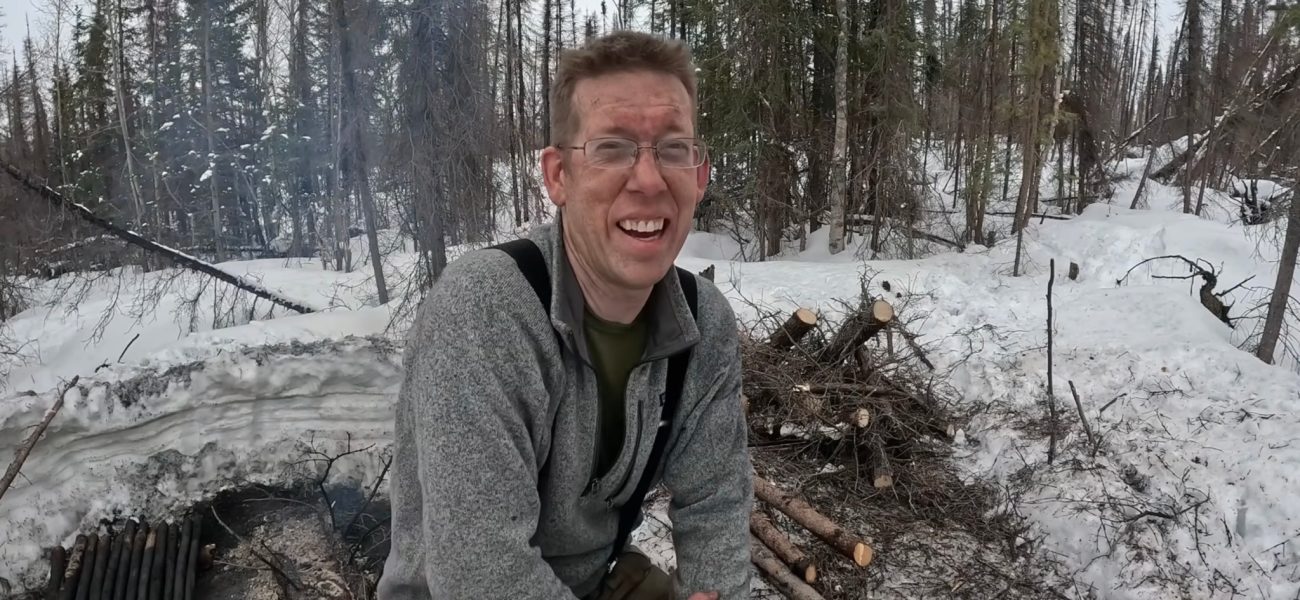
The Ghost of ’08: One Man’s Brutal Apprenticeship Offers Today’s Grads a Chilling Echo
POLICY WIRE — Washington, D.C. — The quiet dread preceding an economic seismic event is often more insidious than the shockwave itself. Before the banking sector imploded, before the dominoes started...

POLICY WIRE — Washington, D.C. — The quiet dread preceding an economic seismic event is often more insidious than the shockwave itself. Before the banking sector imploded, before the dominoes started to topple with terrifying regularity, there were individuals already staring into the abyss, perhaps without even realizing it. Luke Nichols was one of those individuals, an unwitting harbinger of the employment cataclysm that was about to engulf a generation.
His story, now recounted with the calm retrospect of a veteran campaigner, offers less a comforting balm and more a cold dose of reality to fresh-faced graduates emerging into their own uncertain futures. It’s a reminder that sometimes, the struggle isn’t just about ambition or aptitude; it’s about sheer, brutal endurance against forces far larger than oneself. Nichols, you see, was just trying to land a gig when the world spun sideways.
We’re talking about a guy who, by his own account (as captured in the titular sentence for this piece), sent out 3,200 résumés
and received zero job offers in the 2008 crash
. Think about that for a second. Three thousand, two hundred. That’s not a mild disappointment; it’s an industrial-scale rejection. But he lived to tell the tale, — and now, Outdoor Boys’ Luke Nichols is telling grads how he survived
.
His experience isn’t just a quirky anecdote from a dark era; it’s a stark policy lesson. Governments talk about stimulating economies, creating jobs, fostering innovation. But what happens when the jobs just aren’t there? When the economy itself seems to recoil from new entrants? Nichols’s saga cuts through the policy jargon, laying bare the deeply personal, soul-crushing impact of a labor market in full retreat.
Because let’s be real, his journey wasn’t about finding the perfect fit. It was about survival. It’s about finding any toehold when the mountain’s crumbling. [QUOTE_PLACEHOLDER]
for those emerging into a world still grappling with supply chain disruptions, geopolitical volatility, and inflation not seen in decades. They’ve heard the cautionary tales, but Nichols offers an insider’s perspective on grinding it out when the deck’s stacked against you. [QUOTE_PLACEHOLDER]
It’s not just a U.S. phenomenon, this cycle of aspiration meeting harsh economic reality. Think of Pakistan, for instance. A country with a massive youth bulge, where each year millions enter the workforce, often chasing limited opportunities. In Pakistan, the youth unemployment rate stood at a staggering 11.3% in 2023, according to data from the World Bank. That’s young people, often highly educated, facing a wall of economic frustration that makes Nichols’s [QUOTE_PLACEHOLDER] feel grimly familiar to countless families across Lahore or Karachi. They aren’t just applying for jobs; they’re navigating societal pressures, familial expectations, and often, political instability that magnifies economic precarity. And while the contexts are worlds apart, the raw human experience of unrelenting joblessness—of résumés into the void—transcends borders.
📄 POLICY WIRE WHITEPAPER PUBLISHED: PAKISTAN'S NATIONAL SECURITY POLICY PRIORITIES
👉 READ BY CLICKING HERENichols’s message, [QUOTE_PLACEHOLDER]
, surely revolves around resilience, perhaps adaptation. He probably advocates for creativity, for seeking unconventional paths when traditional avenues are bricked up. [QUOTE_PLACEHOLDER]
. But more fundamentally, it’s a critique, however subtle, of systems that can leave well-qualified individuals flailing. It’s a story not just about individual fortitude but about systemic fragility, a fragility that reappears whenever the economy catches a chill.
But the core question remains: What precisely did Nichols do? [QUOTE_PLACEHOLDER]
His path must have involved pivoting, perhaps entrepreneurial grit, or simply waiting for the tide to turn. But one thing is for sure: it wasn’t easy. It rarely ever is when the stakes are this high, — and the world seems to have forgotten how to offer a fair shake. He’s essentially become a reluctant oracle for a new generation facing a similar, albeit different, sort of uncertainty.
What This Means
This isn’t merely a motivational speech for college seniors; it’s a geopolitical pulse check. When large swathes of educated youth are repeatedly denied entry into stable employment, it generates friction—social, economic, and potentially, political. Think of the Arab Spring, born in part from deep-seated economic frustration among educated but unemployed youth. Policies must look beyond macroeconomic aggregates — and consider the individual human cost of a stalled labor market.
For graduates, it means less reliance on linear career paths and more on building transferable skills—what you’d call a verdant paradox
in itself; simultaneously desiring a specific path but being forced into something entirely different to survive. Governments need to re-evaluate education-to-employment pipelines, invest in vocational training that aligns with evolving market needs, and foster an entrepreneurial ecosystem. Failure to do so risks a generation feeling not only disenfranchised but betrayed by the promise of education. Nichols isn’t just selling survival tips; he’s a living monument to how quickly the American dream can sour, and how crucial robust, inclusive economic policy truly is. Because without it, the silent despair he once knew could become a much louder, collective roar.