


The Prodigal Arm: Yesavage’s Fabled Return Ignites Blue Jays, Signals New Era of Athletic Commodity
POLICY WIRE — Toronto, Canada — The roar wasn’t for a championship, not yet anyway. It was for a ghost, a promise, a singular arm that had momentarily flickered out. Tuesday night...

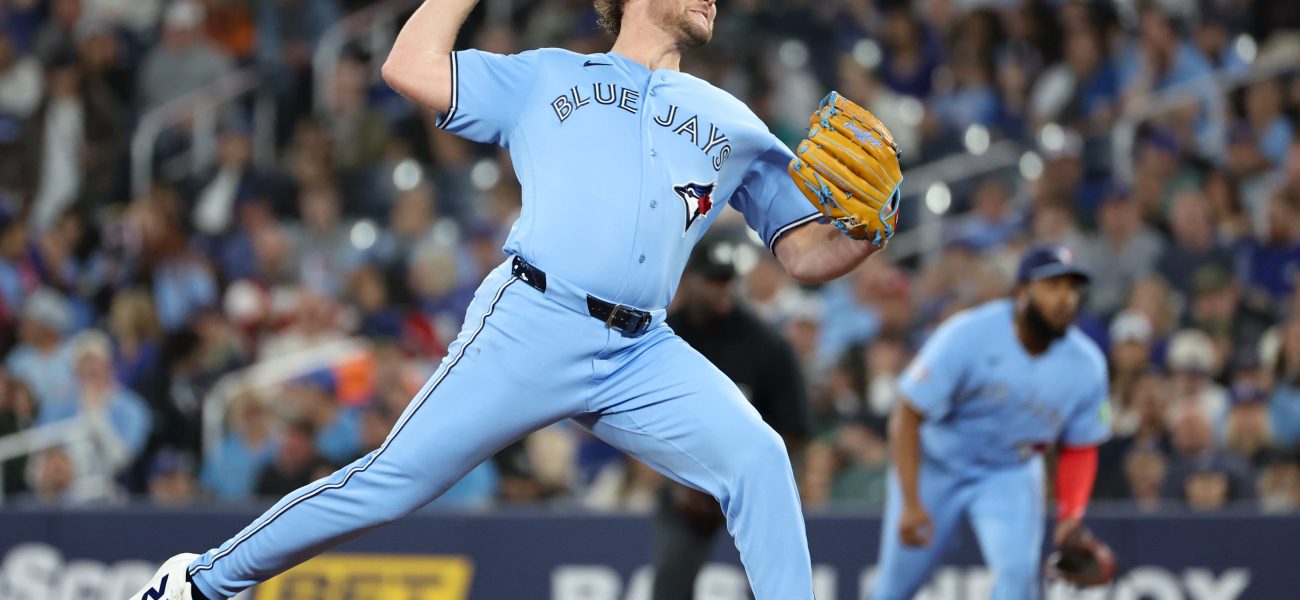
POLICY WIRE — Toronto, Canada — The roar wasn’t for a championship, not yet anyway. It was for a ghost, a promise, a singular arm that had momentarily flickered out. Tuesday night in Toronto saw the improbable return of Trey Yesavage, the Blue Jays’ 22-year-old phenom, to the mound. And what a return it was — a performance that transcended mere sport, offering a stark reminder of the immense pressures, the colossal investments, and the almost mythological narratives woven into modern athletic careers.
Yesavage, a 2024 first-round pick, had ascended with a velocity that defied all conventional development timelines. He’d gone from Single-A to the big leagues in a blink, then anchored a World Series run in 2025, spinning a seven-inning masterpiece against the Los Angeles Dodgers in Game 5. His arm, it seemed, was forged not in the traditional minor league crucible, but in the white-hot forge of immediate expectation. But then, as often happens when mortals flirt with legend, the physical world intervened: a right shoulder impingement relegated him to the injured list, casting a shadow over the much-anticipated start to his ‘official’ rookie season.
Still, on April 28, 2026, against the Boston Red Sox, the young righty emerged from the dugout, a figure both fragile and formidable. What followed was a masterclass in controlled aggression. For 5 1/3 innings, Yesavage kept the Red Sox bats utterly silent, yielding no runs. He needed but 74 pitches — a careful, calibrated effort — to navigate the Boston lineup, tallying three strikeouts and allowing only four hits, just one of which was an extra-base variety. He issued not a single walk. It wasn’t the double-digit strikeout spectacle of his 2025 postseason heroics, no, but it was perhaps more consequential: a demonstration of resilience, a declaration of intent.
When Blue Jays manager John Schneider finally strode to the mound to relieve him, the collective exhale from the stands was palpable. A standing ovation, long — and resonant, engulfed the young pitcher. Yesavage, the Pottstown, Pennsylvania native, embraced the adulation, a broad, somewhat relieved grin creasing his face. “It was awesome,” Yesavage later opined, a sentiment relayed via 6ix Inning Stretch Podcast’s Lindsay Dunn. “These fans are great, and I’m very blessed to play in front of them.” His words, simple as they were, hinted at the profound connection forged between a player and a city desperately clinging to a recent taste of glory.
And the impact, let’s be clear, extends far beyond the emotional. This performance isn’t merely a statistical footnote; it’s a tangible asset for a franchise. The average MLB franchise value, for instance, surged to an estimated $2.3 billion in 2024, a 12% increase from the previous year, according to Forbes, underscoring the colossal economic stakes tethered to individual brilliance. A player like Yesavage isn’t just an athlete; he’s a living, breathing investment, his health and performance directly impacting revenue streams, ticket sales, and media rights.
📄 POLICY WIRE WHITEPAPER PUBLISHED: PAKISTAN'S NATIONAL SECURITY POLICY PRIORITIES
👉 READ BY CLICKING HERE“He’s not just a pitcher; he’s a phenomenon. You don’t often see this kind of impact, this early. It puts pressure on us, certainly, to manage that talent responsibly, but it’s a good kind of pressure,” Blue Jays manager John Schneider was reported to have mused post-game, his voice a low gravel, acknowledging the tightrope walk inherent in handling such precocious talent. This phenomenon of instant impact, while exhilarating, isn’t lost on emerging sports markets. Across South Asia, for instance, where cricket traditionally reigns supreme, organizations are keenly observing how raw talent, when meticulously scouted and developed, can transform an entire franchise — a lesson not just for baseball, but for any nation hoping to cultivate a global sporting presence.
What This Means
At its core, Yesavage’s comeback isn’t just a sports story; it’s a parable for the modern, high-stakes economy of professional athletics. It spotlights the relentless pressure on young athletes to deliver immediate returns on massive investments. Teams, increasingly seen as multi-billion dollar enterprises, aren’t simply developing players anymore; they’re curating assets whose value can fluctuate wildly based on a single pitch or an unfortunate injury. This creates an intricate policy challenge for sports leagues and player associations alike: how to protect these valuable human commodities while maximizing their output — a balance that often leans uncomfortably towards the latter.
Behind the headlines, this also reinforces the global search for athletic prowess. No longer confined to traditional recruiting grounds, scouts and data analysts now cast wider nets, eyeing talent pools previously untapped. This diversification, akin to how global corporations seek emerging markets, holds profound implications for how sports develop internationally, potentially creating new hubs of athletic excellence — and new policy frameworks to govern their integration into established systems. So, while the immediate joy was Toronto’s, the broader narrative — of talent as a global, high-value, and inherently risky commodity — resonates far beyond the ballpark’s walls, echoing in boardrooms and policy discussions worldwide. It’s a stark reminder: in the arena of big business sports, even a single, phenomenal arm can sway multi-million dollar destinies.