


The New Mercenaries: How College Basketball’s Transfer Market Forges Dynasties and Dictates Destinies
POLICY WIRE — Los Angeles, United States — It’s not simply about a new uniform or a change of scenery anymore; it’s a calculated, high-stakes wager in college athletics’ increasingly mercenary...

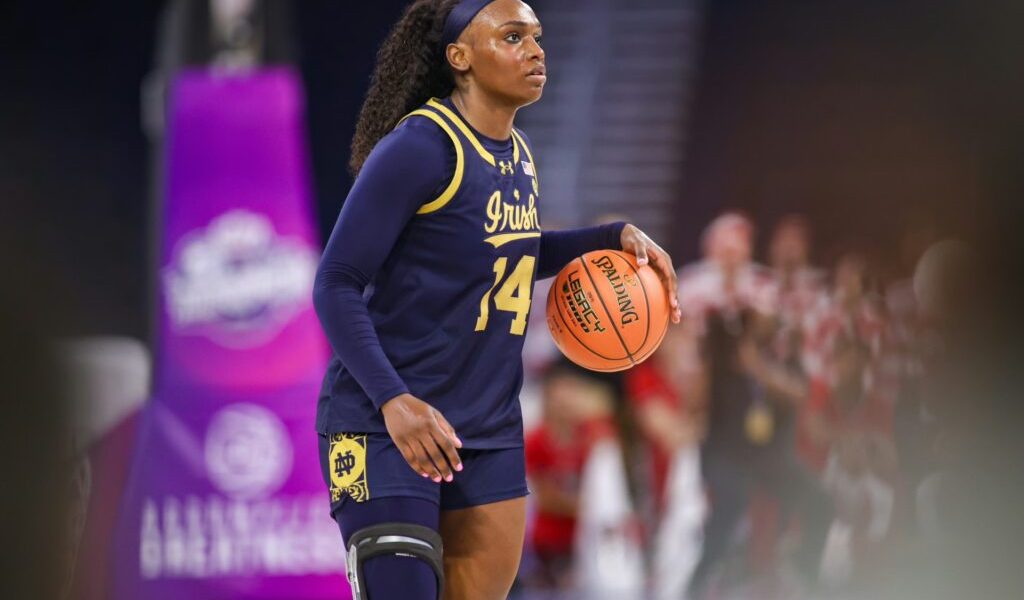
POLICY WIRE — Los Angeles, United States — It’s not simply about a new uniform or a change of scenery anymore; it’s a calculated, high-stakes wager in college athletics’ increasingly mercenary landscape. What was once heralded as an amateur ideal has metastasized into a ruthlessly efficient marketplace, where talent is currency and loyalty, an optional luxury. The recent acquisition of Notre Dame transfer guard KK Bransford by UCLA’s reigning national champion women’s basketball program isn’t just another roster adjustment; it’s a stark, compelling testament to this seismic shift.
Behind the headlines of another star player switching allegiance lies a deeper narrative: the relentless arms race for talent fueled by Name, Image, and Likeness (NIL) deals and the unbridled freedom of the transfer portal. Bransford, a 5-foot-11 senior, arrives in Westwood with one year of NCAA eligibility remaining, a prized asset for a team looking to cement its dynasty. She’s the fifth such addition for the Bruins this offseason, meticulously fulfilling Coach Cori Close’s stated ambition.
And Close, a tactician widely lauded for her recent championship run, isn’t shy about the calculus involved. "We’re not just building a team; we’re assembling an enterprise," she remarked during a post-signing press conference, her gaze unwavering. "In this new landscape, stagnation is dissolution. You adapt, or you’re left watching from the sidelines. This isn’t just about winning games; it’s about sustaining an entire ecosystem." Her words slice through the usual platitudes, reflecting a pragmatic understanding of modern collegiate sports where a player’s market value often trumps long-term developmental narratives. (It’s a tough world out there, folks).
Bransford, a former McDonald’s All-American — and Naismith High School All-American, brings a seasoned versatility. She’s played every position on the court save center, showcasing an adaptability that makes her an immediate fit for the Bruins’ fluid system. But her journey also highlights the precarious nature of an athlete’s collegiate career: she redshirted her 2024-25 season at Notre Dame due to a lower-body injury, a stark reminder of the physical tolls demanded even from the elite.
Still, her statistical contribution for the Fighting Irish last season, where she averaged 7.4 points, 4.0 rebounds, and 1.1 steals per game across 24 appearances—nine of them starts—underscores her immediate impact potential. It’s a compelling resume, even if it comes wrapped in the transient packaging of a one-year rental. For the Notre Dame program, a storied institution itself, seeing such talent depart has become a familiar, albeit frustrating, ritual.
"Losing talent is never easy, but it’s the new reality," conceded a senior athletics official familiar with Notre Dame’s strategy, who spoke on background due to ongoing recruitment sensitivities. "Every program, even storied ones like ours, must recalibrate its strategy. Player movement is now a constant, not an anomaly. It forces you to be perpetually recruiting, perpetually evaluating." This perpetual churn, they imply, can destabilize even the most entrenched programs, making long-term planning a Sisyphean task.
📄 POLICY WIRE WHITEPAPER PUBLISHED: PAKISTAN'S NATIONAL SECURITY POLICY PRIORITIES
👉 READ BY CLICKING HEREThe Bruin’s aggressive recruitment strategy — having also secured guards Elina Aarnisalo from North Carolina, Bonnie Deas from Arkansas, Donovyn Hunter from TCU, and forward Addy Brown from Iowa State — signals a calculated embrace of this new paradigm. It’s a clear declaration that the national championship was a starting pistol, not a finish line. The roster, now at 11 players, still leaves room for further reinforcements, suggesting UCLA isn’t done shaping its formidable arsenal.
The implications of this talent migration extend far beyond the manicured courts of American universities. While athletes from regions like South Asia and the broader Muslim world increasingly seek opportunities in global sports — often contending with vastly different regulatory frameworks and resource limitations — the American collegiate system, for all its complexities, paradoxically offers a unique blend of agency and exposure. The transfer portal, though criticized for its chaotic nature, epitomizes a degree of player empowerment that’s largely unparalleled in many national and international sporting bodies, where organizational control often overrides individual player mobility. It’s a fascinating contrast, isn’t it?
What This Means
At its core, Bransford’s transfer to UCLA isn’t merely a basketball transaction; it’s a microcosm of the profound economic and political shifts convulsing collegiate athletics. The advent of NIL and the transfer portal has effectively decoupled player loyalty from institutional commitment, transforming athletes into free agents operating within a highly competitive market. This dynamic significantly benefits well-resourced programs like UCLA, which can leverage their championship pedigree, brand appeal, and donor networks to attract top-tier talent, creating what some critics term an ‘oligarchy of excellence.’
The ‘political’ implication here is a subtle but potent shift in power. Athletes, particularly those with proven track records, now wield unprecedented negotiating power, forcing coaches and athletic directors to operate more like general managers in professional leagues. This necessitates a constant vigilance over roster construction and retention, draining resources and attention from traditional collegiate concerns. Economically, the increased player movement intensifies competition for NIL funds, potentially exacerbating disparities between wealthy and less affluent programs. Smaller institutions, or those without major media market appeal, find themselves in a perpetual talent drain, struggling to compete against the gravitational pull of established powerhouses. The sustainability of a diverse collegiate athletic landscape is genuinely at stake here. It’s an arena where only the most adaptable, — and often the richest, survive and thrive.