

The Price of Pooches: What an Aging Dog in Lincoln County Reveals About Our Priorities
POLICY WIRE — Ruidoso, N.M. — It&rsquos a cold, hard truth of modern society: some stories are simply too small for our increasingly maximalist news cycles. We’re talking geopolitics,...

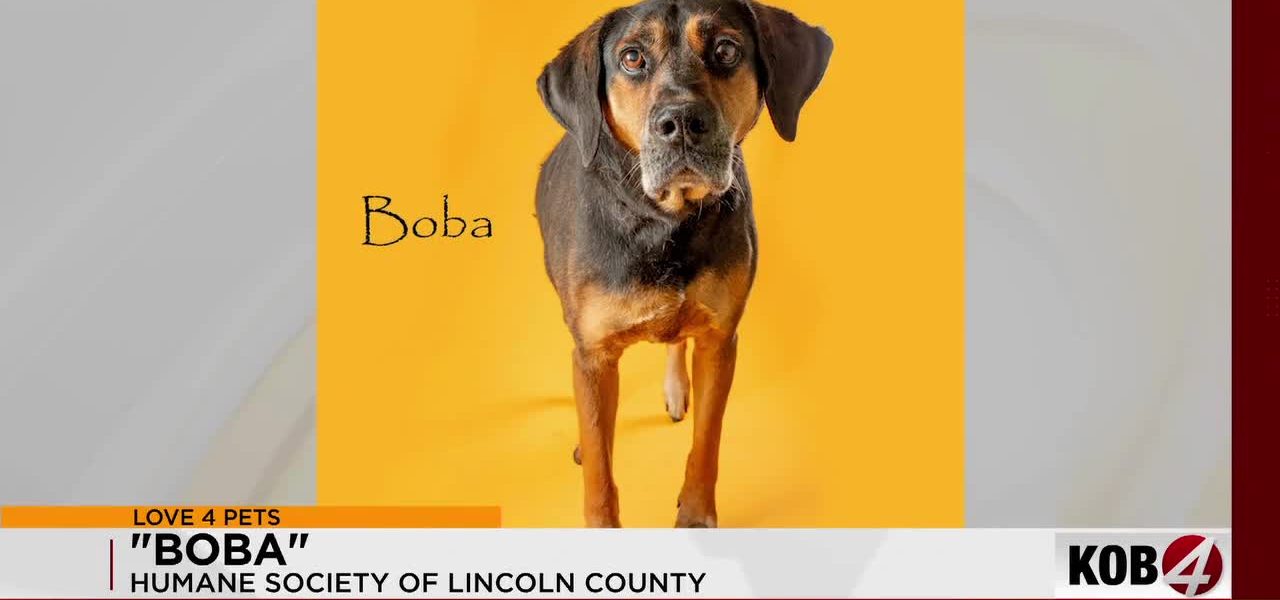
POLICY WIRE — Ruidoso, N.M. — It&rsquos a cold, hard truth of modern society: some stories are simply too small for our increasingly maximalist news cycles. We’re talking geopolitics, market crashes, existential climate threats. We’re not talking about Boba. A senior pup, nearly nine years old, holding court—or perhaps, just holding on—at the Humane Society of Lincoln County. He likes other dogs, people, kids. And long, slow walks, apparently. But here&rsquos the thing: in a world fixated on seismic shifts, this quiet narrative of a couch potato canine and his search for a forever home tells us more about our collective conscience than we’d care to admit.
Forget for a moment the flash — and thunder of Washington D.C. Or the labyrinthine machinations of global finance. Take a look instead at Ruidoso, New Mexico. A tourist town, yes, but one not immune to the gravitational pull of smaller-town American challenges. It’s where creatures like Boba exist, embodying a truth we often gloss over: the seemingly minor issues of community care, of looking after the most vulnerable—be they two-legged or four—are often the sharpest indicators of broader societal health. It&s; a question of where the money goes, — and where the empathy — doesn’t.
Lincoln County, not unlike countless rural and semi-rural regions across the nation, grapples with tight budgets and competing demands. Education, infrastructure, emergency services—they all vie for limited public funds. And then there’s animal welfare. A “soft” issue, it’s often categorized, one that can always wait, can’t it?
“Look, we all love dogs, don’t we?” quipped County Commissioner Martha ‘Marty’ Stevens, her voice etched with an unmistakable weariness, during a recent council meeting. “But when you’re staring down another potential budget deficit, you have to make choices. It’s never an easy ledger to balance, not when essential services are on the line. Boba’s a sweet boy, I’m told. But the county’s obligations extend beyond just providing shelter for animals.” Her words hang in the air, a familiar echo of a sentiment you hear from county seats to state capitals.
But there’s a different way to frame this. And that’s what Dr. Evelyn Reed, a sociologist specializing in public policy at the University of New Mexico, argues. “The way a society treats its most vulnerable populations, whether they’re its elderly citizens or its abandoned animals, is a profound mirror to its values,” she asserted in a recent Policy Wire interview. “When resources for even basic animal welfare are perpetually strapped, it suggests a broader divestment in communal responsibility.” She’s not wrong. Because these aren’t just isolated incidents; they’re symptoms.
Think about it. While developed nations like ours debate the nuances of humane treatment for domestic animals, many parts of the world operate under vastly different—and often brutal—realities. In bustling cities across South Asia, for instance, stray animals face unimaginable hardships daily. In Karachi, Pakistan, the situation for street dogs is particularly dire, with hundreds of thousands reportedly living on the streets, often without food, shelter, or any form of medical attention. Their existence is a constant battle against hunger, disease, and unfortunately, periodic culling campaigns by municipal authorities lacking the resources or political will for comprehensive animal control and welfare programs. It’s a grim contrast that throws America’s own quiet struggles into sharper relief. We don’t have street dogs numbering in the hundreds of thousands; we simply struggle with our finite empathy.
📄 POLICY WIRE WHITEPAPER PUBLISHED: PAKISTAN'S NATIONAL SECURITY POLICY PRIORITIES
👉 READ BY CLICKING HEREAnd these challenges aren’t purely local, they’re national. Data from the ASPCA estimates that approximately 6.3 million companion animals enter U.S. animal shelters nationwide every year. That’s a staggering figure, — and roughly half of them, an estimated 3.1 million, are dogs. Each of those numbers, whether it’s a million or a thousand, represents a narrative of abandonment, neglect, or simply, life changing circumstances for their owners. And it puts immense pressure on facilities like the Humane Society of Lincoln County.
They’re stretched thin, doing God’s work with human-sized limitations. They rely on donations, volunteers, — and the occasional burst of public good will. But sustained support? That’s another story.
What This Means
The tale of Boba — the affable, slightly aging gentleman looking for his permanent spot on someone’s sofa — might seem trivial. It isn’t. It offers a clear, unobstructed view into the priorities of governance, not just in Lincoln County, but across the United States. Economic contractions and stagnating local tax bases mean social services, especially those not considered “front-line,” take a hit. This leads to understaffed shelters, overflowing kennels, and, regrettably, the difficult decisions that follow.
Politically, the ‘animal welfare’ card is often played in broad strokes during election cycles, a gesture towards perceived public kindness. But real, systemic funding? That rarely materializes with the same fanfare. This neglect often translates to increased stress on private charities, forcing them to become de facto government subcontractors for essential services, just without the consistent financial backing. From an economic perspective, every stray animal that needs rehoming represents a societal cost — a cost borne by local taxpayers, donors, and, ultimately, the animals themselves. The silent crisis of local shelters mirrors a wider trend of municipalities struggling to maintain robust public services in the face of dwindling resources, often masked by bigger headlines about global energy crises or digital commons. The next time we see an appeal for “Love 4 Pets,” perhaps we shouldn’t just see a dog. Perhaps we should see a referendum on what we, as a society, truly value. Boba, after all, isn’t just looking for a home; he’s holding up a mirror.