


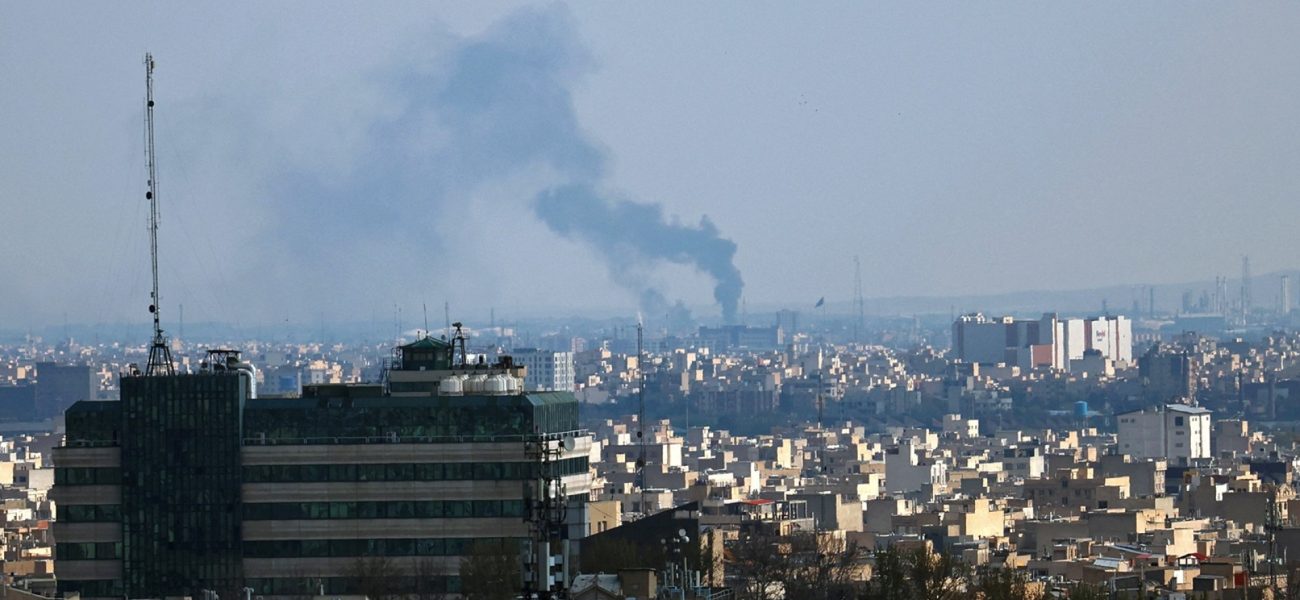
The Ghost of Peace: US-Iran Trade Blows Under Ceasefire’s Thin Veil
POLICY WIRE — WASHINGTON/TEHRAN — Sometimes, the quiet before a storm isn’t really quiet at all. It’s just a different kind of noise – a series of muted thuds, an almost imperceptible...

POLICY WIRE — WASHINGTON/TEHRAN — Sometimes, the quiet before a storm isn’t really quiet at all. It’s just a different kind of noise – a series of muted thuds, an almost imperceptible tremor beneath a meticulously maintained surface of peace. That’s the vibe these days across parts of the Middle East, where a supposed ceasefire has become less a binding agreement and more a convenient fiction, one repeatedly perforated by American and Iranian exchanges of fire.
It’s a peculiar dance, isn’t it? One where both parties insist on their commitment to de-escalation while simultaneously engaging in kinetic activity that, to an outsider (and probably to plenty of folks caught in the middle), looks suspiciously like conflict. This isn’t your granddad’s Cold War standoff, complete with proxy states doing all the dirty work. No, this feels sharper, more immediate. You’ve got direct hits, and then official denials or obfuscations that don’t fool anyone, especially not the folks patching up infrastructure or burying their dead.
But how ‘fragile’ can a ceasefire be if it never really took hold, not in spirit anyway? We’re not talking about a couple of stray shots. We’re talking about an accelerating tit-for-tat that’s got everyone with a map and a working knowledge of regional politics — from Riyadh to Islamabad — biting their nails. Because the underlying tension? It hasn’t dissolved; it’s just shifted form, like a particularly nasty virus adapting to new treatments.
And because, frankly, the U.S. seems less inclined than ever to turn the other cheek, or at least to allow its allies—or its assets—to be targeted with impunity. Iranian-backed factions, according to intelligence briefings [QUOTE_PLACEHOLDER], have kept up their own brand of harassment. That’s just a reality in this tangled patch of earth.
Consider the timing: just last week, American forces conducted strikes in Syria. Retaliation for earlier attacks on U.S. personnel [QUOTE_PLACEHOLDER]. Not long after, a facility in Iraq, reportedly linked to Iranian operatives [QUOTE_PLACEHOLDER], suffered its own very sudden and unfortunate ‘incident.’ It’s a game of chicken, played with advanced weaponry and human lives, and nobody seems particularly keen on being the first to swerve. The stakes? Well, they’re about as high as they get.
This isn’t just about a couple of big players duking it out. It reverberates. For a country like Pakistan, for instance, stability in the broader Muslim world isn’t some abstract policy goal; it’s a tangible security concern. Any major escalation between Washington and Tehran could spill over, creating fresh waves of instability right on its western border. We’ve seen what happens when that region ignites; the humanitarian fallout alone is enough to destabilize entire swaths of the subcontinent, let alone complicate Islamabad’s already delicate balancing act with both Washington and Tehran. Because if the Mideast heats up too much, the ripple effect reaches Afghanistan, — and then Pakistan has to brace itself. It’s an uncomfortable thought.
Then there’s the broader perception. In much of the Muslim world, especially where historical grievances and modern geopolitics intertwine, the narrative around these strikes gets skewed. Is America really the arbiter of peace? Or just another power projecting force? The answers depend entirely on who you’re asking, — and which headlines they’re reading. But the consistent drumbeat of U.S. military action, however justified in Washington, only strengthens narratives about Western interventionism, further alienating segments of a populace that Pakistan often has to contend with, given its deep cultural and religious ties.
📄 POLICY WIRE WHITEPAPER PUBLISHED: PAKISTAN'S NATIONAL SECURITY POLICY PRIORITIES
👉 READ BY CLICKING HEREIt’s worth noting the human toll, too. Even in these supposed limited engagements, people get hurt, lives are upended. According to the United Nations, a staggering 37 million people in the broader Middle East and North Africa region required humanitarian assistance in 2023, a number almost certainly exacerbated by such sustained, low-level conflict.
The prevailing notion in Washington is deterrence—that by responding forcefully, you discourage further aggression. But what if the other side interprets every action as justification for their own? It creates a loop, an ever-tightening spiral of ‘an eye for an eye’ in an era that desperately needs a collective exhale. You’d think the lessons of previous entanglements might’ve sunk in by now. But apparently not.
What This Means
The current ‘ceasefire’ is less a truce — and more a low-grade, strategic war. It’s built on a foundation of mutually assured, tactical skirmishes. Both the U.S. and Iran are operating within a very specific, dangerous calculus: inflict pain, but not so much as to trigger all-out war. This strategy, however, carries inherent risks. One miscalculation, one particularly devastating hit, — and the entire house of cards could come tumbling down.
Economically, this protracted instability, often occurring in oil-rich regions, ensures market volatility. Oil prices, a perennial geopolitical barometer, remain sensitive to even minor escalations, impacting everything from global shipping to consumer prices at the pump. And who needs that? India’s customs battles, for example, might seem unrelated, but every major power spends precious diplomatic capital managing its regional vulnerabilities—money and time not spent on domestic growth. Political leaders, meanwhile, are perpetually caught between the domestic pressure to appear strong and the international necessity of avoiding wider conflict.
From a policy standpoint, this continuous balancing act forces every nation with a stake in the Middle East – that’s pretty much everyone, honestly – to constantly reassess its alliances and red lines. Pakistan, for one, always finds itself in a tough spot, balancing relations with both Saudi Arabia and Iran, alongside its critical ties to the U.S. This persistent friction keeps Islamabad walking a diplomatic tightrope. it undermines faith in international mechanisms for conflict resolution; if even a ceasefire can’t hold without regular gunfire, what hope is there for lasting peace? It’s a dry question, with extremely wet consequences for anyone caught beneath the downpour of projectiles. And nobody’s got a big enough umbrella for that.