

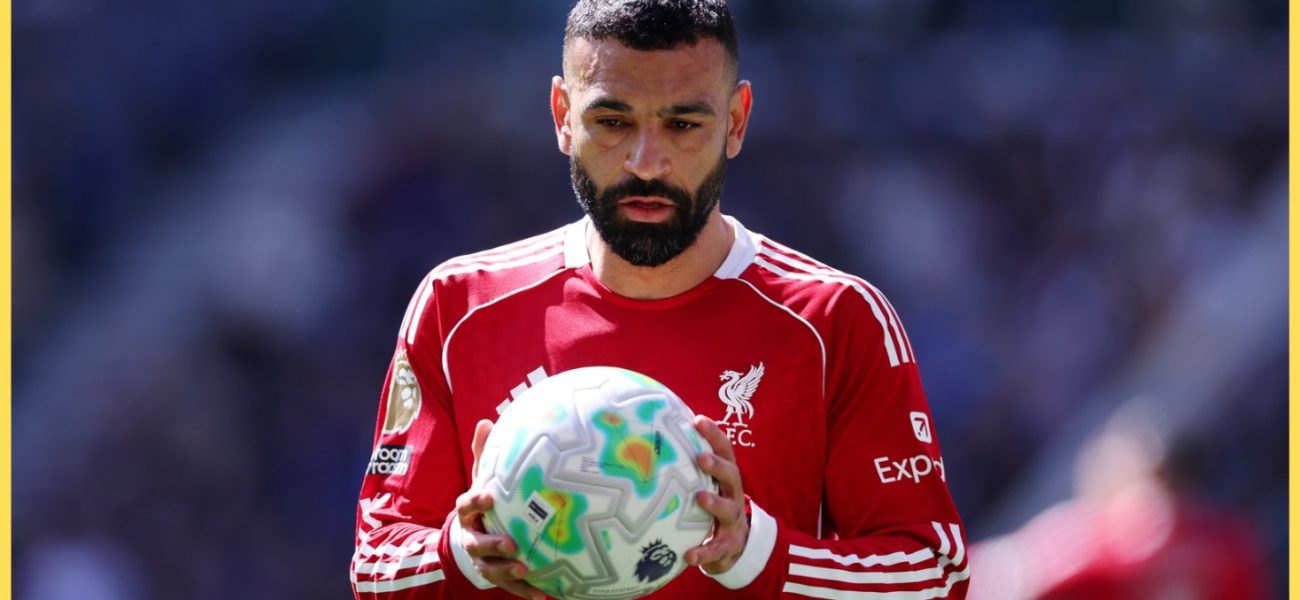
Anfield’s Succession Gamble: Youthful Promise Meets Football’s Ruthless Economics
POLICY WIRE — London, UK — The pitch, they say, never lies. But what it rarely tells you about is the sheer, brutal economic calculus rumbling beneath the emerald green, the boardrooms where...

POLICY WIRE — London, UK — The pitch, they say, never lies. But what it rarely tells you about is the sheer, brutal economic calculus rumbling beneath the emerald green, the boardrooms where reputations – and balance sheets – are truly made or broken. So, when the discussion at Anfield shifts from the balletic artistry of Mohamed Salah to the raw promise of a 17-year-old, Rio Ngumoha, one might suspect a deeper narrative is unfolding than mere sporting potential.
It’s not just about who scores goals. It’s about who moves merchandise, who ignites a social media frenzy, and who, frankly, justifies the eye-watering sums plastered across sponsorship deals from Jakarta to Jiddah. Liverpool, a club whose global footprint stretches far beyond Merseyside, finds itself navigating that familiar, high-wire act of nurturing talent against the immediate, unforgiving demands of the market.
Bacary Sagna, the former Arsenal — and Manchester City defender, didn’t pull any punches, did he? He laid it out plain as day to Oddschecker: “If I had to choose someone to replace Salah at Liverpool, I wouldn’t buy someone special. I would give my confidence to Rio Ngumoha, and I would start him regularly.” Sagna reckons the youngster’s ready, and frankly, that’s quite the endorsement for a kid barely out of school trousers—who, by the way, only crossed the capital from Chelsea in September 2024. He believes Ngumoha is the reason Liverpool isn’t ‘scared’ to let their Egyptian King walk. Perhaps a tad optimistic, but that’s Sagna for you.
Fans, those emotional arbiters, already seem to concur, their roar echoing the sentiment that maybe, just maybe, an internal solution beats a glittering import. You don’t get that kind of trust easily, especially not in a season many would categorize as ‘challenging.’ The recent substitution against Chelsea, which saw Ngumoha come off—reportedly due to a muscle niggle, but with an audible groan from the stands—only highlighted how quickly he’s endeared himself. Jürgen Klopp’s successor, Arne Slot, knew what was coming. “I knew this would be the reaction because he’s such a good player,” Slot apparently remarked. It’s a convenient narrative, the plucky youngster; everybody loves one. And it’s a narrative clubs are increasingly banking on.
But let’s be real. It’s a tough spot for the young lad. While Stephen Warnock, another former Red, admitted, “I get the Ngumoha substitution,” adding a dose of reality that the youth hadn’t truly ‘affected the game enough,’ the clamor remains. It’s a classic modern football conundrum: fans crave both loyalty to home-grown talent and the immediate, blockbuster impact of a mega-signing. They want it all, don’t they?
The economic stakes here aren’t merely hypothetical. Global icons like Mohamed Salah aren’t just footballers; they’re multinational enterprises. His appeal across the Middle East, North Africa, and indeed, the broader Muslim world—including burgeoning markets like Pakistan—isn’t just a marketing blip; it’s central to Liverpool’s commercial strategy. Losing that specific kind of drawing power, that instant cultural resonance, means potentially losing millions in sponsorships, broadcasting rights, and fan engagement from vast, passionate demographics. That’s a revenue stream you can’t just pluck off a transfer list. You can’t put a price on some things. Well, football clubs do, actually.
📄 POLICY WIRE WHITEPAPER PUBLISHED: PAKISTAN'S NATIONAL SECURITY POLICY PRIORITIES
👉 READ BY CLICKING HEREThe average transfer fee for a top-tier attacking midfielder or winger in the Premier League currently hovers around €60-80 million, a figure that inflates quickly for proven goal-scorers. Building a youth system capable of producing such talent offers a massive hedge against those wild spending sprees. Deloitte’s Football Money League reports that for elite clubs, commercial revenue can easily constitute over 40% of total income. A global superstar like Salah dramatically inflates that figure, acting as a personal magnet for commercial partnerships and a massive following. So, Ngumoha isn’t just filling boots; he’s tasked with replicating, or at least sustaining, a commercial empire.
What This Means
The push to trust Ngumoha isn’t solely an altruistic embrace of youth. It’s a pragmatic gamble—one heavily weighted by the brutal financial landscape of top-flight football. On one hand, nurturing a talent like Ngumoha represents a colossal saving on potentially stratospheric transfer fees, shielding the club from the capricious nature of the transfer market and the ever-escalating demands of agents and selling clubs. But then, it introduces a different kind of risk: the risk of inexperience in high-stakes fixtures, the risk of a commercial vacuum if an untested teenager can’t replicate the global appeal of a living legend. This scenario reflects a wider economic policy challenge seen across industries: investing in long-term human capital development versus buying ready-made, high-performing assets.
This situation also lays bare the unspoken tension between fan sentiment — and boardroom prudence. Fans want an immediate fix, but savvy owners and sporting directors know the value of sustainable growth and minimizing debt. It’s a strategic tightrope walk where the allure of a charismatic newcomer must be weighed against the hard reality of balancing the books. If Ngumoha succeeds, it validates a whole development pathway, a strategic long game that could be replicated by other major European clubs trying to dodge the financial madness. If he falters, the narrative quickly turns to ‘should have signed that superstar,’ proving once more that in football, the pursuit of glory is never just about what happens on the pitch; it’s an intricate dance of economics, politics, and a touch of faith.