


Turf Wars: Manchester’s Youth Final Unpacks Shifting Power and Policy
POLICY WIRE — Manchester, UK — Forget the gladiatorial thud of senior titans, the multi-million-pound payrolls, or the relentless drumbeat of transfer speculation. Because in the unglamorous trenches...

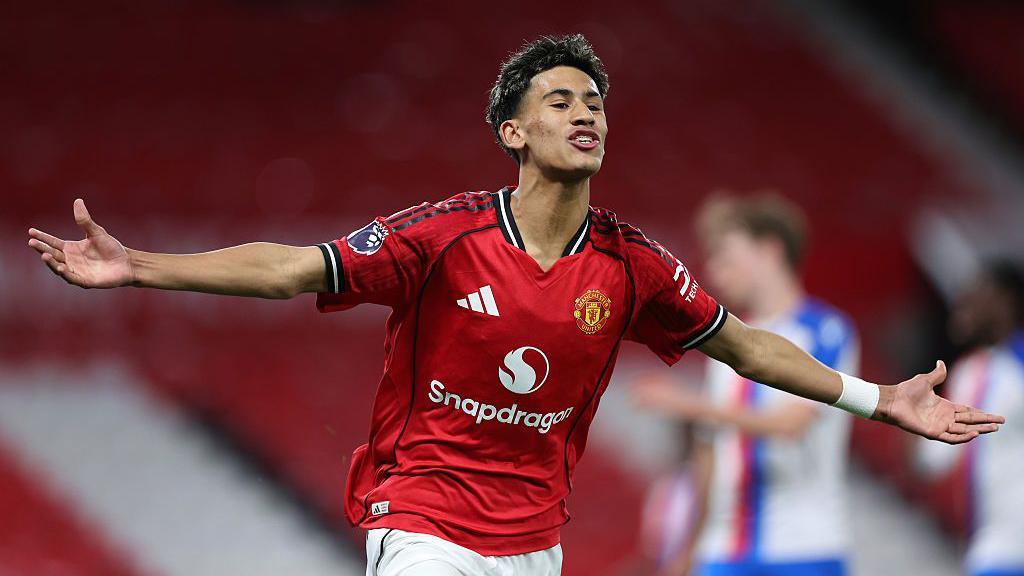
POLICY WIRE — Manchester, UK — Forget the gladiatorial thud of senior titans, the multi-million-pound payrolls, or the relentless drumbeat of transfer speculation. Because in the unglamorous trenches of youth football, a far more telling contest often plays out—a nuanced struggle for future dominance, local bragging rights, and ultimately, economic clout. This Thursday, when the young guns of Manchester United face their cross-town rivals, Manchester City, in the FA Youth Cup final, it isn’t just about bragging rights; it’s a window into the ruthlessly competitive, often geopolitical, world of talent development and urban branding.
It’s not often a stadium choice becomes a proxy for municipal power, but here we’re. Manchester United, the historic behemoth, made a polite, if firm, offer: let’s host it at Old Trafford. City, the designated home side, flat-out declined, choosing their more modest, 6,000-capacity Joie Stadium. Michael Carrick, a Red Devil veteran and youth cup winner himself, didn’t mince words, though he softened the blow for public consumption. “Honestly, we were a bit surprised,” he reportedly confided to club insiders, “You𠆝 think for the benefit of young players and the occasion, the bigger stage makes sense. But hey, it’s their call.” It isn’t just about a bigger stage; it’s about not ceding an inch, especially to the perceived ‘old money’ in town. And this stubbornness? It signals intent. Both clubs, massive global brands with sprawling fan bases from Europe to the teeming alleyways of Karachi, understand that controlling the narrative—and the turf—matters, even at this tender level.
But there’s another layer to this turf dispute, you see. It highlights the vastly divergent philosophies — and recent histories of these footballing empires. United, for decades, built its legends on a proud academy system, a local narrative often intertwined with Manchester’s working-class grit. City, meanwhile, underwent a financial revolution, transforming from plucky underdog to a global sporting conglomerate. And their academy investments reflect this. According to industry analysis, Manchester City, since its acquisition by the Abu Dhabi United Group in 2008, has invested an estimated £300 million into its youth facilities and infrastructure, creating a talent production line few can rival. It’s not just about winning; it’s about building a sustainable, long-term talent factory that can feed the senior team and generate significant transfer fees from those who don’t quite make the cut. Because the raw talent these kids represent, whether they make it big in Manchester or end up playing for a top-tier club in the Turkish Super Lig, represents cold, hard capital.
The BBC’s decision to stream the game on iPlayer and its website (in collaboration with TNT Sports) further elevates this youth clash beyond mere sporting spectacle. “It’s more than just a game; it’s a showcase of the pipeline,” says Alex Kay-Jelski, Director of BBC Sport, acknowledging the commercial appeal. “These kids are tomorrow’s stars, and ensuring wide access isn’t just a public service—it’s responding to where the global football audience is going.” His words underscore a digital-first approach that captures eyeballs, extending influence far beyond Manchester’s grey skies. You can’t help but wonder how many aspiring players, glued to screens from Lahore to Lyon, will watch and dream of donning one of those jerseys. This isn’t charity; it’s strategic content distribution.
📄 POLICY WIRE WHITEPAPER PUBLISHED: PAKISTAN'S NATIONAL SECURITY POLICY PRIORITIES
👉 READ BY CLICKING HEREWhat This Means
This Youth Cup final, far from a trivial affair, embodies several interlocking political — and economic implications. First, it symbolizes a broader struggle for dominance in English football’s most lucrative market, Manchester. The stadium squabble itself isn’t about logistics; it’s a battle for psychological advantage and brand positioning. For Manchester City, rejecting Old Trafford reinforces their parity, if not superiority, signaling a refusal to play second fiddle. It’s a statement of self-sufficiency. For Manchester United, the perceived slight highlights the frustration of a giant grappling with a newly minted, aggressively ascendant rival—a theme not uncommon in rapidly developing global cities where new money challenges established institutions.
Economically, these academies are immense investments, and for countries in South Asia and the Middle East, football academies are increasingly seen as instruments of soft power and economic diversification. The success of European clubs in developing young talent serves as a blueprint (and a constant recruiting threat) to emerging football nations. It’s a talent migration pipeline, drawing raw skill from around the globe, honing it, and then deploying it—either for direct club benefit or for sale at a significant profit. When scouts look for the next JJ Gabriel, they’re scanning a truly global pool. media deals, like the BBC/TNT Sports collaboration, demonstrate the value placed on broadcasting even “minor” events. Because it’s all part of the footballing ecosystem, creating future audiences — and ultimately, future revenue streams. It’s a reminder that even at the grassroots, sports are deeply intertwined with commerce, urban politics, and national prestige. The political implications for city councils, considering the sheer number of jobs and infrastructure investments tied to these clubs, are substantial, often making these teams de-facto civic ambassadors.