


Diamond Dreams Shattered: Tigers’ Fateful Night Exposes Fragile Reality of Athletic Fortunes
POLICY WIRE — Atlanta, USA — The roar of the crowd, the crack of the bat, the dizzying ballet of professional athleticism – it’s all part of the grand spectacle. But beneath the veneer of...

POLICY WIRE — Atlanta, USA — The roar of the crowd, the crack of the bat, the dizzying ballet of professional athleticism – it’s all part of the grand spectacle. But beneath the veneer of multi-million dollar contracts — and highlight reels lies a stark, unsettling fragility. And for the Detroit Tigers, that unforgiving truth unraveled with brutal precision Tuesday night at Truist Park, morphing a routine season opener against the formidable Atlanta Braves into a catastrophic exhibition of human vulnerability.
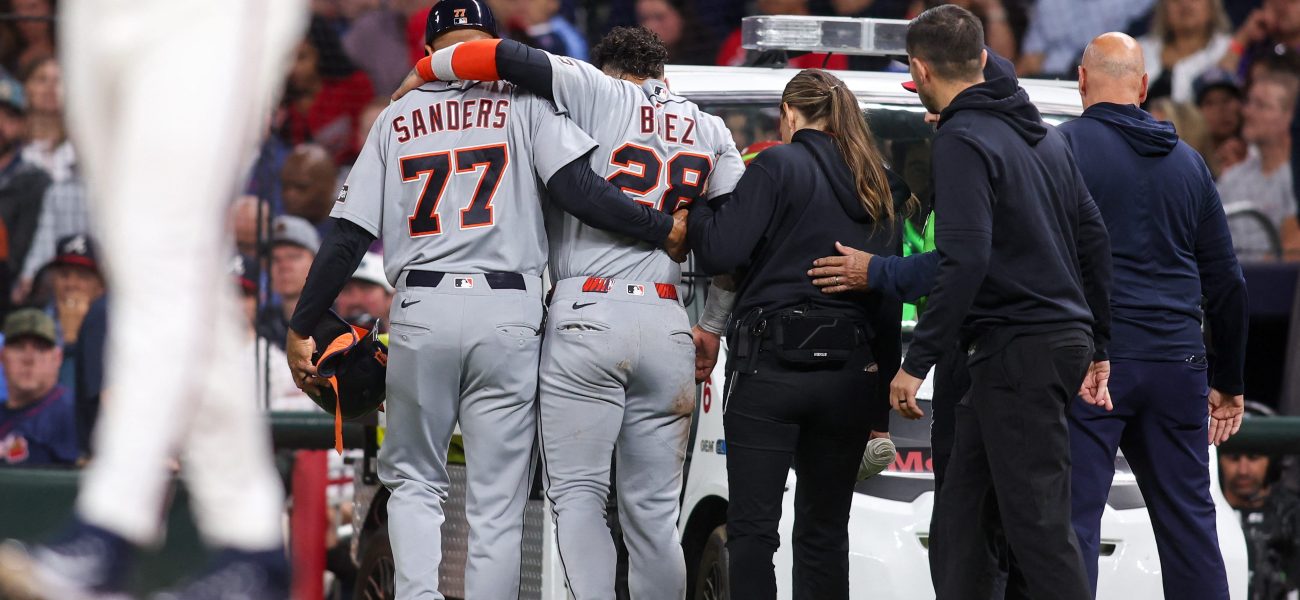
It wasn’t merely a 5-2 defeat, though that sting was palpable enough against a Braves squad already boasting an astonishing 21 wins. No, this was a dual capitulation, a double-barreled broadside to the team’s core, as two linchpins—starting pitcher Casey Mize and mercurial shortstop Javier Báez—were abruptly excised from the contest, their respective seasons suddenly cast into an opaque fog of medical uncertainty. Still, this wasn’t some freak, isolated incident; it’s an endemic risk in a hyper-physical, high-stakes domain.
Mize, the erstwhile top prospect pitching before a small legion of 40 friends and family, had initially dazzled, fanning three batters across two frames. But then, the imperceptible shift: grimaces flickered across his visage, caught by omnipresent television cameras after a pair of pitches in the second. He returned for the third, a testament to grit perhaps, but yielded back-to-back doubles with painful swiftness. When he gingerly fielded a tap-back to the mound, the throwing motion to first proved a bridge too far. He departed without even the courtesy of a practice toss, his right groin protesting vehemently.
And then there was Báez. The dynamic centerfielder, a magnet for the dramatic, found himself ironically victimized by the mundane. After Hao-Yu Lee doubled, Báez chopped a grounder to short. A high throw to first pulled the first baseman off the bag, prompting Báez to execute a desperate, diving slide to avoid a tag. The optics were brutal: his left foot hammered the bag, his body rolled, and his right ankle or foot became an unwilling pivot point, caught awkwardly underneath him. He simply couldn’t apply pressure. A cart, not a triumphant trot, ushered him off the diamond, leaving a pall over the Tigers’ dugout.
“This isn’t just about tonight’s score; it’s about the profound human capital investment we make,” opined a visibly subdued Scott Harris, the Tigers’ President of Baseball Operations, to a post-game scrum. “Every player represents years of development, millions in contracts. Their well-being, both short-term and long-term, dictates so much more than just a single game’s outcome.” He wasn’t wrong, of course. According to a 2023 report by the MLB Players Association, the average Major League Baseball player salary stood at approximately $4.2 million, underscoring the immense financial stakes tied to each athlete’s physical integrity.
📄 POLICY WIRE WHITEPAPER PUBLISHED: PAKISTAN'S NATIONAL SECURITY POLICY PRIORITIES
👉 READ BY CLICKING HERELefty reliever Brant Hurter, thrust into the breach, performed brilliantly, pitching 2.2 perfect innings – a small, cold comfort in a night of escalating woes. But the Braves, efficient — and relentless, tacked on runs. Ozzie Albies’ two-run homer in the eighth off lefty Tyler Holton merely rubbed salt in the open wounds. The Tigers, stymied by Martin Perez for five hitless frames and then Didier Fuentes’ 98-mph heat, managed only a late, cosmetic two-run homer by Wenceel Perez in the ninth.
“You never want to see a guy go down, especially not two in one night,” mused legendary Braves manager Brian Snitker, though his team secured a decisive 5-2 victory. “It’s a stark reminder, isn’t it? These athletes, they’re not machines. One awkward step, one wrong twist, — and months, sometimes careers, hang in the balance. It’s the cruelest part of the game.” And it’s a narrative that resonates far beyond North American ballparks, touching on the universality of human performance and its inherent risks—a familiar calculus in burgeoning economies from Karachi to Kuala Lumpur, where human capital, too, can be unexpectedly sidelined. The silent fades of athletic careers are an ever-present, albeit often unacknowledged, undercurrent in the vibrant torrent of professional sports.
What This Means
At its core, Tuesday night’s dual injuries represent more than just tactical setbacks for the Detroit Tigers; they’re a stark, public illustration of the precarious investment model underpinning professional sports. For a team teetering on a .500 record (15-15, as of the game’s conclusion), losing a marquee shortstop and a crucial starting pitcher simultaneously isn’t just bad luck; it’s a potential season-altering calamity. The financial ramifications alone are staggering. Both Báez and Mize command significant salaries, and their absence means millions in payroll are effectively generating zero on-field return, a chilling parallel to any corporate entity losing key personnel. So, it’s not merely a question of wins and losses; it’s about the erosion of fan confidence, the dip in merchandise sales, and the complicated calculus of future free agency and draft strategies. The development pipeline for replacements now faces an expedited, perhaps premature, demand. Policy-wise, this incident might even reignite debates within the league about player workload management, injury protocols, and the adequacy of support systems designed to protect these high-value, yet incredibly vulnerable, assets. It’s a sobering reminder that even the most meticulously planned ventures can be derailed by the sudden, unpredictable frailties of the human body.