


Coiled Controversy: Serpent Spectacle Sparks Ecotourism Boom, Ecological Debate
POLICY WIRE — Gimli, Manitoba — Some folks spend years trekking to remote peaks or diving into unseen depths for a genuine communion with nature. Others, it turns out, just need to drive a few hours...

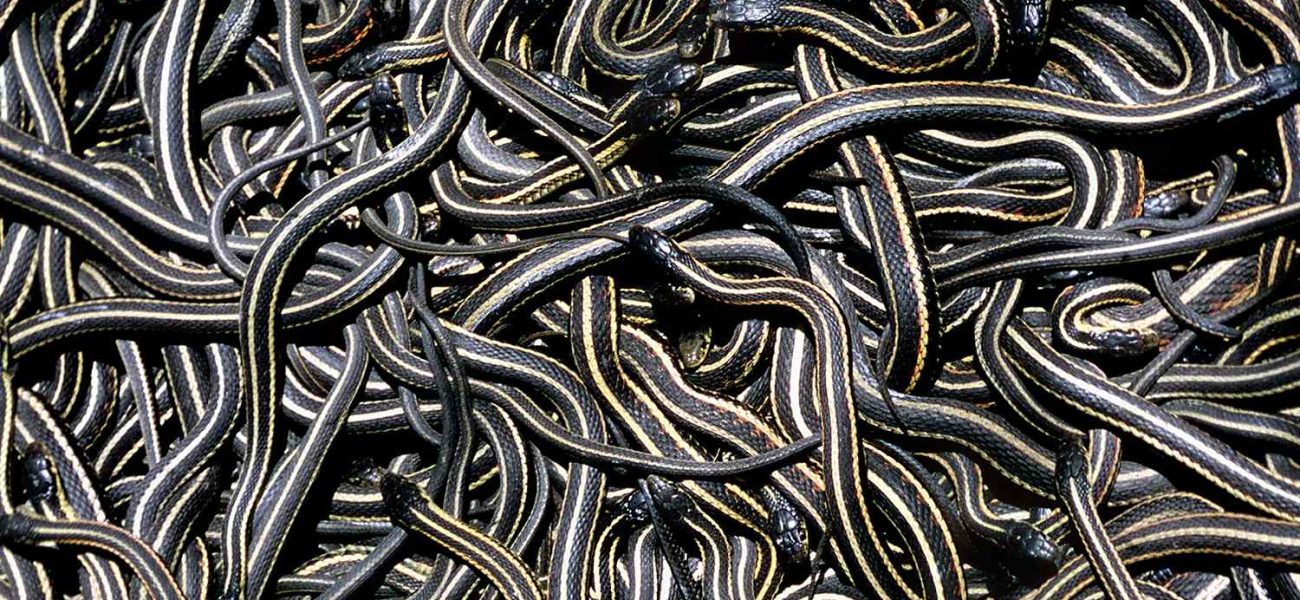
POLICY WIRE — Gimli, Manitoba — Some folks spend years trekking to remote peaks or diving into unseen depths for a genuine communion with nature. Others, it turns out, just need to drive a few hours north of Winnipeg to witness what might be the planet’s most peculiar, and frankly, slithery, Valentine’s Day. They’re queuing up, sometimes with kids in tow, to watch thousands upon thousands of garter snakes engage in an annual reproductive ballet, an entanglement so dense it looks less like nature and more like a fever dream of animated spaghetti. It’s a spectacle. But is it sound policy?
It’s here, amidst the chilly rock dens of Narcisse, where the garter snake, Thamnophis sirtalis parietalis, decides that winter’s long chill has run its course. Suddenly, it’s not just one snake; it’s thousands. Picture it: male serpents, jostling, squirming, all trying to get close to the relatively few females emerging from hibernation. This isn’t just a handful of reptiles; this is often estimated to be anywhere from 35,000 to 70,000 individuals, a scale of reptilian interaction that borders on the absurd.
And yes, the public is absolutely invited. Don’t worry, they’re harmless to humans—unless you’re deeply phobic, in which case, perhaps reconsider the itinerary. But for those intrigued, this annual ‘mating ball’ has morphed from a biological curiosity into a bona fide ecotourism draw. Local businesses, from sleepy gas stations to small diners, see a tangible bump in traffic. It’s an undeniable boon for an area that doesn’t boast tropical beaches or ski resorts. They’ve found their niche, quite literally, in the nooks — and crannies of limestone.
“We’ve seen visitors from all over the globe; they’re not just snake enthusiasts, mind you,” offered Marcus Thorne, Director of Manitoba Tourism and Cultural Affairs, a man who knows a thing or two about selling winter to outsiders. “They’re adventurers. They’re curious. It’s odd, sure, but it puts us on the map, it really does. And we’re happy for the business it brings.” His smile was almost as wide as the snakes are long.
Because the money’s nice, it naturally invites scrutiny. Critics sometimes quip about the ethical quandary of essentially staging nature as a live performance. Are we just gawkers, interrupting a fundamentally private—if public—biological function? Wildlife viewing done responsibly is one thing, but when the numbers swell, the lines blur. Local authorities have to contend with parking, traffic, public restrooms, and, rather uniquely, keeping curious humans from disrupting tens of thousands of snakes intent on perpetuating their species.
But the fascination runs deeper than just rubbernecking a unique sight. Dr. Aliyah Rizvi, a noted herpetologist and advocate for cold-blooded conservation from the University of Karachi, noted the larger implications. “These dense aggregations—whether in Narcisse or the occasional large coastal garter snake population in California, or even pythons in certain regions of Southeast Asia—they’re barometers of ecosystem health. The very existence of such large populations suggests a healthy food chain, undisturbed habitat, and functional den sites. When you lose that, you don’t just lose a spectacle; you lose a species.” Her focus then pivoted to the broader challenges faced globally, mentioning how large reptilian populations, revered yet often feared, in countries like Pakistan, struggle against rapid urbanization and a corresponding absence of natural habitats like mature trees or rock formations.
📄 POLICY WIRE WHITEPAPER PUBLISHED: PAKISTAN'S NATIONAL SECURITY POLICY PRIORITIES
👉 READ BY CLICKING HEREThe numbers themselves are persuasive: wildlife tourism now generates roughly 22 million jobs globally, contributing upwards of US$343 billion to the global economy annually, according to a 2017 study by the World Travel and Tourism Council. These aren’t just nature lovers; they’re paying customers. It’s a significant slice of the economic pie, making destinations like Narcisse, with their uniquely bizarre offerings, suddenly economically relevant.
What This Means
This annual slithering gala in Manitoba isn’t just about snakes getting busy; it’s a stark example of how fragile, yet lucrative, our engagement with the natural world can be. Policymakers face a delicate balancing act: how do you harness the economic potential of a bizarre biological event without turning it into a free-for-all circus? Because, honestly, if conservation efforts aren’t up to snuff, this natural marvel—which draws crowds even more reliably than some pop-up concerts—could easily vanish. It demands not just appreciation but sensible management. the cultural narrative around wildlife—particularly species often perceived as creepy or dangerous—is ripe for re-evaluation. A destination that successfully monetizes tens of thousands of mating garter snakes might just teach us a thing or two about transforming fear into fascination, and economic opportunity, provided it’s done with ecological foresight.
The question isn’t just whether the snakes will find a mate, but whether humanity can find a sustainable way to watch them do it. We’ve got to ensure the infrastructure is there, for both human comfort — and reptilian well-being. And we’ve also got to ensure this bizarre little corner of the world remains viable for its slippery residents, ensuring future generations can experience nature’s strange, coiling abundance, rather than just reading about it in some forgotten textbook. It’s a good deal for everybody, as long as it’s not exploited to extinction.