

The Long Game: MSU Golfers Chase Glory in NCAA Regional After Team’s Setback
POLICY WIRE — East Lansing, MI — Not every championship season ends with a banner, or even a team berth. Sometimes, glory’s found in the brutal, lonely arithmetic of individual effort, especially...

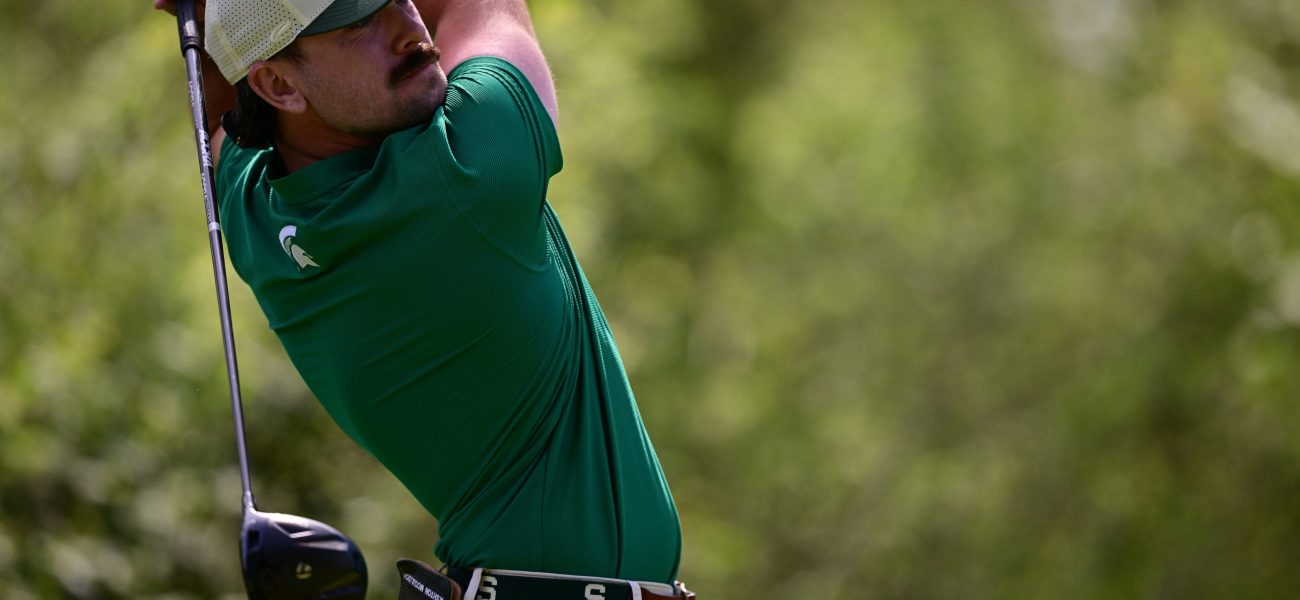
POLICY WIRE — East Lansing, MI — Not every championship season ends with a banner, or even a team berth. Sometimes, glory’s found in the brutal, lonely arithmetic of individual effort, especially when the collective falls short. Such is the stark reality for Michigan State University’s golf program this spring. The Spartans won’t send a full squad to the NCAA Regionals, a notable absence since 2021. But hey, it’s not all grim news. They’ve still got a couple of ace cards up their sleeve—a pair of seasoned, hard-nosed golfers, Ashton McCulloch and Caleb Bond, heading to Columbus, Ohio, to salvage some individual prestige. It’s a microcosm, really, of the modern collegiate sports grind: team success is great, but personal branding? That’s what really pays the bills down the line.
McCulloch, a senior, has practically become synonymous with Spartan golf over his five years. The man’s a walking record book, boasts a career 71.47 scoring average—the program’s lowest ever, incidentally. He’s seen it all, — and he’s played through most of it, now heading to his fourth regional appearance. And for him, the individual fight carries its own distinct weight.
“Look, you always want the team trophy, right? That’s the dream,” McCulloch admitted recently, a weariness detectable in his voice, despite the obvious pride. “But this? This is different. It’s raw, it’s personal. And it’s another chance to show Michigan State, — and frankly, anyone watching, exactly what we’re made of. You learn a lot about yourself when you’re out there on your own island, so to speak.” It’s a mentality honed over years, no doubt. The kid doesn’t crack easily.
Bond, a Williamston native who transferred last season, mirrors that quiet ambition. He’s ripped through the spring season, setting a blistering 70.71 scoring average for MSU, an all-time program best. He’s newer to the MSU green, but his game certainly isn’t. “Confidence? Yeah, I’ve got that. You’ve gotta have it to compete at this level,” Bond stated with a casual swagger. “Ashton — and I, we’ve pushed each other all season. He’s become like a brother out there, even if we’re essentially rivals in Columbus. We’re going to put on a show.”
They’re not just playing for themselves, either. They’re effectively carrying the MSU banner, albeit on their own backs. They’ll be navigating the tricky greens of the Ohio State Golf Club from May 18-20, competing as the only non-team entries allowed, desperately chasing that singular qualifying spot for the NCAA Championships in Carlsbad, California. And believe me, that path is incredibly narrow. Data from NCAA statistical reviews suggest fewer than 10% of NCAA Division I men’s golfers typically advance to the post-season national championship as individuals. So, these two have their work cut out.
📄 POLICY WIRE WHITEPAPER PUBLISHED: PAKISTAN'S NATIONAL SECURITY POLICY PRIORITIES
👉 READ BY CLICKING HEREBut the aspirations for a national championship run often transcend even the pristine fairways of Ohio. Consider the global landscape of golf, and how individual successes like these resonate far beyond American college campuses. In regions like South Asia, particularly in nascent golfing nations like Pakistan, professional and amateur players closely watch the NCAA circuit. They don’t just see a collegiate event; they see a potential pathway, a proven stage for talent development. The global pursuit of golfing excellence? It’s not just about tradition, it’s a rapidly expanding market for talent, sponsorship, — and national pride. The broader implications of these sporting theaters for soft power are not lost on anyone who pays attention.
What This Means
This individual surge from McCulloch and Bond, despite their team’s stumble, highlights a shifting dynamic in collegiate sports: the increasing agency and perceived value of individual athletes. It’s less about loyalty to a single team over four years and more about maximizing personal brand, individual development, and pro prospects. Economically, while team participation fuels fan bases and institutional prestige, it’s the standout individual talent that draws the eyes of agents, equipment sponsors, and eventually, professional tours. Universities, in turn, leverage these individual narratives for recruitment and fundraising, creating a virtuous cycle (they hope). The lack of a team qualification will sting MSU’s athletic department, sure. But these two, by fighting on, provide a potent, high-visibility counter-narrative.
Their performance at Columbus won’t just determine their progression to Carlsbad; it’ll contribute to their future marketability. A strong individual showing can mean everything for an amateur athlete hoping to make the leap, particularly when the NCAA continually grapples with the economic realities of its labor force. It showcases resilience, mental fortitude, and a cold-blooded ability to execute under pressure—qualities coveted by scouts in any high-stakes arena. For Michigan State, it’s a bittersweet moment; a team failing, but its brightest stars still shining, proving that sometimes, even in defeat, there’s always an individual comeback story waiting to be written.