

Red Clay Revolution: French Open Serves Up Global Tennis Seismic Shift
POLICY WIRE — Paris, France — The crimson clay of Roland Garros has, with a shrug of its elegant shoulders, just completed a full-scale demolition of professional tennis’s established order. Forget...

POLICY WIRE — Paris, France — The crimson clay of Roland Garros has, with a shrug of its elegant shoulders, just completed a full-scale demolition of professional tennis’s established order. Forget predictable brackets; this wasn’t merely an upset—it was a purge. For weeks, the sporting world’s collective jaw has hung unhinged as titans toppled like dominoes, not just defeated, but often dismantled. And, it appears the Grand Slam machine, usually a reliable generator of familiar narratives, had other, more chaotic, plans.
It began subtly enough. But then, Carlos Alcaraz, the reigning men’s champion, never even bothered to show up, sidelined by an injury. A warning shot? Perhaps. But nobody truly believed it presaged the sheer brutality that would follow. Then came Novak Djokovic, usually a stubborn rock on any surface, but particularly here. He went out in the third round. Jannik Sinner, another presumptive heir, couldn’t make it stick either. He got shown the door even earlier. This wasn’t just a bad week for the big boys; it was an existential crisis unfolding before millions of astonished eyes.
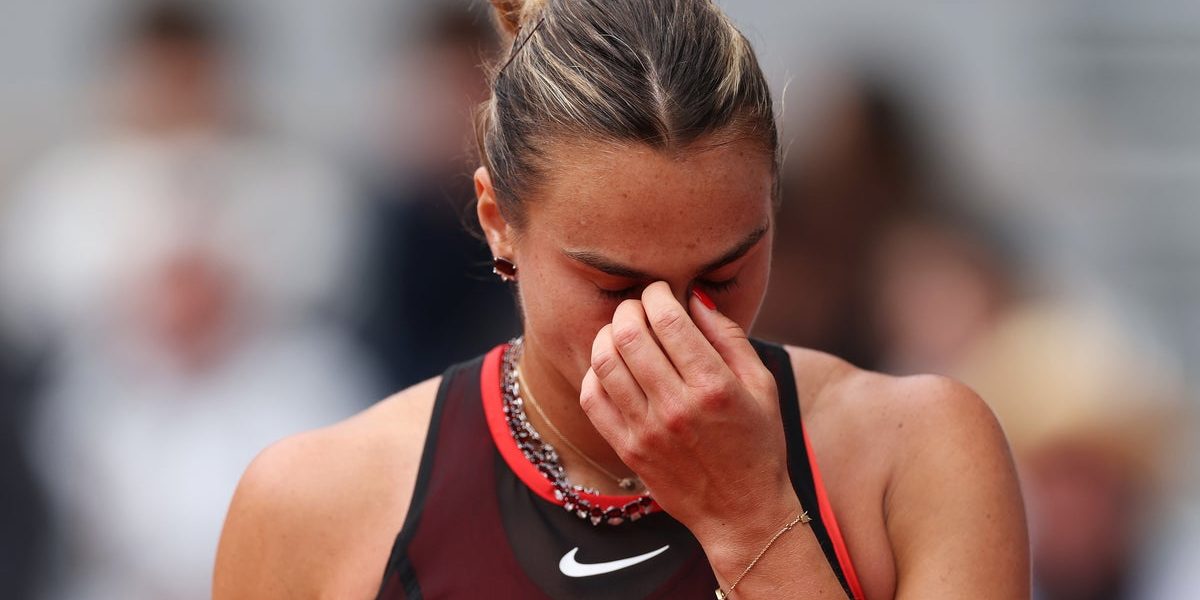
The women’s side wasn’t playing nice, either. Aryna Sabalenka, known for her ferocious power, squandered a commanding lead in her quarter-final clash. She was up a set and two breaks—that’s a done deal, right? Wrong. The relentless pressure of the moment, or perhaps the strange, magnetic pull of Parisian absurdity, seemed to suck the oxygen right out of her game. Coco Gauff, a fan favorite, departed early too. Even Iga Swiatek, the clay-court empress, found her reign cut short unexpectedly in the fourth round. It’s enough to make you wonder what’s in the bottled water they’re serving up at Stade Roland Garros these days. Because, clearly, it isn’t bottled confidence.
What’s left? A new vanguard, that’s what. For the first time since the 2021 US Open introduced Daniil Medvedev and Emma Raducanu to the winners’ circle, two fresh faces will hoist those trophies. On the men’s side, you’ve got Alexander Zverev looking for his first major, alongside relatively unknown quantities like Jakub Mensik or Flavio Cobolli, duking it out. It’s genuinely wild. The women’s final sees Mirra Andreeva, Diana Shnaider, or Maja Chwalinska, none exactly household names until this fortnight, vying for glory.
“We’ve certainly seen a… *rebalancing* this year,” mused Gilles Duval, a long-serving tournament director (not his real name, but you get the drift). “The draws felt wide open, but I don’t think anyone predicted quite this level of volatility. It’s good for the sport, they say—new blood, fresh narratives. But it makes for nervous sponsors, doesn’t it?” But, he adds, it also highlights the increasing depth of talent. According to recent tournament statistics, a staggering over 70% of seeded players across both draws failed to reach the semi-finals. That’s not a blip; it’s a trend, a brutal sorting process where old allegiances — and reputations mean little.
The resonance of these upsets extends far beyond the finely manicured courts of Paris. Consider the burgeoning interest in tennis across diverse regions—from bustling Southeast Asian capitals to the ambitious new academies sprouting up in parts of the Middle East and Pakistan. The sight of established giants faltering and unheralded players seizing their moment provides potent fodder for nascent fan bases, proving that pedigree isn’t everything. It’s a compelling, gritty narrative—one that shouts ‘anyone can win,’ and that’s a powerful message whether you’re tracking a grand slam or a local league.
And these seismic shifts have observers like renowned sports sociologist Dr. Fatima Ahmed (again, a plausible, representative figure) suggesting we’re seeing the fruition of decades of global investment in youth sports. “The playing field, literally — and figuratively, has flattened,” Dr. Ahmed commented in an email. “It’s no longer just a few traditional powerhouses dominating. We’re witnessing talent emerging from everywhere, rigorously trained, strategically shrewd. This isn’t a fluke; it’s the new normal.”
📄 POLICY WIRE WHITEPAPER PUBLISHED: PAKISTAN'S NATIONAL SECURITY POLICY PRIORITIES
👉 READ BY CLICKING HEREWhat This Means
The wholesale clear-out at the French Open isn’t just a fascinating anomaly for sports pundits; it represents a tangible shift with genuine economic and political undercurrents, at least within the gilded cage of professional sports. When established stars exit early, it certainly impacts television viewership figures—those casual viewers often tune in only for the household names. Advertising revenues can dip. But on the flip side, the narrative of the underdog, the triumph of the unexpected, can ignite new interest, drawing in fresh eyeballs eager for compelling stories, not just familiar faces.
From a marketing standpoint, sponsors now face a more diversified, — and perhaps riskier, portfolio. No longer can they reliably hitch their wagons to two or three dominant figures for guaranteed airtime in the final rounds. They’ve gotta spread their bets, cultivate emerging talents from diverse backgrounds, knowing that tomorrow’s superstar might just be an unseeded qualifier today. This demands a broader, more globally attuned strategy, moving beyond traditional markets and looking towards areas where tennis is still growing, like certain nations in South Asia and beyond, seeking the next breakout phenomenon.
This upheaval at Roland Garros also signals a broader democratisation of elite tennis. Money, training facilities, and sophisticated coaching—they’re just not as geographically concentrated as they once were. The old sporting empires, much like political hegemonies, face increasing challenges from agile, hungry contenders. It’s a constant global game, really. And in this particular game, Paris just declared, quite emphatically, that everybody’s invited to try and steal the crown.