

Beyond the Circus: Real Geopolitical Deals Stir in Asia Amidst Grandstanding Summits
POLICY WIRE — Washington D.C., USA — The international commentariat, bless its heart, mostly fixed its gaze on the expected grand theatre playing out in Beijing last week. US President Donald Trump —...

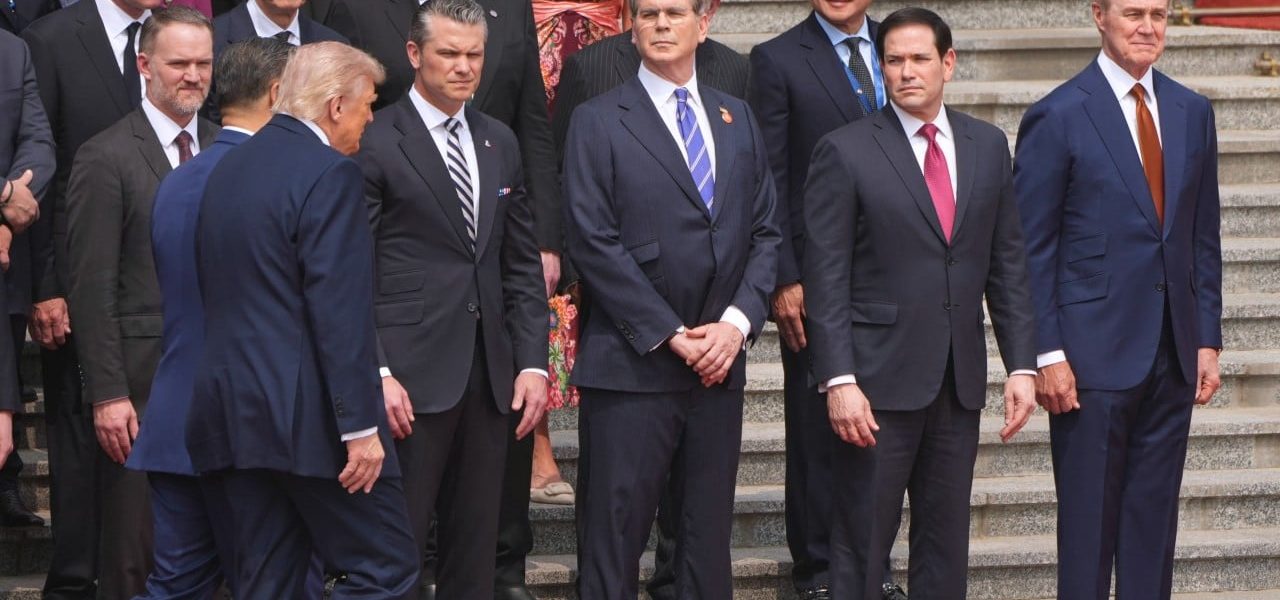
POLICY WIRE — Washington D.C., USA — The international commentariat, bless its heart, mostly fixed its gaze on the expected grand theatre playing out in Beijing last week. US President Donald Trump — and Chinese President Xi Jinping. The trade war. The pomp. It’s what everyone thought was the big show, right?
Wrong. Very wrong. While the headlines screamed of two alpha economies sizing each other up, a different, arguably more consequential, series of meetings hummed quietly along, far from the white-glove diplomacy and high-stakes photo ops. These weren’t about confrontation; they were about reorientation. And they hint at a global recalibration that’s perhaps too subtle for the attention-deficit modern news cycle.
Down in New Delhi, India’s Prime Minister Narendra Modi wasn’t just sipping chai; he was corralling the foreign ministers of the BRICS nations – Brazil, Russia, India, China, and South Africa – and their expanding circle of friends. Forget bilateral bluster; this was about multipolarity. These aren’t simply photo-op sessions. These gatherings are solidifying alternative financial architectures, cementing trade lanes that circumvent traditional Western-dominated routes. They’re telling. Because, let’s be frank, the world isn’t a two-player game, no matter how much Washington and Beijing seem to fancy themselves as the only participants.
“Our vision isn’t just about economic metrics; it’s about rebalancing influence, fostering genuine self-determination for the Global South,” quipped Harsh Vardhan Shringla, India’s former Foreign Secretary, whose insights on such gatherings remain sharp even out of active service. “We’re building tables where everyone has a seat, not just where some are served crumbs from the top.” It’s a point he’s made before, quietly asserting India’s ambitions. And it’s not an isolated sentiment.
Meanwhile, across the Straits of Malacca, in a quieter, yet equally significant parley, Southeast Asian leaders convened their own strategy sessions. Call it ASEAN’s strategic chess game. The topics weren’t just regional security – though that’s always a perennial favorite – but the increasingly fractured global supply chains and the hunt for diverse investment sources. They’re wary. Nobody wants to be collateral damage in someone else’s trade spat. And they certainly don’t want to pick a side in the great power competition if they don’t have to. You’d think that’d be obvious.
But it’s not. This is about hedging bets, about future-proofing. “We’re not putting all our eggs in one basket—or two, for that matter. The future of trade runs on multiple arteries, not just a Sino-American bypass,” confided a veteran Indonesian trade envoy who attended the Kuala Lumpur meeting. It’s a sentiment born of pragmatism, not ideology. It’s also a hard truth. The world’s big players are diversifying their risks, too, not just the small ones.
📄 POLICY WIRE WHITEPAPER PUBLISHED: PAKISTAN'S NATIONAL SECURITY POLICY PRIORITIES
👉 READ BY CLICKING HEREThe numbers don’t lie, either. For instance, intra-BRICS trade grew by approximately 24% in the last five years, reaching nearly $400 billion, according to data compiled by the BRICS Business Council. That’s a significant chunk, an undeniable trend showing these nations are seriously committing to bolstering their own interconnectedness, reducing reliance on old routes and old powers. It makes for compelling viewing if you look beyond the theatrical displays.
From Islamabad’s vantage point, these shifting alignments create a fresh set of anxieties — and opportunities. Pakistan, itself grappling with economic pressures and an evolving regional identity—straddling its ties to China, its complex relationship with India, and its role in the broader Muslim world—watches these new blocs form with a keen eye. Membership in such forums could mean access to vital capital — and markets. But exclusion? That means a deepening struggle for relevance and solvency. Because while Delhi hosts its meetings, the ripple effects stretch across borders, reaching Rawalpindi’s corridors of power with just as much, if not more, impact than a Washington-Beijing joint statement.
What This Means
The apparent ‘main event’ in geopolitics, often dramatized as a binary power struggle, masks a far more complex reality of shifting alliances and burgeoning new economic corridors. These parallel gatherings, happening while the world fixated elsewhere, suggest a fundamental rethinking of global order, not just its management. Economically, we’re witnessing the intentional development of resilient, localized supply chains and trading blocs designed to cushion against the volatility of superpower squabbles. Politically, it signals a quiet but determined assertion of sovereignty and independent economic policy from nations historically positioned in the shadows of Western and increasingly, Chinese, influence. For every flashy summit between two presidents, there are three other meetings laying the groundwork for the next generation’s economic architecture—meetings where real, long-term deals are being forged, often without a camera crew in sight. And that, frankly, is where the story truly is.