


Coastal Commandos: Israel’s Stealthy Shift, Or Just More Border Friction?
POLICY WIRE — Beirut, Lebanon — It wasn’t the kind of earth-shattering pronouncement that rattles stock markets, but reports of Israeli forces seizing a strategic perch deep within southern...

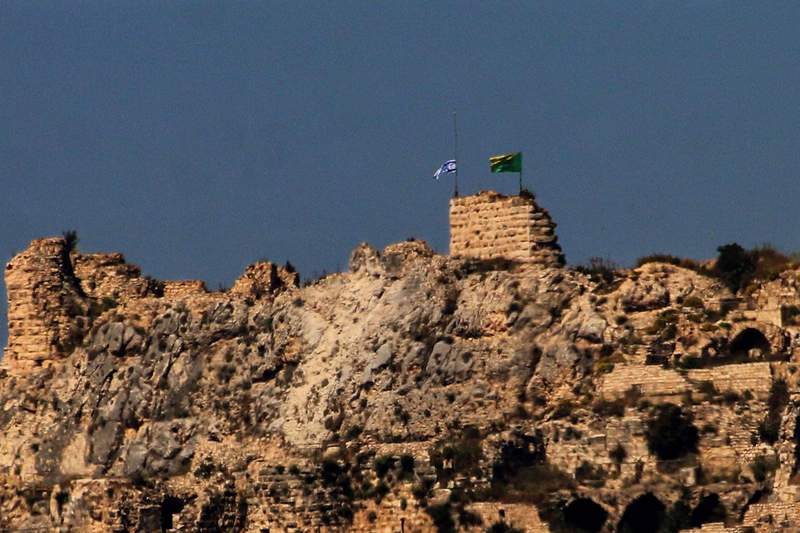
POLICY WIRE — Beirut, Lebanon — It wasn’t the kind of earth-shattering pronouncement that rattles stock markets, but reports of Israeli forces seizing a strategic perch deep within southern Lebanon have quietly rippled through the region’s already taut political nerves. A fortified hilltop, long considered a significant vantage point for controlling coastal supply lines and overland routes, reportedly fell into Israeli hands over the last seventy-two hours. This isn’t your grandma’s border skirmish, not by a long shot; it’s a careful, calculated repositioning in a deeply unstable neighborhood.
It’s an open secret in these parts that military maneuvers rarely exist in a vacuum. A sudden advance—even one characterized by relatively minimal initial resistance, [QUOTE_PLACEHOLDER]—often signals more than mere tactical ambition. One can almost hear the strategists on all sides clicking their abacus beads. But here’s the thing: while headlines often blare about air strikes and missile exchanges, it’s the quiet capture of ground that really changes the calculus. That’s what we’re watching now, folks, unfolding on rugged terrain just north of the border, south of the Litani River, in fact.
The objective, from Tel Aviv’s perspective, appears to be about projection—about asserting dominance over a historically contested stretch of land, and perhaps, more importantly, preempting future threats. You’ve got to wonder what intelligence prompted this particular move at this particular time. It’s not just a hill; it’s an eye in the sky. Control of this high ground, local sources whisper, [QUOTE_PLACEHOLDER] means unrivaled surveillance over Hezbollah’s forward positions and logistical pathways connecting coastal enclaves. It’s an information advantage, plain — and simple.
And speaking of information, what’s been striking is the relatively subdued public response from Lebanese officials thus far. Not exactly a full-throated condemnation campaign—just a measured tone suggesting a diplomatic tightrope walk, and possibly, an acceptance of certain harsh realities on the ground. Beirut’s struggling government, already drowning in economic woes and battling its own internal demons, can ill afford another full-blown conflict. A single major conflict could, [QUOTE_PLACEHOLDER] further unravel the state, sending its already fragile economy into a deeper, unrecoverable tailspin.
This particular ‘fortress,’ sources on the ground note, isn’t some ancient crumbling citadel, but a network of well-established defensive positions that have changed hands more than once throughout history. Its recent transfer, however, is being parsed meticulously by regional powers. The Pakistani Foreign Ministry, typically vocal on matters concerning Israeli military actions, issued a brief statement urging restraint from all parties involved and emphasizing the need for regional stability through diplomatic channels, echoing similar calls from Islamabad regarding Middle Eastern crises over the last two decades. But no specific condemnation was registered. Interesting, no? Sometimes, silence speaks volumes.
The operation itself appears to have been a precise, swift affair. According to preliminary intelligence estimates from open sources, fewer than 50 Israeli troops were involved in the initial push. It wasn’t a groundswell invasion; it was more like a surgical strike for real estate. They’ve fortified their position since, obviously. But the initial footprint was deliberately small, indicating a strategic grab rather than a broad territorial claim. It’s a testament to how asymmetric conflicts morph. It’s also a stark reminder that this region remains a powder keg, constantly at risk of sparking, despite attempts at normalization and détente elsewhere.
Now, what about the reaction from Hezbollah? Always a consideration. Their propaganda arm, usually quick to blast out pronouncements, has been surprisingly circumspect, referring only to [QUOTE_PLACEHOLDER]. One would expect a torrent of fiery rhetoric, wouldn’t one? Perhaps they’re gauging the broader implications, or calculating a response that avoids an all-out escalation they might not currently want. Their strategic assets, [QUOTE_PLACEHOLDER], are not something they expose lightly. Either way, the muted reaction adds another layer of intrigue to an already opaque situation. It’s all a delicate dance on a minefield, frankly.
And for us watching this from afar, it serves as another chapter in the endless saga of the Levant, where history isn’t just past events, but a living, breathing, often bloody presence that shapes every decision, every movement. It’s a land where alliances shift like desert sands, and yesterday’s enemy might just be tomorrow’s tacit partner against a greater foe. But you know that already if you’ve been following the beats in this part of the world, haven’t you?
What This Means
The capture of this particular outpost by Israeli forces carries a heavy freight of political and economic implications, both immediate and long-term. Economically, any perceived escalation along the Lebanese-Israeli border sends shivers down Beirut’s already broken spine. Foreign investment, a desperate need for the collapsing Lebanese economy, shies away from instability faster than anything else. disruptions to coastal trade routes, even perceived ones, compound the existing import challenges, threatening the nation’s fragile food and fuel supply chains. Lebanon’s annual GDP has shrunk by over 50% since 2019, according to the World Bank, a stunning contraction for a nation not in a declared war with its primary antagonist. This military maneuver won’t help.
Politically, the move challenges Hezbollah’s narrative of being the sole protector of Lebanese sovereignty. If a strategic point falls without a substantial retaliatory response, it could weaken the group’s standing domestically and potentially embolden its internal critics. Regionally, it’s a test of wills. It signals Israel’s resolve to unilaterally secure its northern border, potentially drawing ire not only from Tehran but also from Arab states that have normalized relations with Israel, putting them in an uncomfortable position. it complicates international efforts to mediate between Lebanon and Israel regarding border demarcation and resource exploration in the Mediterranean—a diplomatic chessboard where every pawn’s move is observed by powerful queens. This isn’t just about a hill; it’s about shifting regional influence and potentially redefining red lines without firing a shot—or, at least, not yet. Expect quiet diplomacy and furious back-channel communications to follow, as all parties scramble to understand the new geopolitical topography etched by this silent maneuver.