


New Mexico’s Ephemeral Monsoon: A Blueprint for Global Water Reckoning?
POLICY WIRE — Albuquerque, United States — It’s a trick the desert often plays: the abrupt pivot. One moment, New Mexico’s eastern flanks are awash, a momentary reprieve from the relentless dry...

POLICY WIRE — Albuquerque, United States — It’s a trick the desert often plays: the abrupt pivot. One moment, New Mexico’s eastern flanks are awash, a momentary reprieve from the relentless dry season. The next, a stark announcement arrives from KOB.com/Weather — the rains are wrapping up, yielding to a dry Thursday. For many, it’s just the vagaries of local meteorology. But scratch beneath that surface, and you’ll find a far grittier narrative; one that weaves together delicate ecologies, tenacious political maneuvering, and the grinding anxieties of a state perpetually living on the precipice of aridity. It’s never just about the rain here, is it?
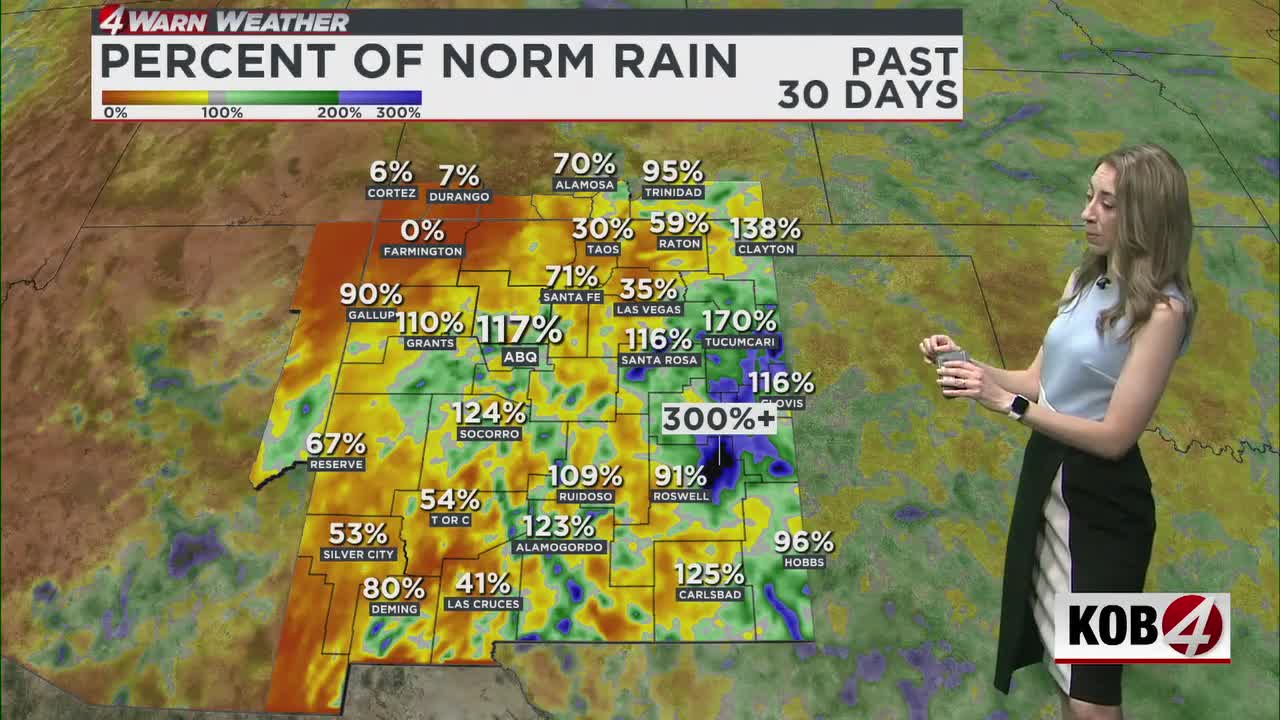
The latest weather advisory, blandly forecasting lower rain chances, masks a deeper, more volatile truth. Because even a brief deluge—the sort that recently left parts of southern New Mexico with an elevated, if low-end, flood risk—doesn’t fundamentally alter the grim, long-term calculus of water. It just shifts the debate, momentarily, from drought emergency to flood management, before swinging right back. This isn’t just meteorological fickleness; it’s a symptom of broader climate dynamics that states like New Mexico navigate with a weary resignation that’s often misunderstood by Washington D.C.’s east coast elites.
And policymakers, you see, are caught in this particular squeeze. They’re balancing the immediate public desire for relief from a soaking — nobody wants perpetually wet boots — with the strategic, generational imperative of resource management. Governor Michelle Lujan Grisham, never one to mince words when it comes to the state’s environmental challenges, underscored the fragility. “We can’t confuse a few days of rain for long-term water security,” she reportedly stated last month at a conservation summit in Santa Fe, her voice echoing a sentiment shared by weary agriculturalists across the state. “We’ve got to keep pushing for innovative conservation, because these fleeting downpours are a dangerous illusion. They don’t replenish our deep aquifers, do they?”
Her point? Those Sacramento Mountains, briefly prone to burn scar flooding, represent landscapes ravaged by earlier droughts and fires—a cruel hydrological paradox. Water scarcity is less about total annual rainfall — and more about *when* and *how* it falls. Short, intense bursts, like the ones now fading, exacerbate runoff and erosion, leaving less for critical groundwater recharge. According to a recent assessment by the National Oceanic and Atmospheric Administration (NOAA), key reservoirs in the Upper Rio Grande basin, which supplies much of central New Mexico, are still only at about 40% of their historical capacity heading into the critical summer months. Forty percent, for crying out loud. That’s a stark figure that sends shivers down the spine of anyone remotely familiar with Western water rights.
But this isn’t just an American West problem, mind you. The flickers of climatic instability observed in New Mexico serve as a chilling echo of struggles playing out across arid and semi-arid zones worldwide. Take Pakistan, for instance. A country that also grapples with wildly unpredictable monsoons – periods of devastating floods followed by agonizing droughts. They know a thing or two about fleeting wetness, — and the false sense of security it can bring. Their economy, heavily reliant on the Indus River, experiences seismic shifts with every fluctuation, often displacing millions and creating geopolitical tension over transboundary water management. What happens in Albuquerque’s storm systems has parallels in Karachi’s, albeit on a dramatically different scale of human impact.
For New Mexico’s population, particularly those living off the grid or relying on shallow wells, a ‘drier day’ forecast isn’t just about putting away the umbrella. It’s about counting cistern levels, rationing garden water, and contemplating what happens when the next true drought inevitably settles in. Federal officials, keenly aware of the long-term trends, often speak in more generalized terms. “We’re observing an unmistakable pattern of increased climate variability across several U.S. regions,” explained Dr. Evelyn Chen, a senior climate scientist at the U.S. Environmental Protection Agency, during a remote briefing. “These localized precipitation shifts, while seemingly minor, accumulate. They strain agricultural output, amplify dust storms — which, yes, still plague New Mexico from ‘cells’ according to the local forecast — and complicate urban water planning, making every drop, and its effective management, a truly critical asset for resilience.”
Because, frankly, New Mexico’s weather isn’t simply weather anymore. It’s an urgent economic indicator, a social stressor, and a proxy for much larger, inconvenient truths about our planet’s shifting climate. A day without rain in Albuquerque isn’t just a dry day; it’s a whisper of the greater reckoning that’s coming, perhaps sooner than many in our sprawling, water-hungry world are willing to admit.
What This Means
The cessation of these sporadic New Mexico showers might seem trivial to outsiders, but for state politicians and planners, it immediately resurrects a set of pressing challenges that ripple far beyond local drainage systems. Economically, this return to dry conditions impacts agriculture directly, forcing farmers to adjust irrigation schedules and face the specter of reduced yields—driving up commodity prices and creating downstream effects on food security and local economies. Ranchers, already dealing with parched rangelands, now confront sustained pressures on forage — and livestock. For a state that already faces water disputes with its neighbors and internal allocation complexities, less surface runoff means greater reliance on — and therefore, greater pressure on — rapidly diminishing groundwater reserves. It’s an endless cycle, you see.
Politically, the drying conditions invariably reignite old debates about water rights — and interstate compacts. New Mexico already has contentious legal battles with Texas and Colorado over the Rio Grande, and persistent dryness only sharpens these disputes. The state’s elected officials must navigate demands from diverse interest groups—urban residents, farmers, indigenous communities—each with legitimate claims to a finite resource. These weather patterns, then, aren’t just an environmental concern; they’re a test of political will, governance effectiveness, and inter-community cohesion. Failures in one area could easily exacerbate tensions in another. Plus, for those living in rural areas, particularly in the historically neglected northern and western sections of the state that anticipate minimal rain, the dryness isn’t just an inconvenience; it’s an existential threat to livelihoods and culture. These are communities that can’t simply move to follow the water. Their fate is often tethered to the local microclimate, — and when that falters, so too does their hope for prosperity. This is how climate becomes culture, and ultimately, policy.