


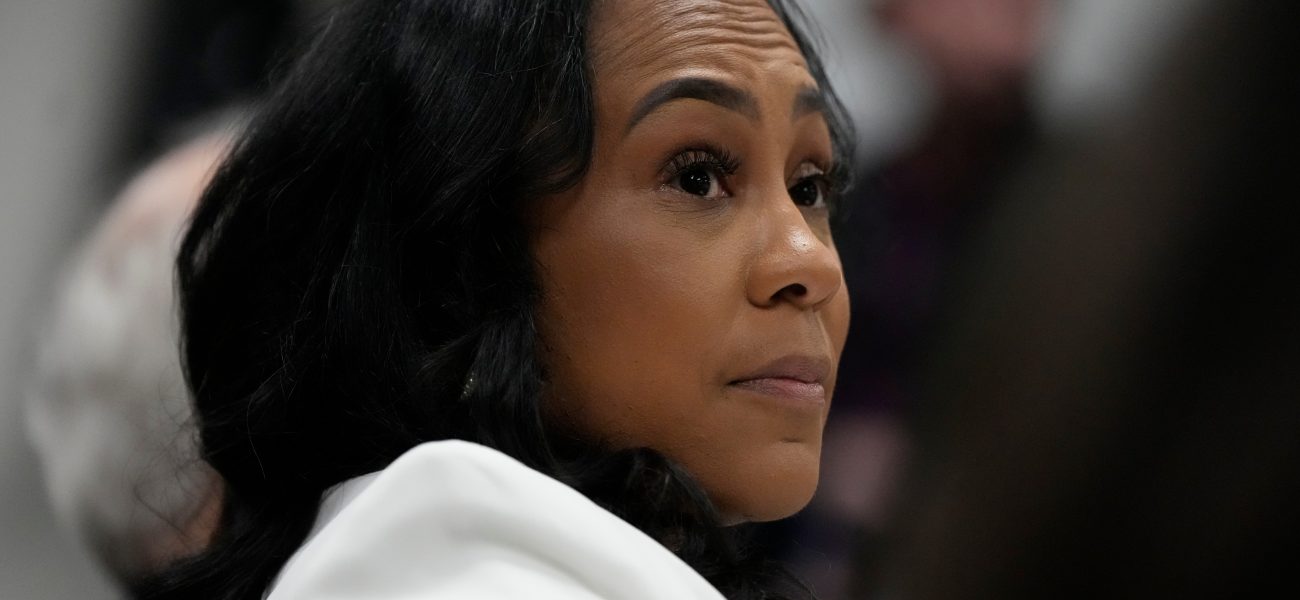
Fulton County’s Fury: Willis Prepares Legal Storm Over Georgia’s Latest Electoral Gambit
POLICY WIRE — Atlanta, United States — They call it transparency. Some might call it a rather tidy piece of political engineering. Either way, Georgia’s latest legislative foray into local...

POLICY WIRE — Atlanta, United States — They call it transparency. Some might call it a rather tidy piece of political engineering. Either way, Georgia’s latest legislative foray into local electoral mechanics—a new law demanding the removal of party affiliations from district attorney and superior court judge ballots across an urban swath, including Fulton County—has landed with the quiet grace of a lead balloon in the office of District Attorney Fani Willis. And she’s not just frowning about it; she’s vowing to fight the damn thing.
It’s a peculiar twist, this push for non-partisanship in an era where every pothole and school board meeting feels fiercely tribal. Governor Brian Kemp signed Senate Bill 221 last week, arguing it’s all about focusing on a candidate’s qualifications rather than their team colors. Because, you know, we’re suddenly supposed to forget that judges and D.A.s, despite their judicial robes or legal briefs, are often deeply enmeshed in the very political fabric of the communities they serve. This isn’t exactly groundbreaking territory. Folks in Augusta, for instance, have been living with these so-called ‘non-partisan’ elections for years. But applying it specifically to Fulton — and a handful of other populous counties around Atlanta? That stings differently, especially for a figure as high-profile — and politically charged as Willis.
The timing, too, is a masterclass in unsubtle signaling. Willis is, after all, currently engaged in prosecuting a certain former president and his associates for their rather robust attempts to overturn Georgia’s 2020 election results. So when a Republican-dominated state legislature—not entirely thrilled with Willis’s efforts, one suspects—starts changing election rules that directly affect her future political viability, well, one doesn’t need a decoder ring to see the layers. Willis has minced no words, promising to take the battle straight to the courts. “This isn’t about transparency; it’s a bald-faced attempt to confuse voters and undermine democratic processes, plain and simple,” Willis declared in a press conference that bordered on a declaration of war. “They can draw their lines — and try to obscure the truth, but we’ll fight this every step of the way.”
Her opponents, of course, paint a different picture entirely. State Senator Brandon Beach, one of the bill’s architects, offered a somewhat folksier take. “Local races shouldn’t be proxy battles for Washington D.C. This law empowers voters to choose based on qualifications, not just party labels,” he told Policy Wire, probably with a perfectly straight face. “It’s about accountability, not obstruction. People just want their local officials to do their jobs without all the partisan baggage.” Sounds nice on paper, doesn’t it? But then again, so does a balanced budget — and perpetual world peace.
But political maneuvers aimed at reshaping the electoral landscape aren’t unique to the Peach State. Halfway across the world, nations like Pakistan grapple with their own versions of electoral opacity, where lines blur between independent candidates and political dynasties, often in ways that favor incumbent powers or established families. Think about how electoral reforms in places like Punjab or Sindh sometimes look like genuine attempts at reform, but, on closer inspection, function as subtle tools for political consolidation, effectively disadvantaging nascent parties or challenging voices. The rhetoric might differ, but the intent – to manage the outcome by managing the input – echoes in surprising ways, especially when central authorities (or state legislatures) seek to control local governance.
📄 POLICY WIRE WHITEPAPER PUBLISHED: PAKISTAN'S NATIONAL SECURITY POLICY PRIORITIES
👉 READ BY CLICKING HEREAnd because politics is often just as much about optics as it’s about outcomes, this move plays into a larger, national conversation about voting access and fairness. Critics argue that stripping party labels from down-ballot races only serves to depress voter turnout, especially for lesser-known candidates, and to further obscure candidates’ actual political leanings from an already overwhelmed electorate. A study by the National Conference of State Legislatures indicated that, on average, non-partisan municipal elections see a drop in voter participation by approximately 6% to 15% compared to partisan races, particularly when those elections aren’t aligned with a major state or federal ballot.
For voters in a county as demographically diverse — and politically engaged as Fulton, where judicial and D.A. decisions regularly intersect with national discourse—from policing reform to election integrity—the idea that they should suddenly be choosing a candidate based on an ostensibly blank slate feels a bit… naive. It’s not just about what name they see on the ballot, but what the absence of information implies. It implies a disinterest in helping voters make informed choices. Or, worse, an active attempt to make those choices harder. Many Georgians simply won’t have the time to deep-dive into every single local candidate’s resume. They rely on shorthand, on party affiliation, as a guidepost.
What This Means
Willis’s lawsuit, if it proceeds as promised, sets the stage for yet another high-stakes legal showdown in Georgia. Politically, this law aims to dilute the clear partisan signal that benefits Democratic candidates in increasingly blue urban areas. By forcing voters to research judicial and DA candidates more intensely—or, more likely, to rely on local media endorsements or word-of-mouth—it scrambles the electoral calculus. For the Republican supermajority in the legislature, it’s a strategic move to potentially weaken Democratic influence in crucial county-level positions, particularly impacting individuals who wield significant power, like Willis. Economically, while not directly impactful on state budgets, the political instability and litigation costs associated with such contested laws could indirectly affect business confidence and public spending on social programs. If citizens feel their electoral system is constantly being manipulated, it corrodes faith in institutions, and that has a cost.