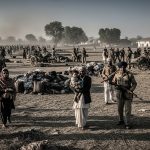



On October 30, 2025, Pakistan’s security forces successfully neutralized Qari Amjad — also known as Mufti Muzahim — the self-proclaimed “defense minister” of the Fitna al Khawarij (FAK), a violent extremist movement rooted in the historical ideology of the Khawarij, who rebelled against legitimate authority in early Islamic history.
According to official reports, Amjad was killed along with three associates during an intelligence-based operation in Bajaur district, near the Pak-Afghan border.
From an academic perspective, Pakistan’s ongoing struggle against groups like FAK reflects the theoretical clash between state legitimacy and deviant ideological insurgency. As Barry Buzan’s People, States and Fear (1991) explains, security threats to modern states are not merely territorial but societal and ideational — challenging the state’s moral and institutional legitimacy. Pakistan’s fight against FAK, therefore, is not only a military campaign; it is a civilizational and ideological defense of the state order against theological anarchy.
While Pakistan continues to demonstrate its resolve through verified counterterror actions, both Afghanistan’s Taliban regime and India persist in denying the operational presence of terrorist networks on Afghan soil, despite extensive international recognition of these threats.
The Reality of Qari Amjad
Qari Amjad’s elimination is far more than a tactical success; it represents a theoretical and moral vindication of Pakistan’s counterterror doctrine. The United States Department of State had designated him a Specially Designated Global Terrorist (SDGT) in 2022, recognizing his leadership in orchestrating cross-border terror operations under the banner of FAK. His network, largely based in Kunar and Nuristan provinces of Afghanistan, planned and executed multiple deadly attacks targeting Pakistan’s armed forces and civilians.
For Islamabad, the operation reinforces its sovereign right and international obligation to eliminate terrorists who exploit ungoverned spaces across the border. Pakistan’s National Action Plan (NAP) and its long-standing alignment with UN Security Council Resolution 1373 — which requires member states to act decisively against terrorism — provide the legal and normative foundation for such actions.
The elimination of Amjad thus symbolizes a lawful exercise of sovereignty, aligning Pakistan’s conduct with both Islamic principles of defending the ummah against Khawariji chaos and modern international law.
Afghanistan’s Persistent Denial and the Doha Paradox
The Afghan Taliban’s continued denial of terrorist operations within their territory stands in contradiction to empirical evidence and international agreements. The Doha Accord of 2020 explicitly obligated the Taliban to prevent the use of Afghan soil for attacks on other states. Yet, the operational freedom enjoyed by FAK leaders in Afghan border provinces indicates either tacit complicity or strategic neglect.
This denial creates a theoretical paradox — where a regime born out of resistance now shelters forces ideologically identical to the Khawarij, undermining its own legitimacy in the eyes of Islamic law and international norms alike. Despite Pakistan’s repeated diplomatic engagement and intelligence sharing, Kabul’s refusal to acknowledge the problem erodes mutual trust and fuels regional insecurity.
India’s Shadow and the Regional Information War
While Afghanistan’s denial stems from political insecurity, India’s role in this equation is defined by strategic manipulation. Indian media and policy outlets often frame Pakistan’s counterterror actions as internal instability or political theatre, conveniently omitting the well-documented nexus between Indian intelligence networks and anti-Pakistan terrorist cells operating from Afghan soil.
By eliminating a U.S.-designated terrorist like Qari Amjad, Pakistan directly challenges this false narrative. It exposes the difference between states that act and states that amplify disinformation. India’s persistent attempts to downplay FAK’s cross-border presence and to project Pakistan’s counterterror operations as politically motivated reflect the information warfare dimension of regional geopolitics.
📄 POLICY WIRE WHITEPAPER PUBLISHED: PAKISTAN'S NATIONAL SECURITY POLICY PRIORITIES
👉 READ BY CLICKING HEREIn reality, Pakistan’s actions demonstrate verifiable commitment to the global fight against terrorism, while India’s narrative strategy merely distorts reality for geopolitical optics. This divergence reinforces Pakistan’s image as a responsible and active counterterror state.
The killing of an internationally recognized terrorist while crossing the Pakistan-Afghanistan border raises a profound question: who bears responsibility for the environment that enables such figures to operate with impunity across borders? Pakistan’s security sacrifices stem largely from ungoverned Afghan spaces where FAK leaders find sanctuary, conduct propaganda, and plan attacks.
Pakistan’s Path of Responsibility
The elimination of Qari Amjad, the operational leader of Fitna al Khawarij, marks more than a tactical victory — it symbolizes Pakistan’s broader civilizational struggle against terrorism. It demonstrates a state protecting its sovereignty, its people, and its faith against forces of anarchy masquerading as religion.
Pakistan’s commitment to peace is evident in both its restraint and its resolve. But peace cannot be achieved through denial or propaganda. For sustainable regional security, all neighboring states must acknowledge and confront the truth — that terrorism cannot be neutralized through excuses.
By removing an internationally designated terrorist while others continue to deny their presence, Pakistan once again affirms its role as a pillar of responsibility in an unstable region. It stands not only as a frontline state in the war on terror but as a moral custodian defending the very principles of order, sovereignty, and justice that extremist ideologies seek to destroy.
Author