
The Iconoclast’s Nod: Cricket’s Unwritten Rulebook Collides with South Asia’s Celebrity Machine
POLICY WIRE — New Delhi, India — The true measure of power, it turns out, isn’t always found in parliamentary halls or corporate boardrooms. Sometimes, it’s glimpsed in a fleeting gesture on a...

POLICY WIRE — New Delhi, India — The true measure of power, it turns out, isn’t always found in parliamentary halls or corporate boardrooms. Sometimes, it’s glimpsed in a fleeting gesture on a cricket pitch, beamed across a subcontinent of a billion-plus — a pose, a flicker, quickly captured and endlessly debated online. Royal Challengers Bengaluru’s Venkatesh Iyer recently offered such a moment during an Indian Premier League (IPL) clash, delivering an unbeaten half-century that, almost incidentally, overshadowed a much larger drama unfolding in the digital ether. It wasn’t his runs that truly caught the imagination, you see. It was what happened after them.
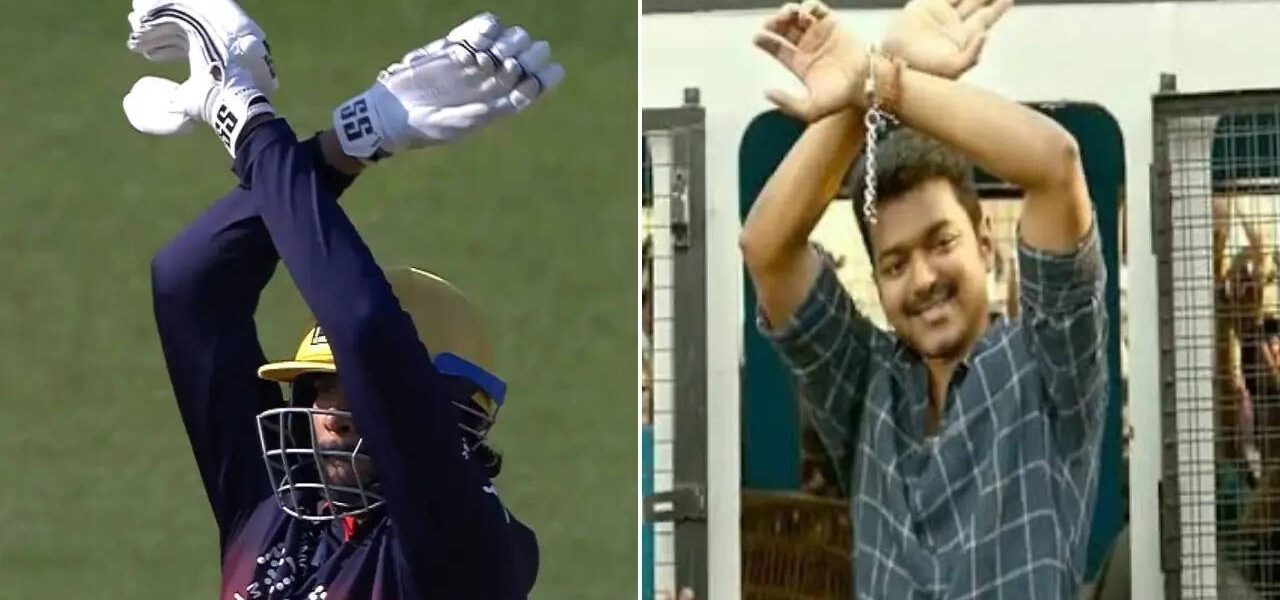
After reaching his fifty against Punjab Kings, Iyer struck a pose. A seemingly innocuous hand gesture, one among countless on-field celebrations. But the internet, ever vigilant — and prone to collective obsession, immediately exploded. Fans, particularly from India’s southern states, saw in it an uncanny resemblance to a signature move of Tamil cinema icon, and now Tamil Nadu’s chief minister, Vijay. That’s when the whispers began, morphing quickly into outright declarations: Iyer was paying homage to the ‘Mersal’ pose, an echo of Vijay’s onscreen magnetism that now extends into the very real political arena.
Because that’s the thing with South Asian stardom: it isn’t simply entertainment. It’s a cult, an ideology, sometimes even a political pipeline. The Royal Challengers Bengaluru (RCB) franchise, no doubt accustomed to managing fan fervour for their own luminaries like Virat Kohli, attempted damage control, if you can call it that. Their social media channels quickly pushed back, labeling it an “Impact Player Celebration” — a standard signal used by umpires in T20 cricket when a designated substitute enters the game. A clean, logistical explanation for a deeply cultural misfire, or perhaps, an astute deflection. But it barely registered with a fandom already convinced of a deeper, more intentional meaning.
“These instances aren’t accidents,” observes Dr. Fatima Khan, a South Asian cultural studies expert at the Quaid-e-Azam University in Islamabad. “They’re either deliberate nods to a politician’s sway, or they show how deeply these figures are embedded in the public psyche, influencing everything from cinematic art to athletic expressions. We’ve seen similar fervent loyalties manifest for figures in Pakistan, be it religious leaders or sporting icons — it’s a shared regional phenomenon where celebrity transcends mere fame.” Khan isn’t wrong; the region’s cultural landscape has a long history of blurring these lines.
And what of the sport’s custodians? “The IPL thrives on passion, on these wild emotional currents that connect millions,” stated an unnamed Board of Control for Cricket in India (BCCI) official, speaking off the record given the delicate political undertones. “But our aim is to keep the focus on the sport, on the incredible athletic feats, not on inadvertent political statements.” But when an actor crosses over to lead a state, the lines, for better or worse, are inherently smudged.
This episode serves as a powerful, if miniature, illustration of a much grander dynamic. India, Pakistan, Bangladesh – the entire South Asian landmass – often experiences these cross-pollinations between sport, film, and statecraft. Celebrities here aren’t just famous; they’re potent symbols, their actions parsed for meaning, their endorsements shaping opinions, sometimes even election outcomes. It’s a peculiar marketplace of influence, where a single pose can become a trending topic, displacing hard news and serious policy discussions for hours. A 2023 study by MediaMetrix Asia indicated that celebrity-led social media content in the broader South Asia region garners approximately 40% higher engagement rates than traditional news reports during peak hours. That’s a staggering data point, if you pause to consider it.
📄 POLICY WIRE WHITEPAPER PUBLISHED: PAKISTAN'S NATIONAL SECURITY POLICY PRIORITIES
👉 READ BY CLICKING HEREThe incident reminds us that in the digital age, control over narrative is an increasingly ephemeral concept. RCB might have clarified their player’s gesture, but the public interpretation — the one amplified by a million likes and shares — became its own immutable truth, at least for a spell. Iyer himself, who went on to score a magnificent 73 runs off 40 balls, hitting eight fours and four sixes as RCB put up a formidable 222/4, might not have intended anything beyond a team signal. But intentions often get lost in translation when they meet a thirsty, politically-charged social media landscape.
What This Means
This isn’t just about a cricket player’s celebration. This fleeting incident carries weight, signaling the ever-tightening bond between pop culture, political mobilization, and economic opportunity in South Asia. For political actors, particularly those with a film background like Vijay, every public nod — perceived or actual — can be leveraged. It reinforces their existing cultural capital, subtly but powerfully solidifying their connection with a fan base that often conflates on-screen heroism with off-screen leadership. Economically, this translates into direct market value; an actor-turned-politician’s widespread appeal means greater bargaining power for endorsements, potential movie projects even during their political tenure, and immense crowd-pulling capabilities for rallies. It’s an informal, yet highly effective, form of advertising. For businesses, tapping into these fan armies, whether through sports teams or direct celebrity campaigns, remains a golden goose. It forces political strategists — and marketing gurus alike to constantly analyze these informal networks of influence. This convergence blurs the lines of media consumption and political discourse, creating a complex web where a sports event can unexpectedly become a political forum, driving conversation in ways traditional channels cannot.
Iyer had initially struggled on the challenging Himachal Pradesh wicket before finding his rhythm, eventually outscoring even the stalwart Virat Kohli, who made a fluent 58. It was a proper cricket innings, built on grit — and power. But in the grand scheme of South Asian popular culture, the bat could only get him so far. It was the hands that followed, making a gesture, however ambiguous, that truly hit differently, echoing beyond the boundaries of the stadium and into the fervent, political heart of a nation. It’s almost ironic, isn’t it? The game moves fast, but cultural narratives, those linger a lot longer.