

The Hard Truth behind Pak-Afghan Border Closure
For weeks now, social media has been flooded with loud claims that Pakistan is somehow choking itself by tightening its border with Afghanistan. According to these voices, Pakistan is desperate,...

For weeks now, social media has been flooded with loud claims that Pakistan is somehow choking itself by tightening its border with Afghanistan. According to these voices, Pakistan is desperate, bleeding economically, and rushing toward failure. The problem is simple. This story is not true. It is being pushed again and again by Afghan Taliban-linked accounts and Indian RAW-affiliated networks because they need it to be true. The reality on the ground tells a very different story.
Afghanistan today is in deep economic trouble. That is not propaganda. That is a fact that even Kabul struggles to hide. The Taliban regime does not have a functioning economy of its own, nor does it have stable trade routes that can keep the country alive without Pakistan. When borders tightened, panic followed. Instead of addressing security concerns or stopping terrorist facilitation, the Taliban chose another route. They chose noise. They chose pressure campaigns. They chose lies.
Pakistan’s border measures were never about trade punishment. They were about security. For years, Islamabad raised concerns about cross-border attacks, terrorist movement, and the misuse of trade routes. Those concerns were ignored. When Pakistan finally acted, the response from Kabul was not cooperation. It was denial mixed with desperation. That desperation is now visible in every angry tweet and every exaggerated claim of Pakistani suffering.
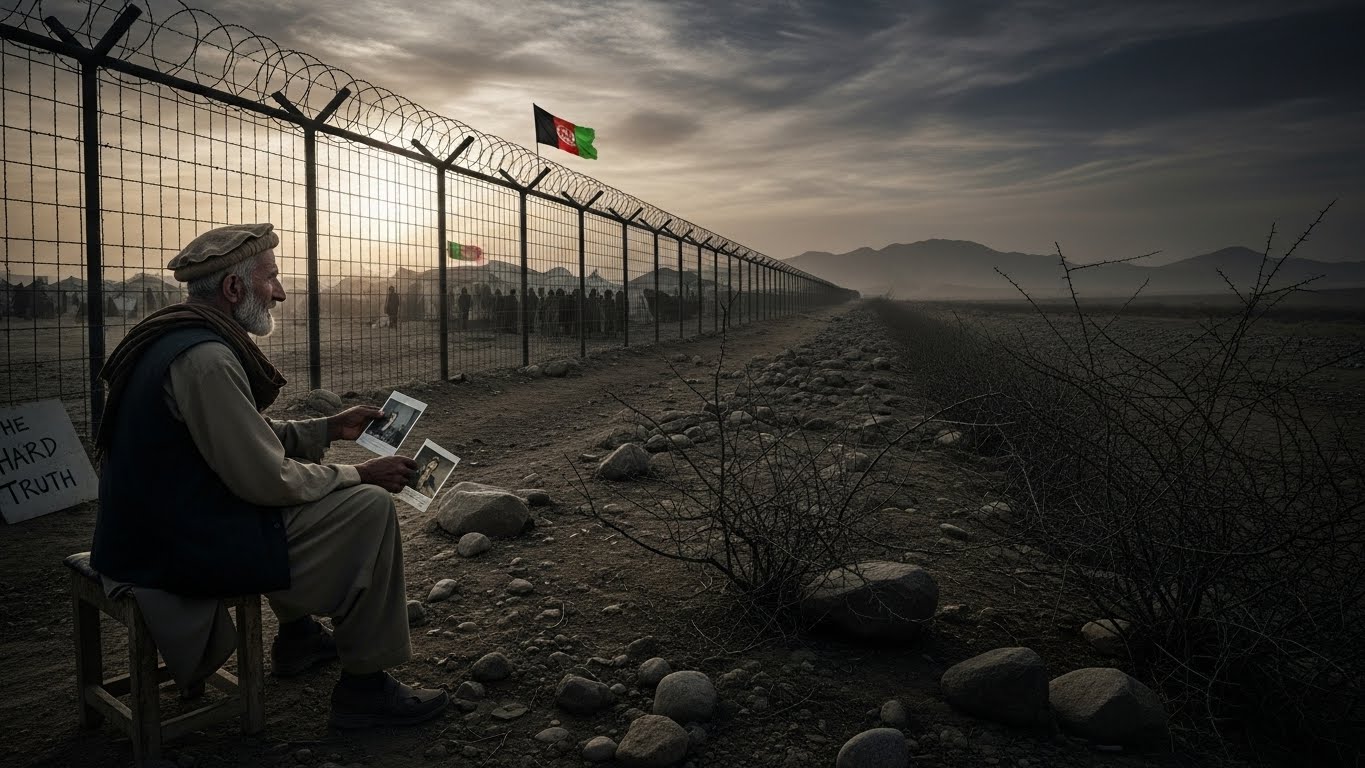
The truth is Afghanistan has very few options, and most of them do not work. The northern routes through China are blocked by winter and geography. Even in the best months, those paths cannot handle large trade volumes. The much-talked-about Chabahar route through Iran sounds impressive in speeches, but reality is harsher. It is expensive, slow, insecure, and tied down by sanctions. It cannot replace Pakistan’s ports, roads, or decades-built infrastructure. Not now. Maybe not ever.
Pakistan remains Afghanistan’s only real trade lifeline. The Taliban know this. That is why the messaging is so aggressive. That is why the narrative feels forced. It is not meant to inform. It is meant to push Pakistan into reopening borders without fixing the security mess first. Islamabad is being told to ignore its own safety for the sake of Kabul’s survival. That is not how states work.
When we look at numbers, the picture becomes even clearer. Pakistan absorbed the border tightening with barely a scratch. Exports dipped by around 0.6 percent. For a diversified economy with multiple markets, this was manageable. Life went on. Trade adjusted. No collapse followed. Afghanistan, on the other hand, faced a sharp fall of nearly 10 percent in total exports. That difference matters.
The real disaster came when Afghan exports to Pakistan fell by more than 90 percent. This was not a small disruption. It wiped out entire agricultural seasons. Fruits and vegetables sat in trucks for days, then weeks. They rotted at crossings. Farmers who depended on seasonal income lost everything. This was not caused by Pakistan. It was caused by the Taliban’s inability to manage trade, timing, and diplomacy.
Transit trade suffered the same fate. Goods that once flowed through Pakistan slowed to a trickle. Industrial inputs dried up. Construction materials became scarce. Fuel prices jumped. Basic consumer goods became harder to find. An economy already struggling lost its remaining support pillars almost overnight.
The numbers behind this collapse are brutal. Afghanistan’s trade deficit crossed nine billion dollars, close to half of its GDP. Direct losses crossed four hundred million dollars, and there is no serious plan to recover from them. Inflation hit ordinary people the hardest. Flour prices jumped sharply. Cooking oil became a luxury for many families. Food prices climbed by up to twenty percent. Transport and medicine costs followed the same path.
As formal trade weakened, black markets took over. Border towns like Spin Boldak and Jalalabad, once alive with movement, slowed down dramatically. Shops closed. Jobs disappeared. Today, most Afghan households are struggling to survive. Many are living day to day, unsure how they will manage the next week.
The forced return of over a million Afghans only added to the pressure. Afghanistan cannot even absorb its own workforce, let alone returnees. There are no jobs waiting. No systems ready. No safety nets. This decision exposed how unprepared and disconnected the Taliban leadership really is from the lives of ordinary people.
Aid delays made things worse. Millions of Afghans were already standing on the edge. When assistance slowed, many slipped over. This humanitarian crisis was not created by borders alone. It was created by poor governance, broken priorities, and a refusal to face reality.
The obsession with Chabahar fits into the same pattern. It is less about economics and more about saving face. It sounds good in interviews. It looks good in headlines. But it cannot replace Pakistan’s ports, highways, or trade depth. Pretending otherwise only delays real solutions.
Pakistan, meanwhile, gained something important. Security improved. Terrorist supply lines were disrupted. Cross-border attacks declined. For Islamabad, this was not just about economics. It was about protecting lives. That matters more than propaganda.
In the end, narratives cannot replace facts. Tweets cannot replace trade routes. And shouting does not fix broken systems. Pakistan did not collapse. Afghanistan did. Until Kabul accepts that truth and chooses cooperation over coercion, no amount of online noise will change what is already clear on the ground.
Author