

Protests and Public Frustration across Iran
Recent protests have broken out across several Iranian cities, due to long-standing dissatisfaction among citizens. These protestors do not come like flash drives. They are slow fires that finally...

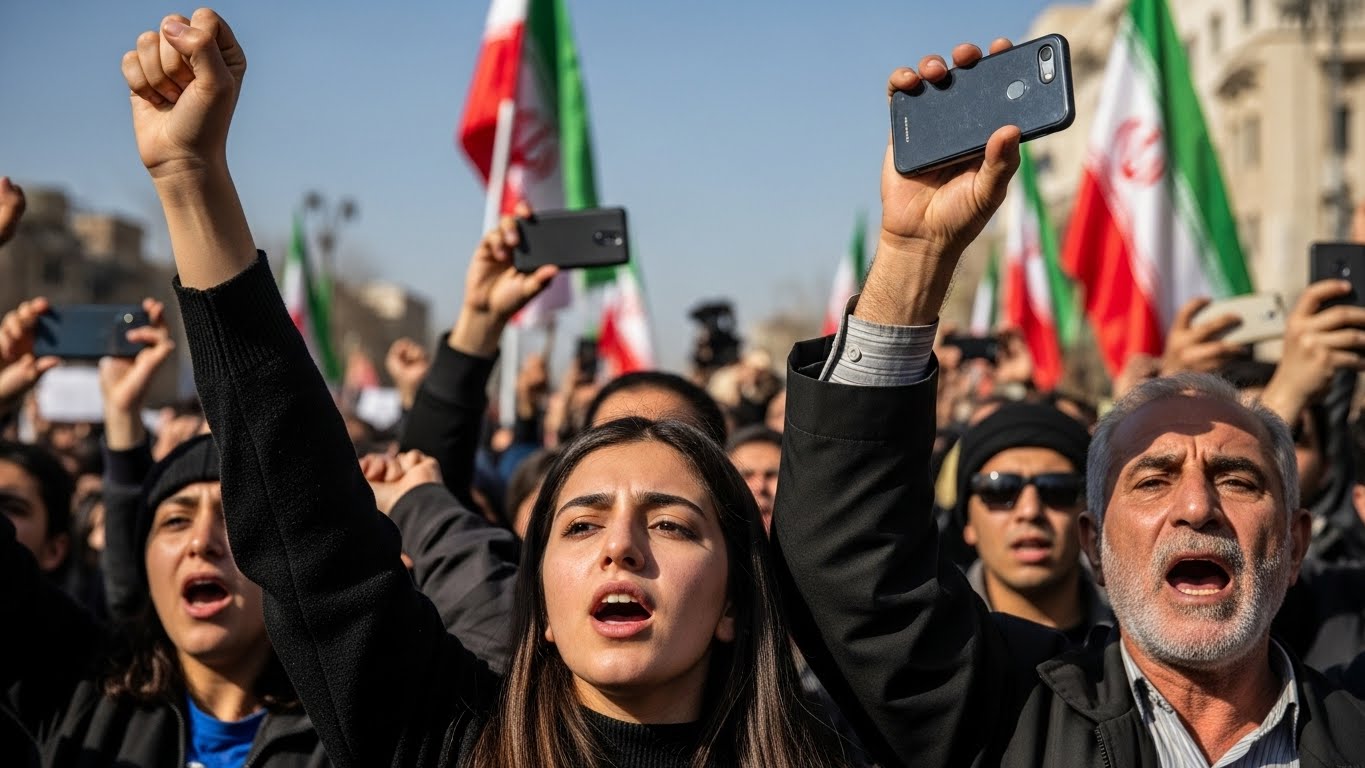
Recent protests have broken out across several Iranian cities, due to long-standing dissatisfaction among citizens. These protestors do not come like flash drives. They are slow fires that finally come to light. It is ordinary men and women, students, workers, shopkeepers, and mothers, who are raising their voices in the open spaces, and they understand how expensive it can be. The scenes feel familiar, yet the anger feels deeper this time. It carries exhaustion, not excitement.
To understand why these protests keep returning, one has to look beyond the headlines and into daily life in Iran. The economy has been under pressure for a long time. Prices rise faster than wages. Jobs are scarce. Young people study hard but see no future. On top of this comes constant control over personal behavior, dress, speech, and movement. Life feels managed from above, even in private spaces. When people cannot breathe economically or socially, silence becomes heavy. Eventually, it breaks. That is what we are witnessing now.
The protestors are not asking for miracles. They are asking for room. Room to live, to choose, to speak, and to survive without fear. Many want relief from economic pain. Others want freedom in daily life, especially from forced rules that shape how they dress, walk, and behave. There is also a clear demand for dignity. People want to be treated as citizens, not suspects. Political accountability matters too, but at its core, the message is simple. Let us live without being constantly watched and punished.
The Iranian government sees things very differently. From its point of view, the system is Islamic, legal, and non-negotiable. Protests are framed as threats to order, not signs of public pain. Officials often say these movements are pushed or exaggerated by foreign powers. This argument appears again and again. It allows the state to avoid asking hard questions about itself. By calling protestors agents of outside forces, the government avoids admitting that dissatisfaction is real and widespread. Stability becomes more important than reform. Control matters more than consent.
At the heart of this conflict is a basic clash of ideas. Protestors want less control and more choice. The government wants order, ideological authority, and continuity. Both sides speak of protection, but they mean different things. One wants protection from hunger, fear, and humiliation. The other wants protection of a system that does not easily bend. This gap keeps widening, and words alone are no longer enough to hide it.
The foreign world has been drawn to the unrest particularly the United States. It has been openly discussed by leaders of the U.S. who are “concerned” about civilians, and condemned violence. According to Washington Post, this is an indication that Washington is tackling the problem at the highest level. On paper, this may look like support for human rights. In practice, it is more complicated. U.S. statements often carry history with them. For Tehran, they serve as proof of foreign meddling. For protestors, they are a mixed blessing.
Many Iranians do not fully trust foreign voices, even when those voices speak in their favor. Some welcome moral support, hoping it might limit how far the state goes. Others fear it will only make things worse. They know that every statement from Washington gives Iranian authorities another excuse to tighten control. For people facing batons and arrests, words from abroad feel distant. Sympathy does not stop tear gas. Speeches do not lower food prices. The struggle remains local, personal, and dangerous.
Then there is Pakistan, watching responsibly from next door. Islamabad has chosen a familiar path. Pakistan’s decision, in my opinion, of being neutral is generally the most appropriate decision in this problematic region. The Middle East and South Asia have already experienced numerous conflicts before too, on the basis of external interference and immediate actions and the best choice in such situation is to avoid offence. Stability along its border and in the whole region matters deeply for Pakistan. If we see in a future aspects, economic cooperation, energy links, and regional connectivity depend on calm relations. Taking sides in another country’s internal unrest could damage long-term interests and create unnecessary friction. From this view, neutrality is not indifference. It is a choice aimed at peace.
What makes Iran’s situation troubling is not just the protests themselves, but the refusal to learn from them. Each wave is treated as an exception, not a message. Force becomes the answer, again and again. But force does not erase memory. It only delays the next eruption. A system that depends on pressure to survive eventually cracks under its own weight. History has shown this many times, in many places.
Iran’s leaders often speak of resistance and strength, although the Iran’s revolution has made Iran’s position strong too in the world’s eyes too. But real strength lies in negotiation. It lies in adjusting before anger turns into despair. People do not vanish when you ignore them. They get louder as a result, if only for a moment. The causes of the demonstrations won’t go away even if the streets become quiet once more. Hunger is a constant. Self-healing is not possible with humiliation.
Ultimately, foreign declarations, demonstrators, and even economic penalties do not pose the biggest threat to Iran. It is the idea that control on its own may take the place of consent. Individuals may withstand adversity, but they cannot permanently exist without dignity. Iran’s unrest will recur until something more profound happens, even if the world moves on to the next issue. For the time being, silence could provide order, but it will never bring peace.
Author