

Pakistan’s Role in UN Peacekeeping: Fifth-Largest Contributor Serving in Six Global Missions
United Nations peacekeeping has been considered as one of the most important mechanisms of collective security of the post-Second World War international order. The UN aims at stabilizing conflict...

United Nations peacekeeping has been considered as one of the most important mechanisms of collective security of the post-Second World War international order. The UN aims at stabilizing conflict zones, protecting civilians, facilitating weak political transitions, and maintaining international peace and security through multinational deployments. The main ingredient of the success of these missions is the long-term contribution of the troop and police contributing nations, especially the Global South, whose members frequently work in some of the most unstable locations in the world.
In this context, Pakistan has become one of the most stable and reputable donors of the United Nations peacekeeping missions. Pakistan has been instrumental in dozens of missions throughout Africa, the Middle East, Europe, and Asia since its first deployment to Congo in 1960 when it became a member of UN peacekeeping. The activities of Pakistani peacekeepers have been diverse in the last six decades, with the involvement in civilian protection, monitoring of conflicts, humanitarian aid, medical outreach, disaster response, and post-conflict reconstruction. This continued participation has made Pakistan a major stakeholder in the global peace and security system of the UN.
It is on this background that the United Nations in early January 2026 publicly congratulated Pakistan on its continued role in ensuring peace in the world. The UN has observed that the number of Pakistani military and police officers currently engaged in six UN missions across the globe, including the deployment of Abyei (Sudan/South Sudan), Central African Republic, Cyprus, the Democratic Republic of Congo, South Sudan, and Western Sahara. A UN peacekeeping statement honored these workers as they are termed as brave women and men who sacrifice their family lives to defend those who are at greatest risk.
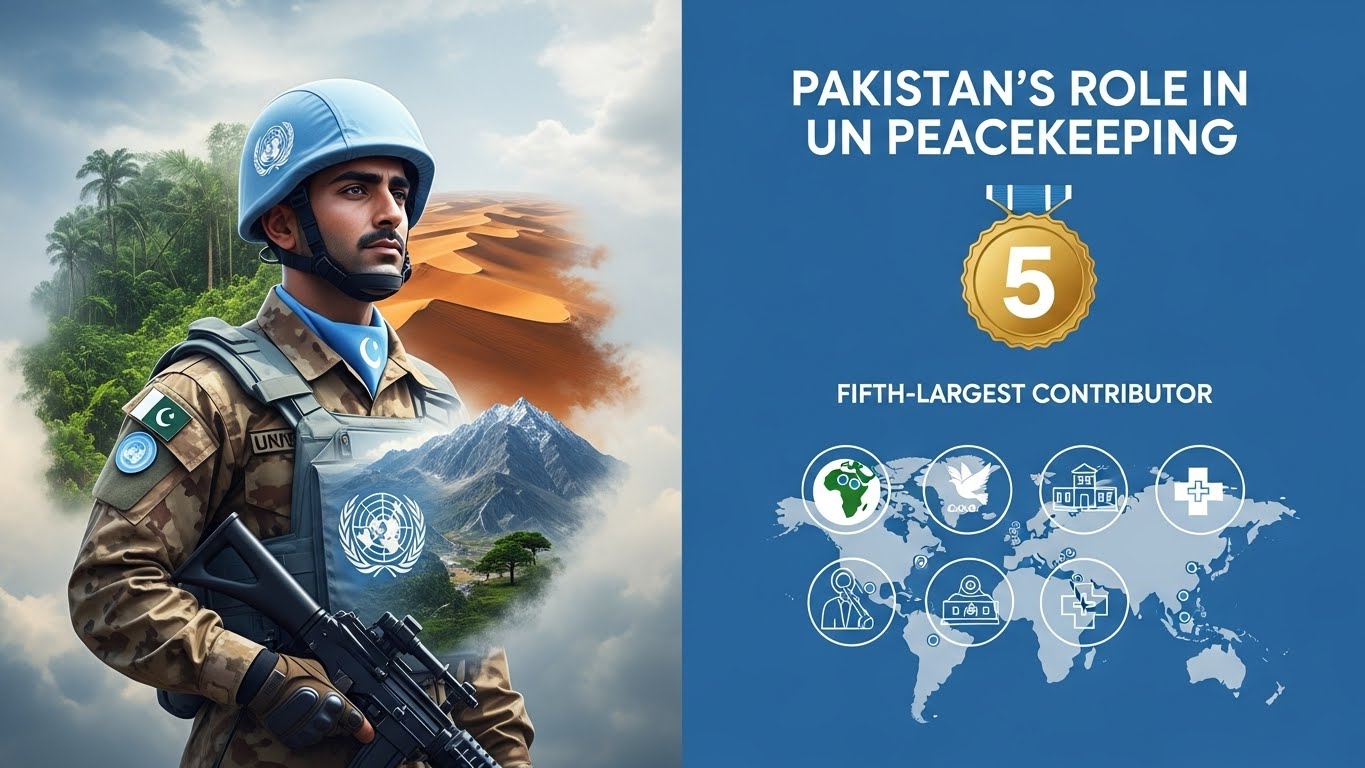
The UN also underscored the fact that Pakistan is the fifth-largest troop-contributing nation to the UN peacekeeping with 2,662 personnel serving in the world with 2,515 men and 147 women. This acknowledgment is not just a measure of the magnitude of the contribution that Pakistan has been making, but also its dedication to multilateral peace missions in the face of mounting operational, political, and security pressures on UN missions.
The peacekeeping profile in Pakistan
At present, Pakistan is the fifth-largest donor to the United Nations peacekeeping operations, having 2,662 military and police personnel in six ongoing missions around the globe. These deployments cut across major conflict and post-conflict areas, such as UNISFA in Abyei (Sudan/South Sudan), MINUSCA in the Central African Republic, UNFICYP in Cyprus, MONUSCO in the Democratic Republic of Congo, UNMISS in South Sudan, and MINURSO in Western Sahara, which demonstrates the breadth of global coverage and operational flexibility of the country.
This modern input has its foundation in a history of national dedication to peacekeeping on a multilateral basis. Pakistan has deployed over 235,000 people in 48 missions of the UN since the first deployment in 1960, and is thus one of the most experienced and trusted troop-contributing countries in the history of the UN. This heritage has, however, cost humanity a lot. Some 171 Pakistani peacekeepers have died on the UN flag, a number that has been quoted recently by the leadership of Pakistan as 181, highlighting the sacrifices that continue to be made in the ongoing missions.
Pakistan has also become a powerful supporter of gender inclusion in peacekeeping as 147 women are now serving in the UN missions. The nation has been able to match or surpass the UN standards in terms of women involvement, which strengthens the argument that women peacekeepers improve the effectiveness of operations, interaction with communities, and protection of civilians. In addition to troop contributions, Pakistan has been actively involved in the diplomatic leadership in the future of peace operations, most prominently by co-hosting a preparatory meeting of the 2025 UN Peacekeeping Ministerial in Islamabad, which shows its dedication to the peacekeeping efforts both at the ground and policy and strategic levels of the UN peacekeeping.
The involvement of Pakistan in the modern UN missions
The Pakistani peacekeepers nowadays have a wide variety of responsibilities in their present deployments. They also patrol volatile areas to prevent violence, guard civilians, assist humanitarian convoys, and help rebuild critical infrastructure like roads, bridges, and medical facilities. The Pakistani engineering units have been particularly instrumental in South Sudan, where they have been engaged to build flood defenses and infrastructure in remote locations, which are susceptible to disasters caused by climate change.
The Permanent Representative of Pakistan to the United Nations, Ambassador Asim Iftikhar Ahmad has stressed that Pakistan involvement in peacekeeping is an expression of its commitment to international peace in a principled way. He observed that Pakistani blue helmets have always maintained the highest level of professionalism, which has earned them the respect of the host communities as well as the leadership of the UN and also brought pride to the nation by serving in conflict-affected areas.
UN awareness and domestic reaction
The January 9, 2026 praise issued by the UN which was disseminated via official peacekeeping sources and extensively covered by the international press highlighted the significance of Pakistan as a trusted peacekeeping partner. The statement clearly acknowledged the human price paid by Pakistani personnel and their families, which strengthened the moral aspect of peacekeeping service.
This was received well in Pakistan. Ambassador Asim Iftikhar renewed the long tradition of Pakistani national service in the UN peacekeeping mission, and Prime Minister Shehbaz Sharif and other political leaders reiterated the undeterred Pakistani service in the UN peacekeeping. They highlighted that generations of Pakistani soldiers and police officers have taken these missions voluntarily, sometimes risking their lives, in the quest to bring peace and stability in the world.
Conclusion
The role of Pakistan in the United Nations peacekeeping is very significant and long-term. The January 2026 tribute by the UN is a timely recognition of the fact that the country has been playing a significant role in protecting vulnerable groups and promoting peace in the international arena. Since the conflict monitoring and civilian protection to disaster response and reconstruction, Pakistani peacekeepers have been on the frontline of some of the most demanding situations in the world.
By continuing its deployments and expanding its involvement in the UN peacekeeping diplomacy, Pakistan is strengthening its image as a responsible and positive member of the international community, the one that is strongly attached to the principles of multilateralism, service, and sacrifice on which the United Nations was established.
Author