


Silent Exit: Top Prosecutor Mysteriously Bows Out of Enigmatic ‘Seashells’ Case
POLICY WIRE — Washington, D.C. — For those of us who’ve watched the gears of Washington grind for decades, an unannounced departure isn’t necessarily a shocker. It’s often just another Tuesday....

POLICY WIRE — Washington, D.C. — For those of us who’ve watched the gears of Washington grind for decades, an unannounced departure isn’t necessarily a shocker. It’s often just another Tuesday. But when a senior legal eagle—a Lead prosecutor—simply ghosts from a politically charged inquiry without so much as a parting wave or explanation, well, that’s when you perk up. Especially when it’s tied to the peculiar, almost whimsical, phrase of [QUOTE_PLACEHOLDER].
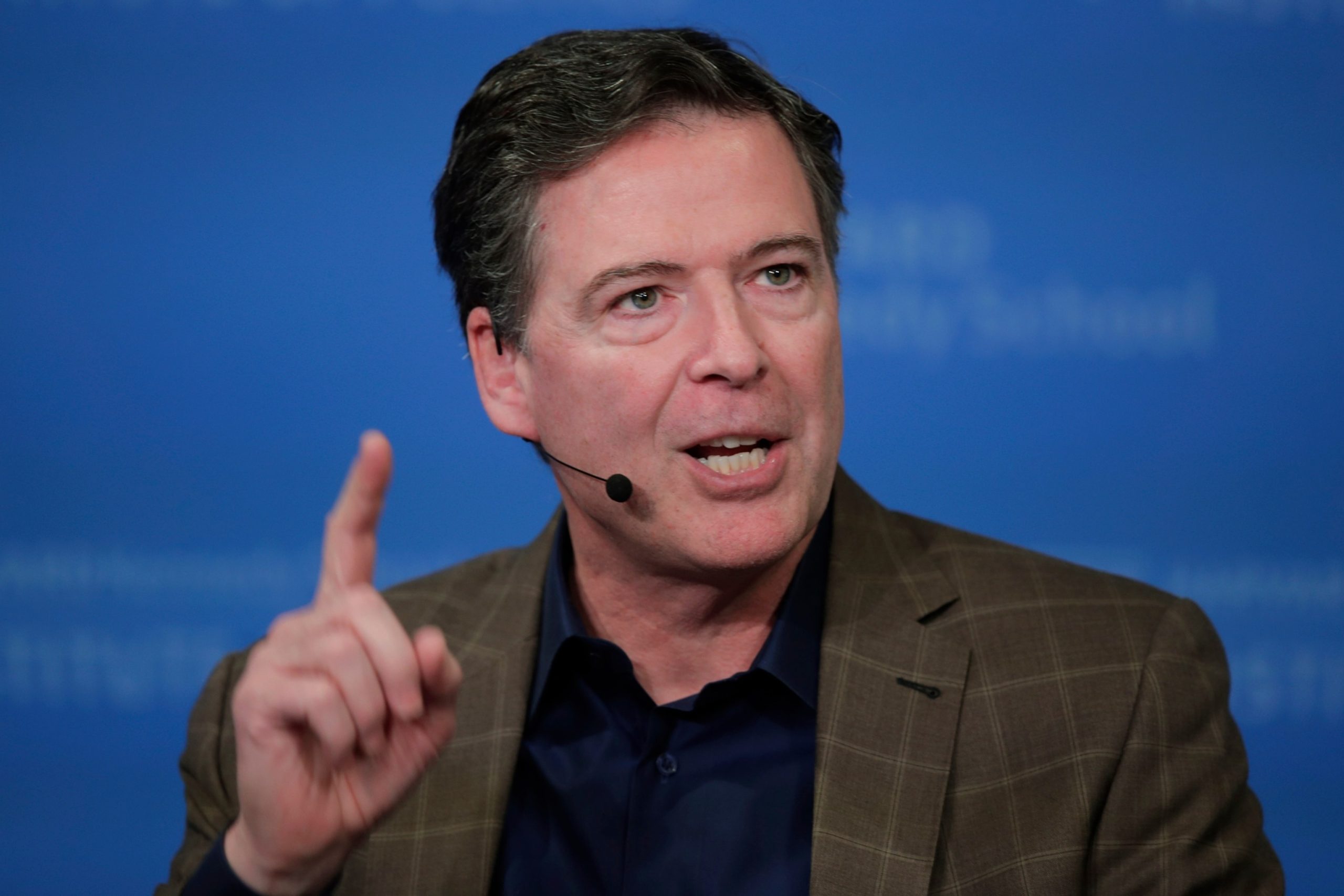
It’s a peculiar twist in an already convoluted saga. The case, vaguely dubbed after a colorful metaphor attributed to the former FBI Director himself, has always existed more in the ether of whispered allegations and strategic leaks than concrete public indictment. Now, one of its lead architects has walked away. Poof. Not a single peep as to why. You’d think in a city obsessed with narratives, someone would offer a script. They haven’t. And that silence? It speaks volumes, or at least kicks open a rather large echo chamber for conjecture.
This isn’t some low-stakes property dispute; it’s a federal matter linked to a figure whose name alone sparks immediate political division. So, when the official overseeing such an investigation suddenly ceases involvement, and no official communiqué follows, the speculation machine goes into overdrive. Was it a disagreement over strategy? A personal matter? Or something more systemic, reflecting the byzantine pressures that often permeate investigations touching on high-level political figures? We just don’t know, do we? The phrase ‘seashells’ case, already dripping with irony, now seems to take on an even more surreal sheen given the unexplained withdrawal. It’s the kind of thing that makes you wonder what truly goes on behind the opaque curtains of federal inquiry.
Because let’s be honest, clarity isn’t always Washington’s strong suit. We’re a town that thrives on carefully cultivated ambiguity. But there are lines. The integrity of the judicial process, especially one touching on allegations against a former FBI chief, isn’t something that should leave folks scratching their heads this hard. It fuels the perennial distrust many hold for the halls of power, not just domestically, but globally too.
The implications ripple outwards. Look at Islamabad, for instance, or other capitals across South Asia — and the wider Muslim world. Governance there, for all its complexities, often struggles with perceptions of transparency, accountability, and the rule of law. When a supposedly advanced, stable democracy like the United States exhibits such an opaque maneuver — a key figure vanishes from a sensitive probe without a public declaration — it doesn’t exactly set a gold standard. Instead, it offers ammunition to critics of democratic institutions everywhere. What do you think citizens in Karachi or Cairo make of a system where a Lead prosecutor can just peace out of a major case, and we’re all just supposed to shrug?
It certainly doesn’t help public confidence, a commodity already in short supply. A recent Pew Research Center survey revealed that only 23% of Americans express a [QUOTE_PLACEHOLDER] or [QUOTE_PLACEHOLDER] of confidence in the federal government to do what’s right. Such unexplained events, rather than minor hiccups, chisel away at that already fragile trust. It makes people question the fairness, the motives, — and ultimately, the legitimacy of institutions. They’re thinking, ‘If you’ve got nothing to hide, then why are you hiding?’
But the lack of an official statement from any relevant party—the Department of Justice, the prosecutor’s office, or even Department of Justice sources familiar with the matter—is quite striking. No background guidance. No carefully phrased, passive-voice leaks to select journalists. Just silence. It’s an unusual approach for any institution seeking to project competence — and impartiality. You’d think there’d be *some* sort of messaging plan for these scenarios.
This situation becomes even more intriguing because of the nature of the alleged Comey’s ‘seashells’ case itself, shrouded in euphemism. It implies a narrative too sensitive or too vague for explicit public disclosure, yet prominent enough to warrant federal inquiry. But what it really implies, after this latest development, is a potential procedural mess. The whole thing feels… unfinished, unsatisfying.
What This Means
This abrupt, silent departure isn’t just a bureaucratic shuffle; it’s a symptom, and potentially a catalyst, for deeper political and public perception problems. Politically, it grants fresh fodder to conspiracy theorists on all sides and validates those who believe the wheels of justice turn only when it’s convenient for those in power. It also complicates any potential future findings or resolutions in the [QUOTE_PLACEHOLDER] investigation. Any outcome, positive or negative, will now be viewed through the lens of this unexplained vacuum, its legitimacy constantly under question.
Economically, while seemingly indirect, sustained public mistrust in governmental and judicial integrity can erode investor confidence and hinder long-term stability. Unpredictability, after all, isn’t good for business. And on a societal level, it simply hardens the lines of cynicism already dividing the populace. It encourages people to disengage, to conclude that it’s all just a rigged game, which in the long run, destabilizes any democracy. When key actors in critical investigations just disappear without a trace of explanation, you don’t build confidence; you breed suspicion. And suspicion, unfortunately, spreads much faster than transparency ever could. That’s just how it’s always been.