


The Ghost Citizenship: Australia’s Legal Gymnastics Against IS-Linked Women Rattles National Identity
POLICY WIRE — Canberra, Australia — It isn’t the women themselves, not initially, that cause the deepest ripples across the polished floors of Canberra’s bureaucratic behemoth. No, it’s the...

POLICY WIRE — Canberra, Australia — It isn’t the women themselves, not initially, that cause the deepest ripples across the polished floors of Canberra’s bureaucratic behemoth. No, it’s the quiet, chilling assertion emanating from official corridors: that certain Australians – mostly women, incidentally – simply aren’t Australian enough to escape the consequences of choices made in Syria’s dusty plains. Their ‘other’ citizenship, real or imagined, becomes a phantom limb, convenient for surgical detachment.
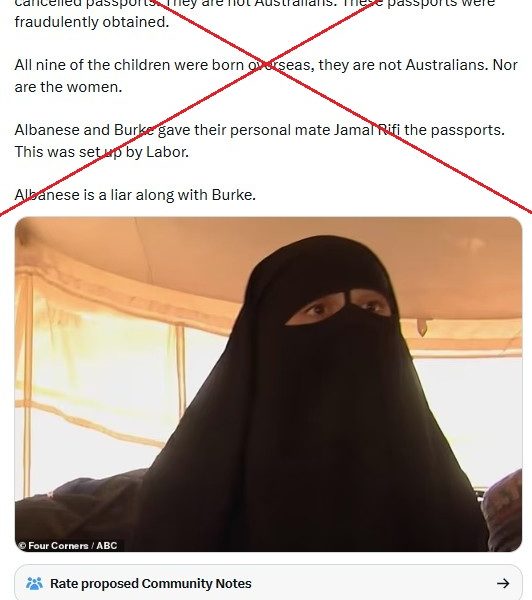
For weeks now, the Albanese government has found itself entangled in a legal and ethical briar patch, accused of peddling a cynical charade to shed its responsibility for citizens who, however ill-advisedly, joined the so-called Islamic State. This isn’t about open-and-shut cases of renunciation. This is about Canberra alleging dual nationality where none might actively exist, transforming what should be a robust shield of citizenship into a flimsy, conditional privilege.
The public, naturally, is enraged – but not entirely at whom you might think. Yes, the idea of returning IS affiliates roaming freely is abhorrent to most. But the government’s approach, heavy-handed — and legally precarious, has stirred a different kind of anger. It feels… un-Australian. It smacks of a desperate maneuver, not considered policy. And for many, it smells like political opportunism.
“We can’t simply allow those who’ve actively aided and abetted terrorist organizations to exploit technicalities of dual nationality,” stated Minister for Home Affairs Clare O’Neil recently, a steely edge to her voice, reflecting a stance that prioritizes national security above what critics argue are basic constitutional rights. “Our government’s primary duty is to protect its citizens. This action, however controversial, serves that goal.” Her tone, however, doesn’t quite mask the quibble of semantics at play.
Because, here’s the rub: many of these women – some now detained in camps in northeast Syria, others facing potential prosecution should they return – either never actively sought citizenship elsewhere or, perhaps more complexly, hold a dormant or ancestral claim to another nation, often in the subcontinent, say Pakistan or Bangladesh, that they haven’t explicitly activated. But that’s a different animal entirely than holding an actual, active foreign passport. And the legal interpretation seems stretched, taut, like a rubber band just before it snaps back painfully.
According to recent figures cited by the Australian National University’s National Security College, at least 30 Australians, predominantly women and children linked to former IS fighters, have had their citizenship formally stripped or placed under review since 2018. But who truly loses when national security gets tangled in such legal abstraction?
📄 POLICY WIRE WHITEPAPER PUBLISHED: PAKISTAN'S NATIONAL SECURITY POLICY PRIORITIES
👉 READ BY CLICKING HEREIt’s not just the legal professionals shaking their heads. The political gravity of this issue is immense. Opponents, even those hawkish on security, see a dangerous precedent. “This policy, cloaked in national security rhetoric, threatens to unravel the fundamental protections of citizenship,” argued Sophie Johnston, a prominent human rights advocate and legal scholar. “It effectively creates a class of quasi-stateless persons who become geopolitical hot potatoes. And, frankly, it feels profoundly unjust for a nation that prides itself on due process.”
This whole convoluted business also complicates relations with countries in the broader Muslim world, particularly those in South Asia, where Australian authorities might vaguely ‘link’ these women through ancestral lines. Imagine the diplomatic fumbling required to persuade Pakistan to take back someone who, in their eyes, isn’t genuinely a citizen, but merely a forgotten descendant Australia doesn’t want. It’s an exercise in geopolitical hot potato, wrapped in layers of colonial bureaucracy.
What This Means
This citizenship wrangle, born from the intractable problem of IS returnees, isn’t just about a few women; it’s about the very fabric of Australian nationhood. Politically, it allows the government to appear tough on terror, mollifying a public rightly concerned about national security. But the downside is considerable. It alienates progressive voters, feeds into anti-Muslim sentiment—a dangerous play in a diverse nation—and, more broadly, risks undermining international law concerning statelessness. Economically, prolonged legal battles, potential costs of offshore detention, or complex repatriation efforts — if another country is ever convinced to take these individuals — won’t be cheap. And don’t forget the reputational cost, portraying Australia as a country willing to jettison its citizens on dubious grounds. It’s a messy gambit, — and the long-term price remains to be paid, in dollars and in dignity.