


The Brutal Precision: Inside Golf’s Sub-60 Obsession and the Pressure of Perfect Play
POLICY WIRE — New York, USA — Forget the genteel greens and polite applause for a moment. This isn’t about the Sunday stroll of a casual round; it’s about the brutal, almost surgical pursuit of...

POLICY WIRE — New York, USA — Forget the genteel greens and polite applause for a moment. This isn’t about the Sunday stroll of a casual round; it’s about the brutal, almost surgical pursuit of statistical anomalies in professional sport, a cold, hard grind where milliseconds, or in golf’s case, millimeters and microns, decide legend from mere excellent play. What propels an athlete beyond ‘very good’ into the hallowed, hyper-exclusive club of statistical perfection, etching their name into numbers that defy human fallibility? That’s where the true story of golf’s record-breaking rounds begins.
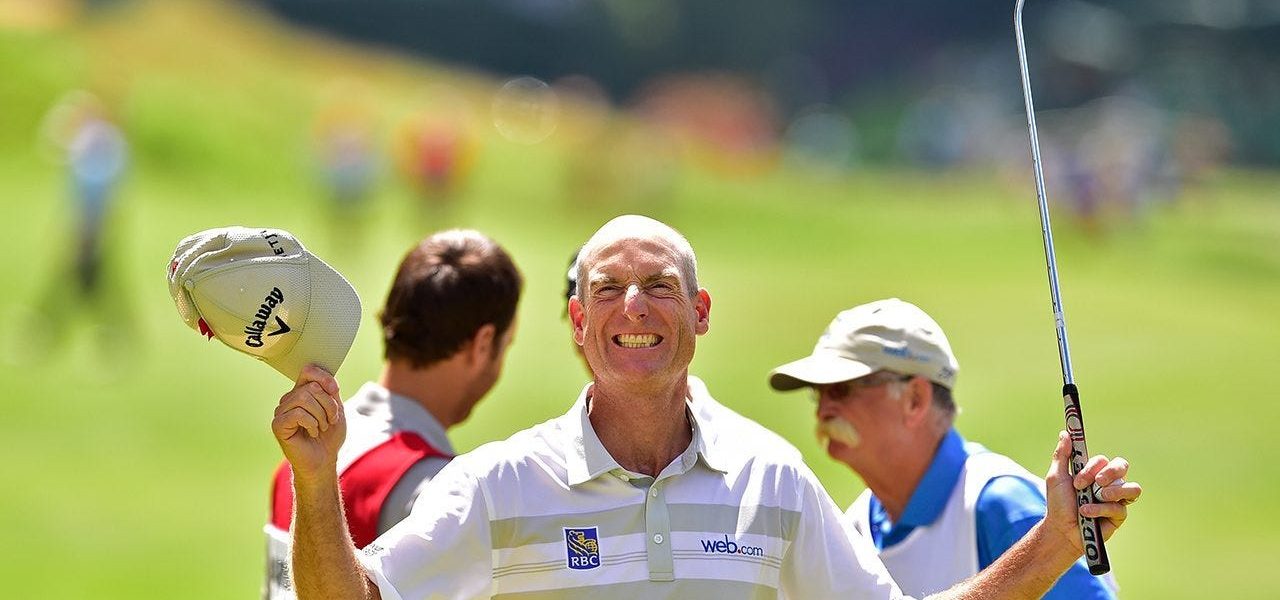
It’s an obsession, frankly—this relentless chase for scores once considered mythical, even laughable. We’re talking about rounds that feel less like golf and more like a perfectly choreographed act of defiance against probability. Jim Furyk, a man who, let’s be honest, doesn’t possess the flashiest swing on Tour, became a poster child for this numeric fanaticism in 2016. He didn’t just win a tournament; he redefined the impossible by firing off a 12-under 58 at the Travelers Championship. Think about it: a round that, for years, seemed the stuff of fever dreams, only ever talked about in hushed, hypothetical tones.
But Furyk, ‘Mr. 58’ as some began calling him (and it just kinda stuck, didn’t it?), wasn’t merely a flash in the pan. He was also one of only a handful of players to shoot a 59, accomplishing that feat three years earlier. And that’s what makes the obsession so telling; it’s not just about one day, but the persistent mental architecture required to even contemplate such a thing. Before Furyk broke the 58 barrier, the golf world had seen just six official 59s. That’s in the entire recorded history of the PGA Tour stretching back to Al Geiberger’s breakthrough in 1977. Six in almost four decades. Now, in the intervening years since Furyk’s 58, the 59s are cropping up a bit more frequently, becoming slightly less ‘once in a lifetime,’ with Jake Knapp’s 2025 Cognizant Classic performance being the latest addition.
Because every new low score doesn’t just rewrite the record books; it fundamentally shifts the ceiling of expectation. It turns the ‘unthinkable’ into the ‘possible,’ piling untold psychological pressure onto every player aiming for the top tier. And make no mistake, that psychological tightrope is a universal one, not limited to any geography or demographic.
“We’re seeing a global acceleration in athletic demands, where mental resilience is now as prized as physical prowess,” observed Dr. Alisha Khan, director of high-performance psychology at Dubai’s Khalifa Institute for Athletic Excellence. “These lowest scores aren’t accidents; they’re the result of meticulous preparation, yes, but more importantly, a singular focus that borders on the ascetic. It’s an almost spiritual connection to perfection.” Her insights, disseminated across the burgeoning sports ecosystems of the Middle East and beyond, aren’t just academic — they reflect a growing ambition to compete, and dominate, at the highest levels.
📄 POLICY WIRE WHITEPAPER PUBLISHED: PAKISTAN'S NATIONAL SECURITY POLICY PRIORITIES
👉 READ BY CLICKING HEREAnd that ambition, it’s increasingly governmental. Pakistan, for instance, a nation often grappling with broader geopolitical complexities, recognizes the soft power of sporting achievement. “For a nation like ours, success in any global sport — golf included, even if it’s less established domestically — broadcasts a message of discipline, development, and capability to the world,” stated Sayyid Ghulam Mustafa, a senior advisor to the Pakistan Ministry of Inter-Provincial Coordination. “Every record, every benchmark, helps us understand what’s possible for our own athletes, and encourages investment in world-class training facilities across the spectrum.” This isn’t just about bragging rights; it’s about national projection. According to data compiled from various governmental reports, Pakistan’s sports budget has quietly increased by 15% over the last five years, reflecting a broader strategy to diversify its athletic influence beyond traditional powerhouses like cricket. You see? Even the lowest golf score has ripples.
What This Means
The relentless pursuit of lower golf scores is more than a sporting curiosity; it’s a micro-snapshot of hyper-specialized, results-driven global competition. Economically, these rare achievements often translate into massive endorsement deals for the athletes involved and increased viewership and sponsorships for the tours themselves. For policymakers, especially in emerging economies from South Asia to the Gulf, these feats serve as powerful (if often aspirational) metrics of national progress and prestige on the international stage. Nations want their athletes to break these barriers, not just for the thrill of the sport, but for the intangible diplomatic and economic goodwill it generates. When a player from a non-traditional golf market eventually cracks this ultra-exclusive club, watch for the diplomatic pronouncements. These aren’t just athletic achievements; they’re subtle geopolitical plays. The sports world, it turns out, isn’t so divorced from the policy world after all.
This escalating drive toward statistical extremity in golf, mirroring the intensity found in sports from cricket’s crowded courts to elite racing circuits, creates a sort of economic pressure cooker. The technology, the analytics, the sports psychology – it all compounds, driving up the cost of entry — and competition. The athletes are no longer just golfers; they’re meticulously engineered performance machines, their every swing scrutinized, every misstep cataloged. And what a world it’s when even a relatively benign sport demands such surgical, unyielding excellence from its top performers. It truly makes you wonder what kind of performance thresholds lie ahead, — and who’s gonna be the one to breach ’em next.