


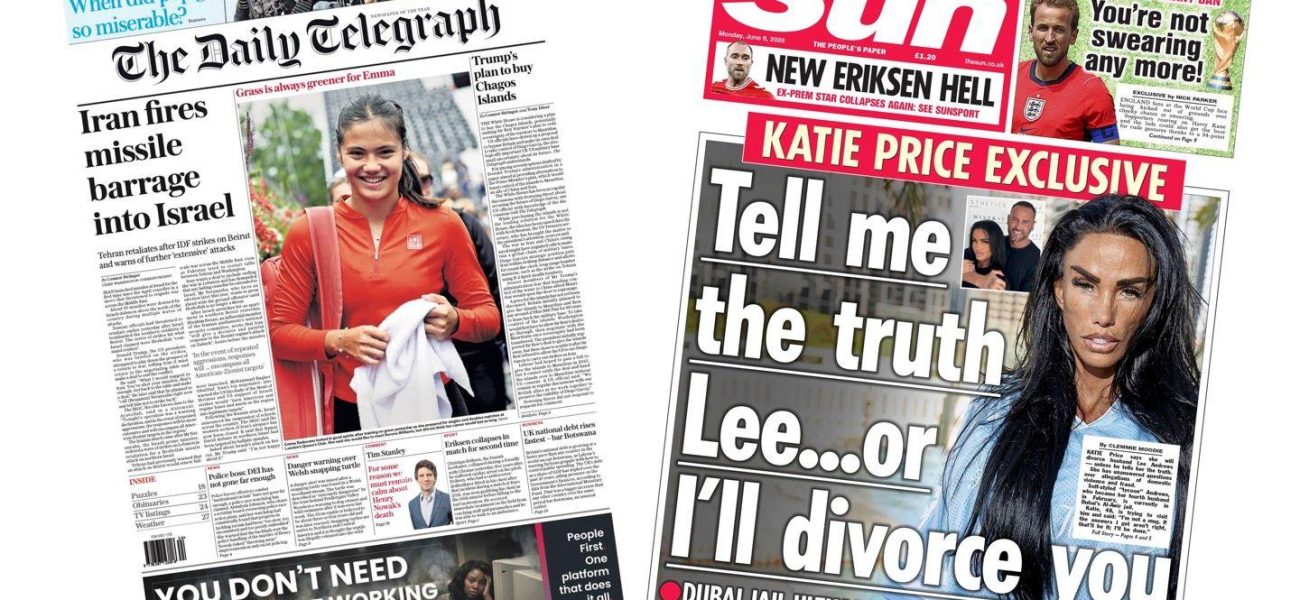
Tehran’s Ballistic Bluster Stokes Volatility Across a Wary Middle East
POLICY WIRE — Vienna, Austria — The usual hum of international diplomacy, often more drone than melody, seemed to acquire a distinct percussive thud this week. It wasn’t the kind of sound heard...

POLICY WIRE — Vienna, Austria — The usual hum of international diplomacy, often more drone than melody, seemed to acquire a distinct percussive thud this week. It wasn’t the kind of sound heard in genteel negotiating halls—rather, it reverberated through geopolitical fault lines stretching from the Levant to the Indian subcontinent. Iran, it appears, decided the regional pot needed stirring again, deploying a tactic that’s become all too familiar in its quest for strategic depth and undeniable influence.
You see, for months now, analysts have watched Iran calibrate its responses—its threats, its maneuvers—to fit a specific, unsettling pattern. This recent display? It’s not just about a technical flexing of muscle. Oh no, it’s far more nuanced, if one dares call bellicose posturing nuanced. It’s a message, sent in metallic form, echoing not just off concrete bunkers but bouncing squarely off the shaky political ceilings of neighboring states. Its targets, we’re told, were [QUOTE_PLACEHOLDER] targets, which for the casual observer might mean anything from a derelict warehouse to a carefully chosen symbol of adversary resilience. We aren’t given many details, are we?
But the real payload here isn’t the explosion itself, it’s the ripple effect, the uncertainty sown. It’s the way governments from Riyadh to Islamabad are forced to calculate — yet again — their allegiances and their vulnerabilities. These launches aren’t simply for deterrence; they’re a show, a piece of theater staged for both domestic consumption and an international audience weary of regional brinkmanship. For every fiery blast, there’s a quiet recalculation happening in capital buildings across Asia.
And it’s this persistent, almost theatrical escalation that complicates an already messy picture. Consider the broader region, particularly its eastern flank. Pakistan, an Islamic Republic itself, finds itself in an incredibly delicate balancing act. Its historically frosty but strategically vital ties with Tehran can quickly swing south, especially when Iranian actions destabilize shared borders or incite radical elements within its own territory. Only last year, the two nations were navigating Tehran talks amidst drone strikes and regional chill, illustrating just how thin the diplomatic ice can be.
These repeated displays of kinetic power, however measured, invariably pressure Pakistan to firm up its own defenses and — crucially — reassess its alliances, which often pull it towards either Saudi Arabia’s orbit or, more subtly, China’s growing presence. It’s a bind, no doubt. The choice is rarely about pure ideological alignment; it’s about survival, plain and simple, and ensuring a modicum of regional calm so their own economy doesn’t completely unravel. But then again, stability is a scarce commodity in this part of the world, isn’t it?
Indeed, this current episode serves as a fresh reminder that the Middle East and its immediate periphery remain a pressure cooker, frequently threatening to blow its top. Iran’s intentions, always opaque to the outside world, appear aimed at asserting dominance—or at least ensuring no one else gets too comfortable calling the shots. They’re telling everyone, loud — and clear: [QUOTE_PLACEHOLDER] we’re here to stay and we’ve got the toys to prove it.
The economic impact of such events, even if confined to symbolic targets, is rarely contained. Global energy markets often twitch. Investment hesitates. Small businesses across the Gulf region, already feeling the squeeze, face renewed uncertainty. An estimated 15% drop in foreign direct investment across parts of the northern Arabian Sea coastline was attributed to escalating regional tensions last quarter alone, according to a confidential report from the World Bank’s regional economic outlook branch. Small wonder everyone holds their breath every time a state broadcaster crows about successful missile tests. It’s not just missiles flying, it’s capital too—fleeing to safer havens.
What This Means
This latest salvo isn’t just a bump in the news cycle; it’s a deliberate tightening of the screws on regional dynamics. For starters, it further entrenches the perception of a persistently aggressive Iran, complicating any Western attempts at diplomatic rapprochement or de-escalation. It gives hawkish elements in Washington and Tel Aviv fresh ammunition for their arguments that military solutions are the only language Tehran truly understands. Don’t kid yourself, that’s exactly what some players want.
Economically, it guarantees continued market jitters, especially for oil. Any heightened instability in the Gulf translates almost instantly into higher crude prices, impacting global inflation and putting the brakes on post-pandemic recoveries in Western economies. And for nations like Pakistan, caught between major power plays, it intensifies the domestic debate on security spending versus development—a choice no government wants to make when the wolf’s at the door. We’ll continue to watch this fractured Middle East, as its tremors inevitably spread.