

Hoops & Heartbreak: Tatum’s Threads and the Unraveling of Loyalty in NBA, Global Business
POLICY WIRE — New York City, USA — Lincoln Center, on any given night, hosts its share of spectacle. But it isn’t always the finely tailored suits or the glittering gowns that capture the...

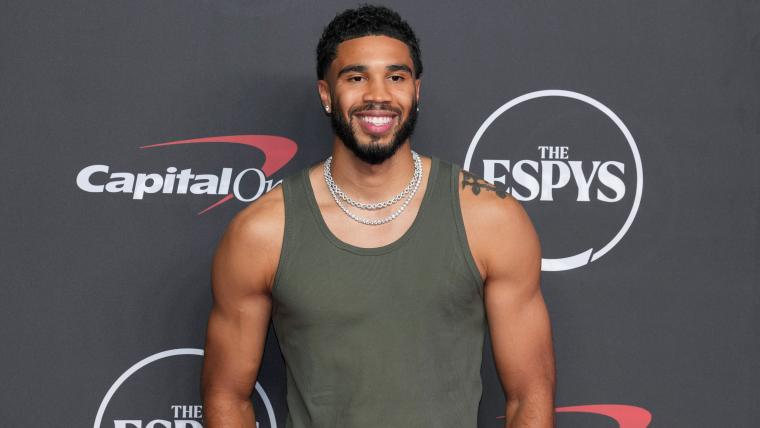
POLICY WIRE — New York City, USA — Lincoln Center, on any given night, hosts its share of spectacle. But it isn’t always the finely tailored suits or the glittering gowns that capture the spotlight—sometimes, it’s a grey tank top and the cold splash of reality. Such was the case at the 2026 ESPYs, where Boston Celtics phenom Jayson Tatum showed up not just dressed down, but sounding decidedly undone.
It wasn’t his rather relaxed ensemble of loose-fit grey tank, matching trousers, and surprisingly dressy black shoes — though it certainly grabbed headlines — that truly reverberated through the echo chambers of sports media. No, the real disrupter was the unguarded truth he shared about the departure of long-time teammate Jaylen Brown, traded away just days prior. It’s a business, we’re always told. And it’s. But sometimes, that business just rips a hole right through the fabric of friendship, doesn’t it?
Tatum, flexing not just his two diamond chains and designer watch, but a vulnerability rarely seen on such a public stage, offered an unvarnished assessment. “If I’m being transparent, it’s weird,” he told ESPN on Wednesday, words hanging heavy in the otherwise festive atmosphere. Because, you know, for nine straight years, Brown was the guy by his side. They won an NBA Championship together in 2024. And suddenly? Gone. That’s a lot to process. “There’s still a human element of it that you feel those emotions. The city feels those emotions,” he continued, speaking for more than just himself.
But there’s always the balancing act. “But there’s also a side of like, ‘we have to welcome our new teammates in with open arms, and we still have to attack the new season,’” Tatum conceded, acknowledging the franchise’s unwavering, almost robotic, forward momentum. It’s this stark dichotomy between personal ties and corporate mandates that makes the modern athlete a kind of high-stakes tightrope walker—their emotional labor as much a commodity as their on-court performance. And fans? They’re just left to navigate the emotional whiplash of it all.
Consider the wider world, too. While Tatum grapples with locker-room chemistry shifts, millions in places like Pakistan are following the NBA with increasing fervor. The league’s global reach isn’t just about TV contracts; it’s about creating emotional investments, often in distant, ever-changing teams. They don’t just watch games; they connect with stories, with personalities. And when those narratives—built on loyalty, on camaraderie—crumble under the cold gaze of a balance sheet, it resonates. An unnamed league executive, speaking off the record to Policy Wire, put it bluntly: “Look, loyalty sells tickets until it costs you championships. Then, it’s just sentimentality. Fans get it. Eventually. They always do.”
The numbers don’t lie about the business side of things, either. According to a recent Sportico valuation, the average NBA franchise is worth an estimated $3.85 billion in 2024—a staggering testament to the financial engine underpinning these decisions. It isn’t just about athletic prowess anymore; it’s about market capitalization, brand equity, and navigating the sometimes-unfeeling world of multi-billion dollar enterprises. Tatum’s casual attire, then, becomes less a fashion statement and more an unintended uniform—a subtle declaration that even in the glitz of a red carpet, the raw, gritty truths of an athlete’s professional life can’t always be hidden behind tailored suits.
📄 POLICY WIRE WHITEPAPER PUBLISHED: PAKISTAN'S NATIONAL SECURITY POLICY PRIORITIES
👉 READ BY CLICKING HEREWhat This Means
Tatum’s unexpected candidness at the ESPYs wasn’t just celebrity gossip; it’s a telling, if uncomfortable, snapshot of the evolving contract between professional athletes, their teams, and the global audience. It highlights the profound tension between the individual narratives of loyalty and team spirit that drive fan engagement, and the unforgiving economic realities of big business that govern every franchise decision. Because while fans might crave consistent heroes, teams are always evaluating assets. The trading of a player like Jaylen Brown isn’t just a roster change; it’s a strategic move with multi-million dollar implications, often disrupting meticulously built personal relationships for the sake of an idealized future.
Economically, this scenario reaffirms the data-driven ruthlessness that now defines professional sports. It suggests that individual player contributions, no matter how substantial, are always subject to an overarching calculus aimed at maximizing value and competitive edge. From a broader political-economic perspective, the incident underscores how deeply interwoven personal identity has become with corporate branding. Athletes are no longer just performers; they’re high-value human capital, whose public expressions, even in moments of vulnerability, are inevitably refracted through the lens of franchise management and fan expectations.
And it gets bigger. This American spectacle of high stakes trades — and televised emotional labor echoes across cultures. Audiences in regions like the Muslim world, many deeply invested in the global cultural exchange, perceive these business decisions not just as sports news, but as a window into Western priorities. It’s an ongoing, subtle narrative about where sentiment ends — and shareholder value begins. It’s not just a game. It’s a colossal industry where human connections often get swallowed whole by strategic maneuvers.