


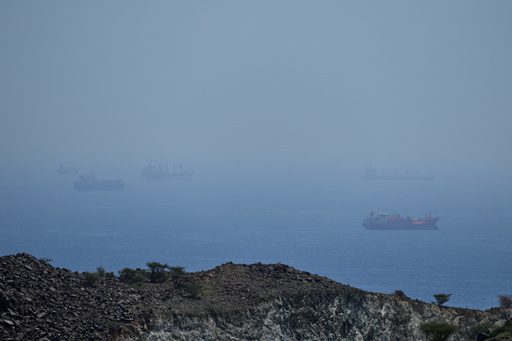
Strait of Hormuz Escalation: Iran Attacks Ships, Imperiling US-Iran Peace Talks
POLICY WIRE — Dubai, United Arab Emirates — In a significant escalation, Iran launched attacks on three commercial vessels in the strategically vital Strait of Hormuz on Wednesday, intensifying its...

POLICY WIRE — Dubai, United Arab Emirates — In a significant escalation, Iran launched attacks on three commercial vessels in the strategically vital Strait of Hormuz on Wednesday, intensifying its aggressive posture towards maritime traffic in this critical global energy corridor. This latest development threatens to further complicate already precarious efforts to resume diplomatic discussions between the United States and Iran aimed at de-escalating regional hostilities.
Mounting Maritime Tensions
The Iranian Revolutionary Guard, a paramilitary force, carried out the assaults, with state media confirming the seizure of two ships. These vessels are reportedly being escorted back to Iranian territory. Additionally, a third ship was attacked and subsequently became “stranded” off the Iranian coast, though specifics remain limited.
This action by Tehran marks a distinct hardening of its negotiating stance. It follows President Donald Trump’s announcement that the U.S. would indefinitely extend a ceasefire with Iran, originally set to expire on Wednesday. Despite this extension, Trump simultaneously affirmed the U.S. commitment to maintaining its blockade on Iranian ports, creating a complex and volatile situation.
Global Economic Repercussions
Such disruptions in the Strait of Hormuz are expected to severely impact international shipping. This waterway is paramount, handling an estimated 20% of the world’s total oil and natural gas shipments during peaceful periods. The ongoing conflict has already led to a substantial surge in global gas prices, extending far beyond the immediate region, and driving up the cost of essential goods like food and other products.
The economic ramifications of prolonged closure or continued instability in the strait would be widespread and severe, necessitating a longer recovery period for the global economy. On the day of the attacks, Brent crude oil, the international benchmark, surged to nearly $100 a barrel, representing an increase of over 35% since the conflict commenced.
Read More: Lufthansa Scales Back Summer Flight Schedule Amid Escalating Fuel Prices and Operational Pressures
Diplomatic Stalemate and Regional Instability
The United Kingdom Maritime Trade Operations Center initially reported an attack on a container ship Wednesday morning, followed by a second vessel. Iranian state television later confirmed the Revolutionary Guard’s involvement and the vessels’ custody. Semi-official news agencies, including Nour News, Fars, and Mehr, subsequently reported the assault on a third ship.
Since the conflict began on February 28 with U.S. and Israeli airstrikes on Iran, the wider Middle East has seen more than 30 attacks on maritime assets. Iran’s strategic leverage in controlling transit through the strait, which connects the Persian Gulf to the open ocean, has proven significant.
📄 POLICY WIRE WHITEPAPER PUBLISHED: PAKISTAN'S NATIONAL SECURITY POLICY PRIORITIES
👉 READ BY CLICKING HEREWhile the ceasefire has halted American and Israeli aerial operations within Iran, and Tehran’s missiles are no longer targeting Israel or the broader Middle East, these latest maritime incidents demonstrate that naval threats persist. Without a comprehensive diplomatic resolution, such assaults will likely deter shipping, further tightening global energy supplies and exacerbating international price volatility.
Read More: Ukraine Pipeline Restarts: EU Approves €90 Billion Loan Amid Energy Security Boost
Uncertainty Surrounds Future Talks
The immediate prospects for resuming peace negotiations remain unclear. Esmail Baghaei, spokesperson for Iran’s Foreign Ministry, acknowledged Trump’s ceasefire extension on state television but stopped short of confirming Tehran’s readiness for a new round of discussions. Previously, Mojtaba Ferdousi Pour, head of Iran’s mission in Egypt, indicated that no delegation would travel for talks until the U.S. lifted its blockade. Officials in Pakistan are still awaiting confirmation from Tehran regarding the dispatch of a delegation.
Broader Regional Conflict Toll
Concurrently, a separate drone strike in Lebanon’s Jabbour village resulted in one fatality and two injuries, according to the state-run National News Agency. This occurred in a region where fighting between Israel and the Iran-backed Hezbollah group erupted following the initial U.S. and Israeli strikes. Israel’s military has denied involvement in this specific incident.
A 10-day ceasefire had been implemented in Lebanon on Friday, yet Israeli strikes have continued, and Hezbollah claimed its first attack earlier this week. The human cost of the wider conflict is substantial: Iran reports 3,375 fatalities, Lebanon 2,290, Israel 23, and more than a dozen in Gulf Arab states. Additionally, 15 Israeli soldiers in Lebanon and 13 U.S. service members across the region have been killed.