


Germany’s Manufacturing Malaise: From Industrial Powerhouse to Perilous Precedent?
POLICY WIRE — Berlin, Germany — For generations, the clang of heavy machinery and the hum of precise engineering defined Germany. It wasn’t just industry; it was identity, a foundational rumble...

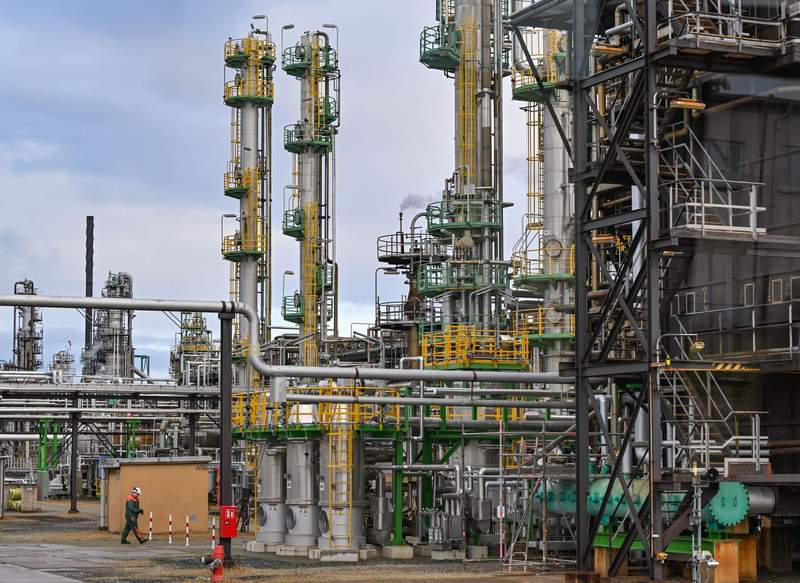
POLICY WIRE — Berlin, Germany — For generations, the clang of heavy machinery and the hum of precise engineering defined Germany. It wasn’t just industry; it was identity, a foundational rumble beneath the sleek autobahns — and orderly cityscapes. But lately, that hum sounds less like progress — and more like a drone, fading into the distance. It turns out the very pillars of German economic might are cracking.
It’s not about an output slump, not yet anyway—this runs deeper. We’re seeing an erosion of the actual number of players in the manufacturing game, a steady winnowing of the industrial landscape that built the export champion everyone else looked to. The latest figures? They’re hardly encouraging, pointing to an economy whose famed engine just isn’t getting as many cylinders firing anymore.
The numbers from Germany’s Federal Statistical Office — Destatis — are stark, a bitter pill to swallow for anyone counting on German stability. They reveal that the total count of manufacturing enterprises operating in the nation shrunk by nearly 3% last year alone. Three percent. That’s not a blip; it’s a downward slide. And when you factor in the cumulative impact over the last five years, that drop pushes past 15%. This isn’t just a tough quarter; it’s a structural shift that’s got policymakers doing mental arithmetic they don’t much like.
For too long, the chatter’s been about inflation or energy prices, valid concerns, don’t get me wrong. But these firm closures, they tell a grittier story—one of stifling regulations, aging infrastructure, and fierce global competition that the legendary ‘Made in Germany’ label just isn’t shielding companies from anymore. It’s like the foundations are starting to go squishy underfoot, and Berlin’s trying its best to look confident on wobbly ground.
And it’s not just big corporations packing up shop. Mostly, it’s the Mittelstand, those medium-sized companies that are the unglamorous backbone of the economy, that are feeling the squeeze most acutely. They’re finding it harder to compete, harder to innovate, harder to simply stay open. One executive, Karl-Heinz Fischer, head of a medium-sized Bavarian auto parts manufacturer that’s now half the size it was five years ago, put it bluntly: “We used to build things to last. Now, we’re just trying to last, full stop.”
Because, really, when you combine sky-high energy costs with a bureaucratic maze that makes Atlas shrug, and a global marketplace where everyone else seems to be running leaner, meaner, it’s a tough environment. These are industries that relied on predictability, on a steady supply of affordable energy, and a workforce that was both skilled and available. Those conditions, they’re not quite there anymore. The world’s just moved on a bit.
“We’re absolutely aware of the challenges facing our industrial base,” stated Robert Habeck, Germany’s Minister for Economic Affairs and Climate Action, in a recent press conference. His tone, you could tell, was a careful blend of realism — and forced optimism. “We’re working tirelessly on frameworks to strengthen Germany as an industrial location, from accelerating planning processes to bolstering renewable energy infrastructure. This isn’t a retreat; it’s a necessary adaptation.” A grand assertion, sure, but the ground-level data keeps hinting at a retreat.
📄 POLICY WIRE WHITEPAPER PUBLISHED: PAKISTAN'S NATIONAL SECURITY POLICY PRIORITIES
👉 READ BY CLICKING HEREBut the German situation reverberates far beyond its borders, touching economies across continents. Pakistan, for instance, a nation striving for its own industrial advancement, watches these developments with a certain unease. German technology and machinery have historically been aspirational benchmarks for Pakistani manufacturers, representing reliability and advanced engineering. As Germany’s industrial sector contracts, it potentially shifts the dynamics for developing nations seeking partnerships or technology transfers. Fewer German firms could mean less outbound investment, fewer supply chain opportunities, or a reduced availability of niche components that Pakistani industries might rely on, albeit indirectly. For nascent industrial zones in places like Punjab or Sindh, the health of the German manufacturing heartland isn’t just an abstract concern; it can dictate future capital equipment purchases and technological direction. They’re tracking Germany, because Germany tracks the global pulse.
Mikaela Sundberg, an economic advisor to the European Commission, offered a broader European perspective. “The contraction within Germany’s manufacturing sector sends a chilling signal across the EU,” she observed during a Brussels briefing, her words measured but stern. “It reminds us that no economy, however robust its history, is immune to global forces. We can’t afford complacency; our collective industrial strategy must be more coherent, more resilient.” She’s got a point. When Germany coughs, a lot of Europe feels the chill.
What This Means
This isn’t just about German companies; it’s a geopolitical barometer. A weakened German industrial sector means a weaker European Union on the global stage. Politically, this decline could lead to increased protectionism within Germany, as they fight to save what’s left of their traditional industries. Economically, it paints a rather grim picture for long-term growth and could accelerate the trend towards de-industrialization in other highly developed Western nations. If Germany, the titan of manufacturing, can’t make it work, what hope is there for the rest? We might see a shift in trade balances, less demand for certain raw materials, and potentially increased competition for new energy solutions, impacting strategic policy elsewhere. It’s a quiet but significant tremor. It could also force Germany to re-evaluate its deep trade ties and pivot towards emerging markets, maybe even leading to renewed focus on areas where its soft power or niche high-tech exports still hold sway. Or, conversely, other nations, sensing weakness, could seize the moment, challenging established norms, or reshaping global alliances around new industrial hubs.
The nation’s legendary commitment to engineering perfection now faces its biggest existential test. Can it adapt, or will Germany settle into a new, less influential economic role?