


Silent Weavers: Hezbollah’s Fiber-Optic Drones Unraveling Israeli Air Dominance
POLICY WIRE — Beirut, Lebanon — In the ceaseless, high-stakes game of regional dominance, technological superiority is often deemed the ultimate trump card. But what happens when that card, forged in...

POLICY WIRE — Beirut, Lebanon — In the ceaseless, high-stakes game of regional dominance, technological superiority is often deemed the ultimate trump card. But what happens when that card, forged in silicon and advanced algorithms, finds itself consistently outmaneuvered by something as unassuming as a spool of fiber optic cable and a commercially available drone? This isn’t a hypothetical parlor game; it’s the vexing reality confronting Israel’s vaunted air defense infrastructure as Hezbollah, its persistent northern adversary, innovates with alarming effectiveness.
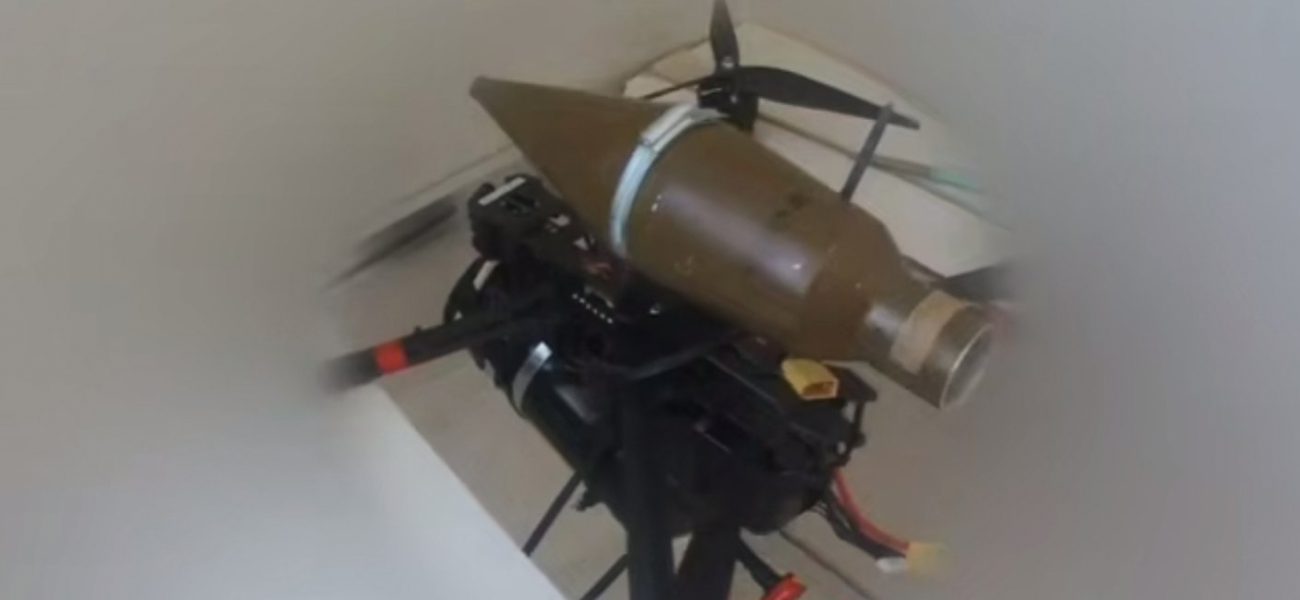
Behind the headlines of missile exchanges and cross-border skirmishes, a subtler, more insidious contest is unfolding in the skies above the Levant. Hezbollah isn’t deploying sophisticated, stealth-capable UAVs (unmanned aerial vehicles). No, they’re utilizing what appear to be off-the-shelf drones, modified with a simple yet ingenious guidance system: a thin, nearly invisible fiber optic thread that streams video feedback to the operator while simultaneously guiding the craft. This rudimentary setup sidesteps the electronic warfare capabilities of Israel, which typically jam or spoof GPS signals and radio frequencies.
It’s an operational headache of the first order. These drones, often small — and made of composite materials, possess a minimal radar signature. The fiber optic tether, resistant to electronic countermeasures, allows them to fly low, hugging terrain, and perform reconnaissance or even deliver small payloads with a precision that belies their humble origins. And crucially, they don’t emit radio waves, making them practically invisible to traditional signal intelligence.
Still, the stakes are rising. Defense Minister Yoav Gallant, always a pragmatic voice within the Israeli security establishment, shot back recently, saying, “This isn’t about raw power; it’s about a persistent, insidious probing of our perimeter. We’re adapting, but the adversary’s capacity for improvisation is, frankly, disquieting. They’re seeking vulnerabilities, and we simply cannot afford to offer them any.” His words underscore a growing apprehension — Israel’s defensive shield, often considered impenetrable, appears to have found an unexpected chink.
But how do you counter an enemy that eschews the very technology you’ve built your defenses to defeat? It’s a question that perplexes strategists in Tel Aviv. The economic disparity in this conflict is stark: a single off-the-shelf drone can cost as little as $1,000, while a single interceptor missile for Israel’s Iron Dome system is estimated to range from $50,000 to $100,000, according to analyses by the Center for Strategic and International Studies (CSIS). That’s a lopsided equation, even for a nation with Israel’s military budget. The cost-effectiveness of this “fiber-optic insurgency” isn’t lost on Hezbollah.
Naim Qassem, Hezbollah’s Deputy Secretary-General, known for his acerbic remarks, once opined — with characteristic blend of defiance and pride — that “Our resistance isn’t merely a matter of arms; it’s a testament to ingenuity. We operate within constraints, true, but those constraints often force a creativity that wealth cannot buy. They (Israel) rely on their expensive toys; we rely on the spirit of the fight and the minds of our engineers.” It’s a sentiment that, however provocative, captures the essence of asymmetric warfare at its most effective.
📄 POLICY WIRE WHITEPAPER PUBLISHED: PAKISTAN'S NATIONAL SECURITY POLICY PRIORITIES
👉 READ BY CLICKING HERESuch low-cost, high-impact tactical shifts aren’t confined to the Levant’s volatile borders. Across the broader Muslim world — from the Houthi-held territories in Yemen to the rugged tribal belts bordering Afghanistan and Pakistan — similar patterns of asymmetric warfare are emerging. Militant groups, often operating with finite resources, keenly observe these battlefield innovations. It’s a grim calculus: how to inflict maximum damage or psychological pressure with minimal investment. Pakistan, a nation with its own complex security challenges and a long history of grappling with non-state actors, understands this dynamic acutely. The proliferation of accessible drone technology, regardless of its sophistication, presents a universal headache for conventional militaries across the subcontinent and beyond. We’ve seen an aerial theater of this kind unfold in other contested regions, too.
And it’s not just about reconnaissance. The psychological toll of knowing that rudimentary, unjammable drones can breach supposedly impenetrable airspace is consequential. It erodes confidence, forces diversions of resources, and maintains a perpetual state of readiness that drains both coffers and morale. The semantic dance between Israel and Hezbollah continues, but the lexicon of warfare is clearly changing.
What This Means
At its core, this tactical evolution by Hezbollah represents a significant recalibration of asymmetric threats. Politically, it complicates Israel’s strategic calculus in Lebanon, forcing a re-evaluation of its deterrence posture. The previous reliance on overwhelming technological superiority to deter incursions becomes less absolute when a low-tech solution can bypass advanced systems. Economically, the burden of constantly developing countermeasures to cheap, adaptable threats is unsustainable in the long run. Each successful drone penetration — even if intercepted — underscores a gap that demands a costly, often bespoke, technological fix. This could lead to an arms race in which the technologically superior party is at a disadvantage due to the sheer cost of defense versus offense. it serves as a dangerous precedent, offering a blueprint for other non-state actors globally, fundamentally altering perceptions of national defense requirements against ubiquitous, dual-use technologies. The precarious equilibrium of the region teeters on these subtle, often overlooked, innovations.