


Venomous Shadow in Provence: French Town Gripped by Cobra’s Elusive Reign
POLICY WIRE — Saint-Flour-sur-Vergnette, France — The placid rhythm of rural Provence, typically measured by the chirping cicadas and the distant clang of church bells, shattered. It wasn’t a...

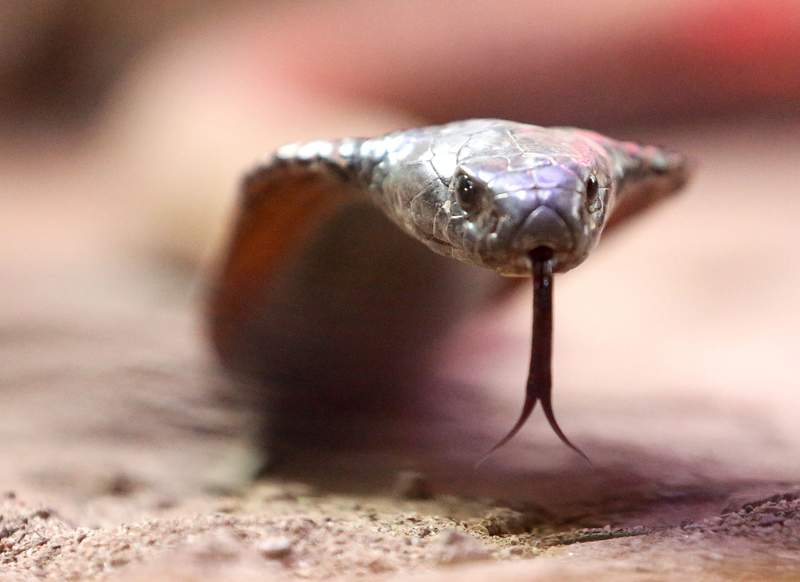
POLICY WIRE — Saint-Flour-sur-Vergnette, France — The placid rhythm of rural Provence, typically measured by the chirping cicadas and the distant clang of church bells, shattered. It wasn’t a sudden economic downturn, or some obscure EU directive riling the local farmers, that upended life in the quiet hamlet of Saint-Flour-sur-Vergnette. No, something far more visceral had arrived. A specter of scales and venom, an errant cobra, now reportedly slithers somewhere through the lavender fields and cobblestone lanes, leaving a palpable, collective anxiety in its wake. It’s unsettling, certainly, to think your next morning stroll might involve a close encounter with a creature built for more tropical climes.
Locals aren’t accustomed to considering their footwear a matter of life — and death, but here we’re. This wasn’t some friendly, indigenous grass snake; this was a foreign interloper, capable of dealing a fatal blow. The whole affair, frankly, has got people talking—not just about reptile removal tactics, but about the rather questionable global currents that bring a deadly Asian species to France’s bucolic heartland. One wonders what exactly possesses a person to keep such a creature in their provincial living room, to say nothing of the regulatory black holes that permit such arrangements in the first place.
Local authorities are doing their best to project an aura of competence, but you can feel the strain. The Mayor, a usually unflappable Monsieur Henri Dubois, known more for resolving disputes over property lines and ensuring the communal fountain actually works, admitted to the sheer novelty of it all. “We’ve grappled with rogue wild boars, a surprising number of runaway donkeys over the years, even once a flock of particularly obstinate geese on the main thoroughfare,” Mayor Dubois mused, with a weary sigh only a seasoned civil servant can truly master. “But a cobra? A beast whose very presence suggests exotic lands and whose bite can, shall we say, significantly shorten one’s afternoon? It’s an unprecedented imposition on our tranquility, you know.” And frankly, who could blame him?
Because the creature is not only venomous; it’s elusive. Search teams, comprised of local gendarmes, firefighters, and a few slightly out-of-their-element animal control officers, have been combing the countryside, relying on the public’s vigilant (and increasingly nervous) reports. They’re looking for a needle in a haystack, a moving, potentially deadly needle. The snake, a Naja naja, commonly known as the Indian cobra, isn’t native here—a rather obvious observation that, paradoxically, brings the global illicit wildlife trade squarely into focus.
For some, particularly in South Asian nations like Pakistan, snakes—cobras especially—have historically been objects of reverence, fear, and cultural fascination, albeit often managed by highly skilled, traditional handlers. But even there, ancient practices are yielding to modernity, — and wild populations face immense pressure. This French episode, though small-scale, acts as a grim proxy for the larger, shadow economies thriving across borders. The illegal wildlife trade is estimated to be worth up to $20 billion annually, a staggering black market that often rivals arms and drug trafficking, according to Interpol reports. This particular cobra simply offers a stark, slithering embodiment of that statistic.
📄 POLICY WIRE WHITEPAPER PUBLISHED: PAKISTAN'S NATIONAL SECURITY POLICY PRIORITIES
👉 READ BY CLICKING HERE“This isn’t merely an escaped pet,” argued Dr. Sophie Renard, the Regional Prefect for Environmental Affairs, her voice clipped with the precision of someone frequently disappointed by human folly. “It’s a stark, slithering reminder of unchecked exotic animal markets. These creatures don’t belong here—not for their own sake, forcibly removed from their natural habitats, and certainly not for the unsuspecting public whose lives are now quite literally on edge because of it.” She’s got a point. You don’t find many iguanas sunbathing on the rooftops of Paris, do you? (Not yet, anyway.)
What This Means
The Saint-Flour-sur-Vergnette incident, while perhaps sounding like a farcical subplot from a forgotten French film, actually ripples with serious policy implications. Economically, it exposes the significant costs—both direct (search and rescue operations, veterinary care for bites) and indirect (tourism impact, agricultural disruption)—associated with inadequate exotic animal regulations. France, like many European nations, struggles to effectively police a sprawling, often subterranean trade that sees everything from endangered primates to highly venomous reptiles arrive in residential areas. Politically, the immediate fallout will likely push for a tightening of laws governing exotic pet ownership and stricter enforcement of existing import bans. It won’t be popular with the niche group of enthusiasts, but it’s hard to argue for a private hobby that literally threatens public safety. And who’s responsible for the cost of hunting down a cobra across an entire French département? Taxpayers, of course.
the saga inadvertently shines a light on broader global challenges. The movement of exotic species—sometimes deliberately, sometimes accidentally—is a common feature of our interconnected world, often creating environmental headaches for new habitats, as explored in challenges facing island nations like the Maldives, grappling with human-introduced ecological pressures. It makes one think, doesn’t it, how a simple lapse in judgement or security can send a ripple effect across an entire ecosystem. For now, however, the primary concern remains the safe capture of the snake, allowing the good people of Saint-Flour-sur-Vergnette to once again enjoy their morning coffee without checking under their chairs for unexpected guests.