


Silent Descent: Another Drone Scrape Rekindles NATO’s Eastern Chill
POLICY WIRE — Riga, Latvia — It wasn’t a stealth bomber. Nor was it some cutting-edge surveillance beast out of a Bond film. It was just another drone — quite likely an...

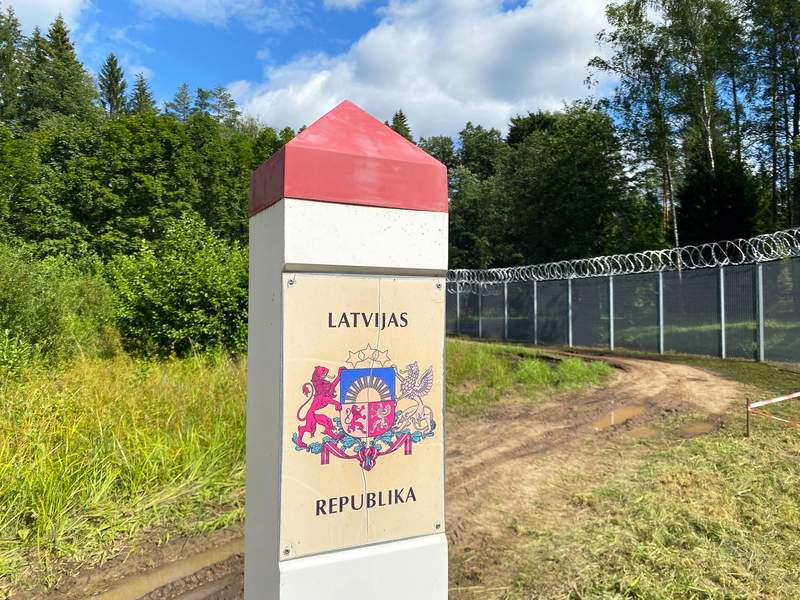
POLICY WIRE — Riga, Latvia — It wasn’t a stealth bomber. Nor was it some cutting-edge surveillance beast out of a Bond film. It was just another drone — quite likely an off-the-shelf commercial model adapted for whatever dubious purpose — that plunged from the sky near Latvia’s eastern border last week. But its silent descent has kicked up more noise than a fighter jet, rattling already frayed nerves across NATO’s European flank. Because this isn’t just about a crashed bit of plastic and wires; it’s about the creeping, unsettling normality of low-grade belligerence.
For weeks now, the skies over the Baltic States — those former Soviet republics stubbornly rooted in the Western alliance — have felt less like open air and more like a psychological battleground. Drone intrusions, both civilian — and military, have become an unsettling commonplace. This particular incident, quickly downplayed by local authorities, speaks volumes about a new brand of geopolitical harassment, one that prefers ambiguity to outright confrontation, but gnaws at stability all the same. You don’t need ICBMs to stir up trouble; sometimes, a consumer drone, piloted by unknown hands from unknown locales, does the trick just as effectively — and far more deniably.
“We’re witnessing a concerted effort to test our resolve, to probe our defenses without crossing a threshold that invites a direct response,” said Latvian Defense Minister Andris Berzins, his tone measured but with an unmistakable steel edge, in a recent address. “Our skies aren’t free parking for anyone’s toys. Every incident is investigated with the utmost seriousness, not just as a matter of airspace violation, but as a deliberate provocation.” It’s a delicate dance they’re doing out there, trying to look strong without giving Moscow the excuse it might be seeking for some bigger, louder spectacle.
And it’s not just a European problem. The very nature of this ‘untamed diplomacy’, where state and non-state actors alike deploy cheap, readily available tech to project power or sow discord, ripples outward. Nations like Pakistan, wrestling with their own internal insurgencies and cross-border skirmishes, know this landscape intimately. From the tribal areas to contested frontiers, these simple drones have rewritten the rules of engagement. This latest European dust-up isn’t a world away; it’s a symptom of a global security environment increasingly characterized by low-cost, high-impact asymmetry, threatening stability in places far beyond the immediate flashpoint.
The latest drone-fall coincides with intelligence reports indicating a roughly 15% increase in suspected Russian probing flights and naval incursions around NATO territory in the past six months alone, according to classified briefings obtained by Policy Wire from an EU defense official. It’s a numerical creep, but a disturbing one. For years, Europe has relied on a sort of grim stability. Now, every radar blip — and every crash of unknown origin serves as a reminder of how quickly that calm can erode.
📄 POLICY WIRE WHITEPAPER PUBLISHED: PAKISTAN'S NATIONAL SECURITY POLICY PRIORITIES
👉 READ BY CLICKING HERENATO’s collective response remains robust, at least rhetorically. “Our commitment to collective defense isn’t just enshrined in treaties; it’s practiced daily,” assured a high-ranking NATO official, speaking off the record but clearly authorized to convey the alliance’s firm stance. “These provocations won’t fracture our unity. If anything, they solidify our resolve to defend every inch of allied territory — airspace included.” But the questions linger: How many of these tiny incursions are too many? And what happens when a drone, whether by accident or design, brings down something significant?
But the real game is subtler than that. It’s about fatigue. It’s about maintaining constant vigilance, the sheer drain of resources and personnel committed to tracking what often amounts to a glorified hobby project repurposed for nefarious ends. This isn’t grand, strategic warfare; it’s death by a thousand paper cuts, keeping everyone on edge, forever anticipating the next, slightly bigger incident. And the global economy, always keen to price in risk, certainly notices when Europe’s calm gets disturbed. Imagine the trickle-down effect on markets, on energy prices that impact struggling economies from Cairo to Karachi.
What This Means
This spate of drone incidents, far from being isolated anomalies, signifies a dangerous normalization of grey-zone warfare. Politically, it’s designed to wear down opponents, to constantly challenge their borders and reactions without triggering an Article 5 response from NATO. It forces countries like Latvia to expend resources — their military, their intelligence agencies — on threats that are both insignificant and potentially disastrous. Economically, such persistent instability introduces an unpredictable variable into foreign investment — and trade. No one wants to pour money into a region where airspace integrity is perpetually compromised or where even a small drone can create international headlines. it strengthens the argument for increased defense spending — something NATO members, for all their bluster, have been historically slow to fulfill. It means defense contractors in the West — and those burgeoning firms in nations like Qatar — are about to see another boom. It’s a low-cost strategy for an adversary, yielding high-cost headaches for those trying to maintain the peace, a grim prognosis for an already volatile geopolitical chess board.