


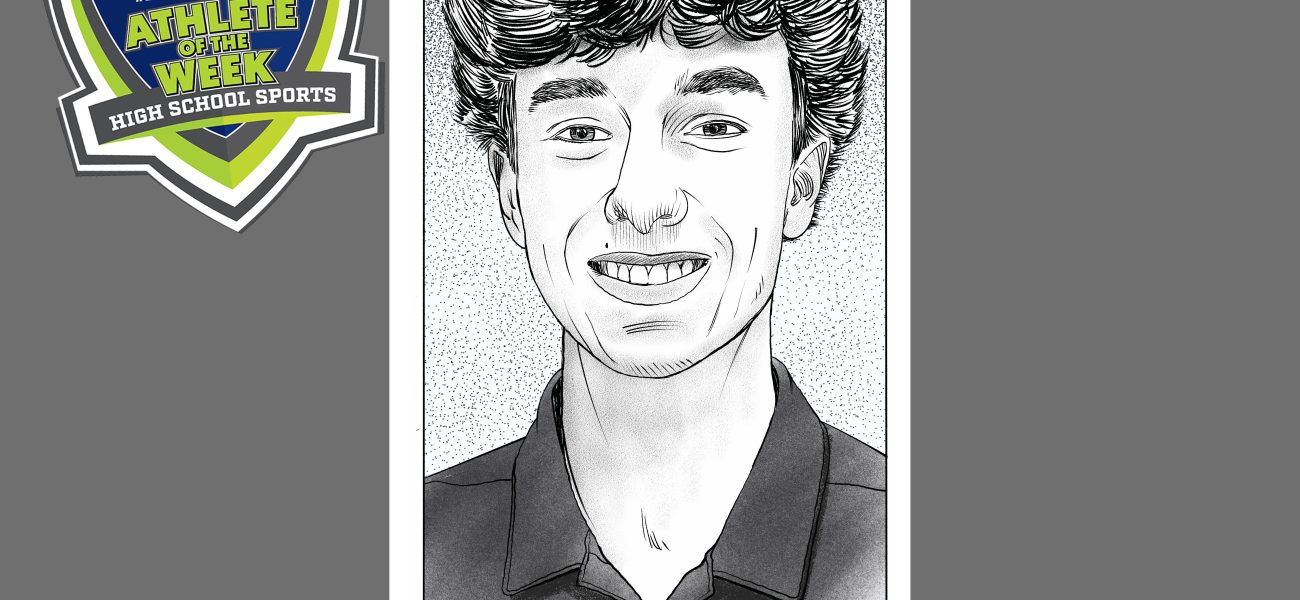
Fairway’s Crown: North Jersey Prodigy’s Singular Quest Amidst Global Grids
POLICY WIRE — Raritan Valley, New Jersey — The sun hadn’t quite settled, a lingering gold streak painting the manicured greens, but the quiet menace of expectation already hung heavy in the air. Rory...

POLICY WIRE — Raritan Valley, New Jersey — The sun hadn’t quite settled, a lingering gold streak painting the manicured greens, but the quiet menace of expectation already hung heavy in the air. Rory Asselta, a mere 16-year-old, had just sunk a birdie on a playoff hole, cementing his second consecutive state golf championship. But before the echo of his putter faded, the conversation, as it always does for those perched on the precipice of legend, wasn’t about the trophy in hand. Oh no, it was already about the one that wasn’t, the one that history had thus far withheld. That’s the way it goes, doesn’t it? Win big, — and they immediately ask, “What’s next?”
It’s an unspoken covenant, a quiet understanding whispered among elite athletes, regardless of their arena, whether a pristine North Jersey golf course or the dust-caked pitches of Peshawar, where young talent yearns for even a fraction of such opportunity. The demand for more, the relentless march of achievement, it’s universal. But Asselta’s ambition isn’t merely personal; it’s a direct challenge to nearly a century of athletic precedent. No golfer has ever bagged three New Jersey State Interscholastic Athletic Association (NJSIAA) titles since their inception in 1934—not one. And Asselta, a St. Joseph sophomore, now finds himself staring down that statistical brick wall.
“It’s a peculiar feeling, you know?” Asselta confided recently, a thoughtful furrow in his brow that belied his age. “You spend all this time focused on this win, but the second the ball drops, someone’s already framing the next one. It’s like, hey, can a guy just enjoy it for a minute? But I get it. It’s the drive. The impossible is just a target, isn’t it?” That measured self-awareness, some might argue, is as potent as his swing.
His second state triumph, a tighter, two-shot victory for his Green Knights over Mainland, proved tougher than the first. A nascent team, less experienced varsity players, and even a couple of early-season losses – things weren’t as smooth as the undefeated cruise the previous year. Because, let’s be honest, sports, much like geopolitical strategy, rarely goes exactly according to the blueprint. They stumbled, yes, but recovered. And now the younger Asselta watches his older brother Michael, a crucial anchor on the team, head off to college golf at Loyola (Maryland). That’s another dynamic shift; one less familiar face on the course, one more void to fill, leadership to assume.
This quest for three isn’t happening in a vacuum. It’s part of a broader, increasingly intense ecosystem of junior sports. The demands are brutal, requiring not just talent, but unwavering dedication and resources— resources often unattainable for many. While Asselta is packing his bags for Florida to compete in the Team TaylorMade Invitational—rubbing elbows with golf’s scions, including Tiger Woods’ son, Charlie—it’s a world apart from where many budding athletes from developing nations might be struggling to find proper equipment or coaching. But the fire of ambition burns just as hot, no matter the locale. For every American prodigy flying private, there’s a young man in Karachi dreaming of an old driver — and a chance.
“To see an athlete, particularly one so young, navigate this kind of pressure and continually perform at such a high level, it’s quite rare,” noted Brendan Gallagher, a seasoned observer of high school athletics for over two decades. “The statistical likelihood of achieving three consecutive state titles in NJSIAA history? It’s extraordinarily low. We’re talking less than 0.05% of all individual state champions ever repeating three times, according to our historical records.” Gallagher speaks with the quiet authority of someone who’s seen countless rising stars flicker and fade, but in Asselta, he suggests, there’s a distinct staying power.
Asselta, however, isn’t contemplating an early exit from the Garden State’s scholastic circuit. “I’m here for two more years. I’m graduating a Green Knight,” he stated, dismissing any speculation about transferring to a prestigious golf academy, a path some past double-champions have chosen. Morgan Hoffmann, another New Jersey double-winner (2005-2006) moved to an international academy and later competed on the PGA Tour. But Asselta has his sights set on national junior circuits too, including qualifying for the formidable U.S. Junior Amateur.
What This Means
Rory Asselta’s pursuit isn’t just a feel-good local sports story; it’s a microcosmic look at the evolving landscape of elite youth sports. It highlights the immense physical and psychological pressures placed upon gifted adolescents, effectively professionalizing their amateur careers long before they hit college. The entanglement with national brands (TaylorMade) and the intense competitive circuit, involving high-stakes national tournaments and their subsequent collegiate recruitment pipelines, demonstrates the profound economic implications for both the athletes and the institutions investing in them. It’s a meritocracy, yes, but one built on significant investment—of time, money, and parental sacrifice. The cultural obsession with individual excellence, particularly when historical records are on the line, creates compelling narratives but also raises questions about burnout and the broader well-being of these young competitors.
From a policy standpoint, the sheer rarity of Asselta’s potential achievement also underlines the challenge faced by state athletic associations like the NJSIAA. How do they continue to foster widespread participation while simultaneously managing and celebrating such extreme individual talent? The narrative of a solitary quest against decades of history captures public imagination, driving engagement, but it also casts a long shadow over the hundreds of other hopefuls. This isn’t just about golf; it’s a template for aspiration, for triumph against long odds—a story that, in a vastly different context, might mirror the tenacious pursuit of recognition or economic stability in less privileged societies, such as those grappling with the ripple effects of regional instability in the Middle East, where any avenue to a better life is often a similarly steep climb against history’s indifferent march.