


Roma’s Executive Labyrinth: A Global Search for Sporting Direction Amidst Shifting Sands
POLICY WIRE — Rome, Italy — In the cutthroat echelons of European football, the churn of managerial talent often overshadows the more subtle, yet arguably more consequential, dance of executive...

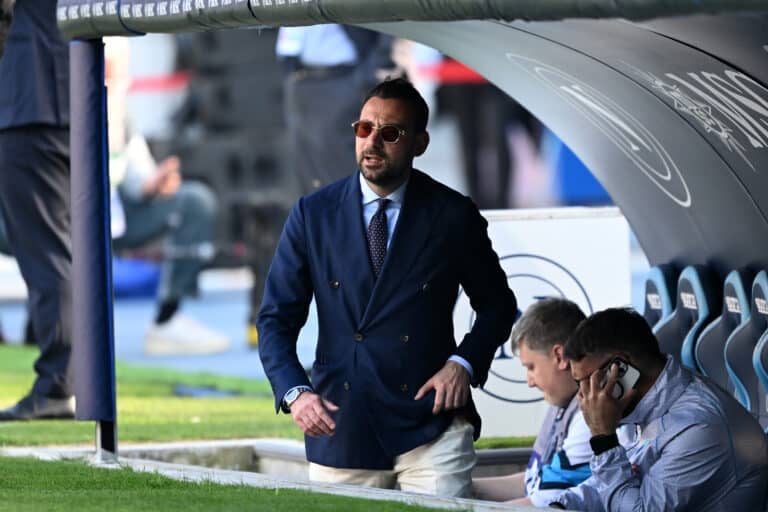
POLICY WIRE — Rome, Italy — In the cutthroat echelons of European football, the churn of managerial talent often overshadows the more subtle, yet arguably more consequential, dance of executive appointments. Roma, a venerable institution steeped in the Eternal City’s lore, currently finds itself enmeshed in just such a delicate ballet, scanning the continent — and indeed, the global talent pool — for a new sporting director. It’s a choice that won’t merely dictate tactics on the pitch, but could recalibrate the club’s financial trajectory and brand resonance in an increasingly competitive international market.
The departure of Massara, now confirmed by his very silence during critical junctures, isn’t just a vacancy; it’s a structural tremor. And while the Friedkin ownership group insists on ultimate authority, the influence of the head coach in shaping this crucial appointment is anything but negligible. Daniele De Rossi, the legendary midfielder turned manager, reportedly holds significant sway, understanding acutely that the symbiotic relationship between coach and director is the bedrock upon which any sustained success is built. “The chemistry between the manager and the sporting director—it’s paramount,” De Rossi is believed to have conveyed to confidantes. “We need someone who understands the squad’s nuances, someone who shares a common vision for how we evolve, not just recruit. Without that symbiosis, you’re just assembling parts, not building a machine.”
The initial frontrunner, Cristiano Giuntoli, whose stock had soared after orchestrating Napoli’s Scudetto triumph, has seen his appeal inexplicably wane, despite now being free from contractual obligations with Juventus. His track record is undeniable, a testament to astute player acquisition and strategic development, yet Roma’s American proprietors, it seems, have opted for a different strategic compass. This isn’t just about finding a warm body; it’s about aligning a vision that spans balance sheets — and trophy cabinets. Fabio Paratici, another name that once circulated, is also off the table, firmly ensconced at Fiorentina until 2030, a testament to the contractual complexities that often shackle top-tier talent in this industry.
So, the gaze has shifted, landing now with particular intensity on Giovanni Manna, currently with Napoli. He’s seen as a pivotal figure there, his contract stretching to 2029, regardless of any coaching changes at the Neapolitan club. Tony D’Amico, Atalanta’s current sporting director, offers another intriguing profile, largely due to his existing rapport with coach Gian Piero Gasperini during their shared tenure in Bergamo—though even that relationship wasn’t always a smooth sailing, a common thread in the high-pressure world of Serie A football. Sean Sogliano, set to exit Verona, appears to be an outside bet, increasingly linked with cross-city rivals Lazio in recent hours, perhaps illustrating the tight-knit and often incestuous nature of Italian football’s executive merry-go-round.
The Friedkins, pragmatic American owners, aren’t just buying a football club; they’re investing in a global brand. “Our mandate isn’t just about winning Sunday’s match; it’s about building a sustainable, globally competitive enterprise,” a source close to the ownership group intimated. “Every executive decision, particularly one of this magnitude, must align with a long-term fiscal strategy. Short-term fixes simply don’t suffice in this market anymore.” This meticulous selection process underscores the brutal economics of modern sports dominance, where a misstep in executive hiring can cost tens, even hundreds, of millions. According to a 2023 Deloitte report, Serie A’s collective revenue stood at approximately €2.5 billion, underscoring the formidable financial stakes involved in these executive appointments, and Roma’s slice of that pie is highly dependent on shrewd management.
📄 POLICY WIRE WHITEPAPER PUBLISHED: PAKISTAN'S NATIONAL SECURITY POLICY PRIORITIES
👉 READ BY CLICKING HEREWhat This Means
This executive maneuvering at Roma isn’t merely an internal club affair; it’s a microcosm of the larger political and economic currents reshaping European football. At its core, the search reflects a tension between the traditional, coach-centric model of Italian football and the data-driven, ownership-first approach increasingly favored by foreign investors. The Friedkins’ insistence on a long-term fiscal strategy over immediate star power for the sporting director role signals a broader shift, prioritizing sustainable growth and brand value over splashy, often ephemeral, transfer market gambles. This pragmatic stance is critical for clubs like Roma, which must compete not just for domestic titles but for international mindshare and commercial partnerships.
the global reach of Serie A, bolstered by significant viewership and burgeoning fanbases across Asia and the Muslim world, means that every leadership decision has far-reaching economic implications. The perceived stability and strategic direction of a club like Roma directly influences its attractiveness to sponsors and broadcasters in these lucrative emerging markets, where European football enjoys immense popularity. A well-chosen sporting director, therefore, isn’t just a talent scout; they’re a key architect of the club’s global brand, ensuring its competitiveness in a truly international marketplace. The internal ‘politics’ of balancing coach demands with owner vision, while navigating a finite pool of top executive talent, will define Roma’s immediate future, making this behind-the-scenes drama as compelling as any match on the pitch.