


Dodgers’ Late Surge: A Study in Resilience and the Unlikely Hero
POLICY WIRE — Los Angeles, CA — There are evenings when a single swing changes everything, and then there are nights when an entire battle — a pure, gladiatorial clash at home plate—reminds everyone...

POLICY WIRE — Los Angeles, CA — There are evenings when a single swing changes everything, and then there are nights when an entire battle — a pure, gladiatorial clash at home plate—reminds everyone what it means to be alive, or at least, to play baseball with an unblinking stare. The Los Angeles Dodgers, having suffered a drab defeat just 24 hours prior, rediscovered their swagger Tuesday, clawing back to beat the San Diego Padres 5-4. It wasn’t just about the score; it was a brutal testament to sticking around, and, frankly, the bizarre alchemy of professional sports where an anemic run of form can vanish quicker than a foul tip.
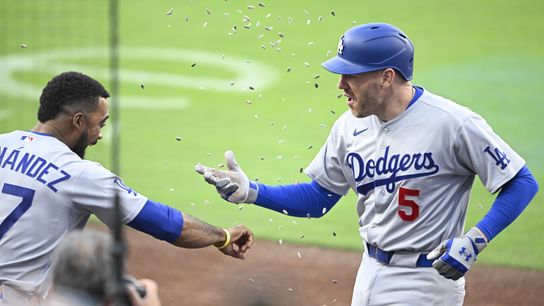
Freddie Freeman, the seasoned first baseman, had been, by his own high standards, mired in a bit of a dry spell—0-for-16 across five games. Not pretty, no. But this game was a different beast. Shohei Ohtani kicked things off with a double, — and Freeman, right after, obliterated a fastball. Two runs. Just like that. It wasn’t long before the Padres, however, led 4-2, fueled by a couple of two-run blasts themselves. Emmet Sheehan, the Dodgers’ young hurler, had one of those nights. Four innings. Four earned runs. He just couldn’t find his groove.
But momentum, she’s a fickle mistress. And teams that win don’t just fold up shop. The Dodgers chipped away. Freeman, bless his heart, found his thunder again in the sixth, drilling an 81 mph splitter right out of the park, squaring things up at 4-4. Two homers. Just like that. A guy goes from looking for answers to looking like a genuine threat, almost instantaneously. “Trying to get rid of the cut swing,” Freeman later explained, “Cage work was a lot better today and to see instant results in the first at bat definitely helped the mind.” A candid admission, don’t you think? It’s all in the head, sometimes.
The bullpens traded blows. And then came the eighth. Ohtani doubled, again. A chance to go ahead. But Freeman struck out. Kyle Tucker grounded out. The run stood stranded. These games, they just refuse to make it easy. So the score held. Until the ninth.
Here’s where it got truly gnarly. Max Muncy worked a walk against Mason Miller, arguably baseball’s most overpowering relief pitcher right now. Dave Roberts, the Dodgers’ manager, put in Alex Call to run. Call, seeing an opportunity, broke for second. Miller, trying to nab him, sailed his throw. Suddenly, Call was on third. Ninety feet from the lead. But then Andy Pages stepped in. A rookie. Facing a guy throwing 102 mph gas — and wicked 88 mph sliders. Pages didn’t flinch. He fouled off missile after missile—a gladiatorial display that drew even Freeman into open admiration from the dugout. “That at bat was incredible,” Freeman remarked. “To foul off 102, back-to-back sliders at 87-88 — one of the best at-bats I’ve ever seen.” On the ninth pitch, Pages, that rookie, lifted a sacrifice fly deep enough to bring Call home. The Dodgers led, 5-4. Because, sometimes, the pressure births heroes from unexpected places. As for Miller, he might be dominant, but even the best crack under extreme duress. That’s just how it works.
Roberts, never one for overwrought praise, summed it up perfectly: “It was him versus Mason Miller, and he wasn’t gonna lose that battle.” A clear, unapologetic endorsement of pure grit. The win pushed the Dodgers’ record to 30-19, according to league standings, securing a half-game lead in the NL West. Will Klein closed it out without a hitch for his first career save.
What This Means
This Dodgers victory isn’t just about a baseball game; it’s a narrative echoing far beyond the ballpark, illustrating that sometimes, strategic patience combined with an almost absurd belief in latent potential can upset even the most entrenched forces. In political landscapes, or burgeoning economic zones across the South Asian region—where resilience against odds is often a daily mandate—this story of collective comeback, ignited by a star’s personal renaissance and sealed by an underdog’s defiance, resonates. It suggests that even when established leadership falters, and young, untested elements face overwhelming opposition, sustained pressure and a refusal to yield can turn the tide. For instance, consider how many fledgling enterprises in developing nations must battle established global giants with far greater resources. They too need their ‘Pages’ moments—where individual tenacity against superior firepower creates a breakthrough. The suddenness of Freeman’s turn-around, from slump to supremacy, reflects how quickly sentiment and belief can shift, driving market confidence or political momentum. It’s a reminder that true strength isn’t just in dominance, but in the relentless capacity to rebound.